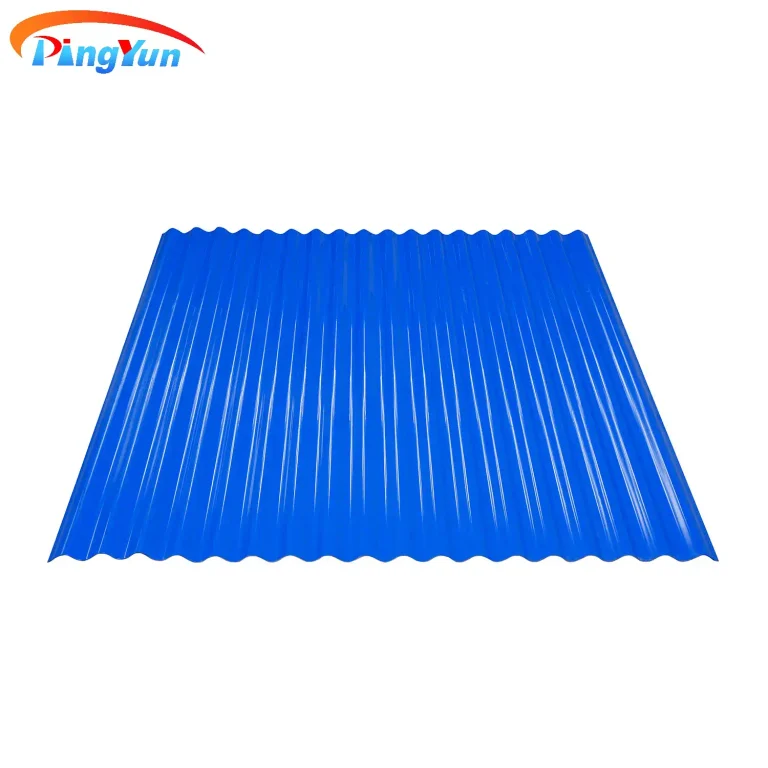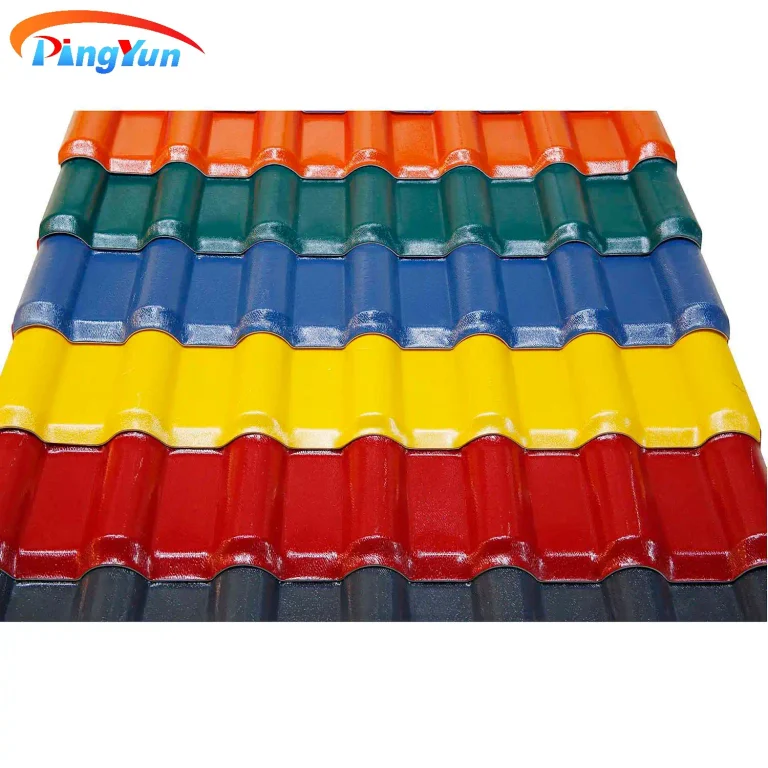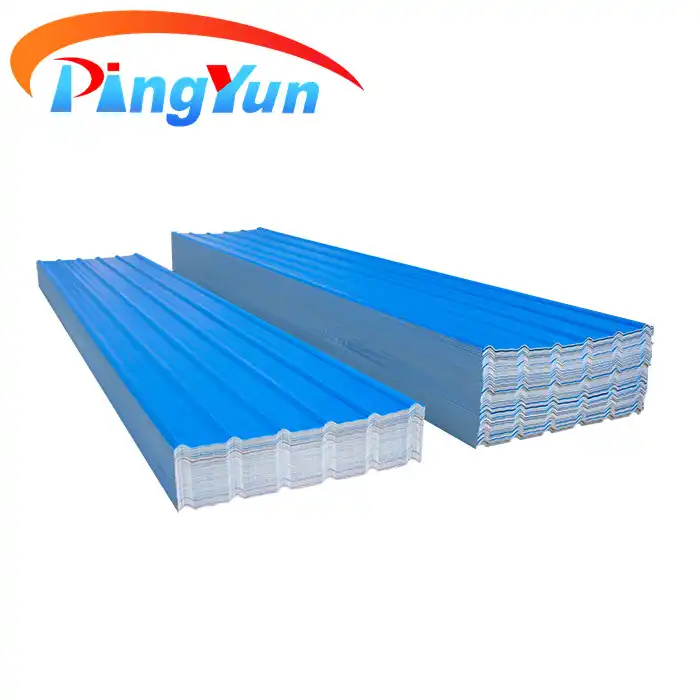
How Do You Select the Right PVC Roof Sheet?
Select a PVC roof sheet by working from the roof outward: document the building use, geometry, exposure and local requirements; choose the material family and profile; verify the exact construction, effective cover width, length and interfaces; then compare a written evidence pack, quotation and approved sample. Do not choose by thickness, colour or price alone. A suitable sheet is the one whose identified material, profile, support arrangement, drainage details, performance evidence and warranty all match the actual roof. Pingyun’s current website separates PVC roof tiles, corrugated UPVC sheets, twinwall hollow PVC sheets, translucent PVC sheets, polycarbonate and FRP, so the first decision is to keep those identities separate.
Contents
- What Project Information Should You Collect First?
- Which PVC Sheet Family Fits the Roof?
- How Do You Confirm the Exact Sheet Construction?
- How Do You Check Roof Coverage and Layout?
- Which Performance Claims Need Product-Specific Evidence?
- Can the Chosen Sheet Form a Complete Roof System?
- How Should Importers Compare Quotes and Samples?
- What Must Be Checked at Delivery and Trial Installation?
- What Should Be Monitored After Handover?
- Preguntas frecuentes
- Conclusion
- References
What Project Information Should You Collect First?
A quotation becomes useful only when the supplier receives enough information to identify the roof problem. Start with a short project brief rather than asking for the cheapest PVC sheet. The brief should be kept with the quotation, drawing mark-ups, sample approval and delivery records. If a field is unknown, label it as unknown and assign someone to obtain it; do not silently replace it with a generic installation assumption.
Use and roof geometry
Record the building use, whether the roof is new or a replacement, the intended appearance, and whether people will ever need to access the roof. A garden shelter, a residence, a warehouse, an agricultural building and a factory with corrosive vapour can have very different selection constraints. The correct question is not simply whether a panel looks like a roof tile. It is whether the proposed sheet and its support system suit the use, exposure, maintenance access and consequences of leakage.
Measure each roof plane separately. Note the plan length from eave to ridge, the width across the slope, the number and position of ridges, valleys, hips, verges, wall abutments, penetrations and gutters. Record the designed roof pitch and any existing pitch that cannot be changed. A profile that looks acceptable in a catalogue may not be suitable for a particular pitch or overlap arrangement. Ask the supplier for the current installation instructions for the exact model, then have the project designer confirm that the geometry and drainage arrangement are acceptable.
The support drawing matters as much as the sheet drawing. Mark purlin or batten lines, support material, support spacing, edge conditions and any intermediate framing. Do not infer a permitted span from a different profile, thickness, layer structure or material. The old Pingyun catalogue, for example, presented several UPVC options and four structure descriptions, but its historical comparison language is not a current structural design table [2]. Treat it as a reminder to request current evidence, not as approval for a new roof.
Also state the visual requirement. Spanish and Roma tile profiles create a different appearance from wave or trapezoidal sheets. Colour, gloss, translucency and the direction of a profile can affect planning approval and client acceptance. A colour name alone is not a sufficient identification because a translucent PVC sheet, an ASA-PVC tile and a standard UPVC sheet can all be shown in visually similar colours. Put the approved appearance in a dated sample record.
Exposure, loads and local requirements
List the environmental conditions that the roof will face: strong sun, large temperature changes, wind, snow, hail, coastal salt, industrial fumes, animal waste, cleaning chemicals, standing moisture and airborne dust. A product category label such as anti-corrosive or weather resistant is not a substitute for a test report or written compatibility statement for the named product and exposure. If the roof is close to a process that releases solvents, acids or alkalis, identify the chemical and concentration for the supplier and the project engineer.
Wind and snow are design inputs, not marketing topics. The responsible local designer should determine the governing actions, edge and corner zones, uplift resistance, support reactions and attachment requirements under applicable local rules. The sheet supplier must then provide the data and installation limits for the exact construction. This article deliberately does not provide a universal purlin spacing, screw spacing, wind pressure, snow load or minimum pitch. Those values depend on profile, thickness, temperature, support, fastener, lap and jurisdiction.
Ask which local documents are mandatory. Depending on the destination, these may include a product data sheet, declaration or certificate required by the authority, fire classification, reaction-to-fire or resistance-to-fire information, structural test evidence, chemical-resistance statement, safety data for accessories, installation instructions and warranty conditions. The absence of a document is not proof that the product fails; it means the buyer should not claim compliance until the responsible supplier and designer resolve the gap.
Separate three responsibilities in the project brief. The supplier identifies the product and supplies product evidence. The design professional selects the roof arrangement and checks local technical requirements. The installer verifies that the actual substrate, supports, fasteners and interfaces match the approved design. A purchaser may coordinate these tasks, but should not present a commercial brochure as an engineering approval.
Existing roof matching
For a replacement or extension, photograph the existing roof and measure the visible profile at several locations. Record crest and trough shape, pitch, sheet orientation, side-lap position, end-lap condition, ridge treatment, verge treatment and the material of adjacent sheets. Check whether the existing roof is PVC, UPVC, ASA-PVC, polycarbonate, FRP, metal or a composite assembly. Similar colour or corrugation does not prove compatibility.
Ask for a cross-section or physical profile sample before ordering. A replacement must fit the support lines and preserve drainage; an attractive sheet that cannot share a ridge cap or side lap can create an expensive transition. If a new PVC sheet meets a metal or another plastic, request a detail for the joint rather than assuming the two products can be fixed with the same screw and washer. Confirm whether the existing roof can safely support any temporary access or new framing.
Which PVC Sheet Family Fits the Roof?
Use a candidate matrix with columns for material identity, profile, internal construction, visual purpose, confirmed dimensions, evidence status and warranty status. Pingyun’s current product navigation lists PVC Roof Tile with Spanish and Roma subcategories, Corrugated UPVC Roof Sheet with trapezoidal and wave subcategories, Twinwall Hollow PVC Roof Sheet, Polycarbonate Sheets and Translucent Roof Sheet with PVC and FRP subcategories [3]. This classification is useful for narrowing the conversation, but it does not by itself prove stock, current dimensions, performance values or compatibility.
Do not collapse the words PVC and UPVC into a promise about every product. UPVC is a product description used for certain roof sheets; ASA-PVC describes a construction or material identity involving an ASA surface where confirmed; PC means polycarbonate; FRP means fibre-reinforced plastic. They can have different optical, thermal, fire, chemical, structural and weathering behaviour. The final purchase order should name the material and exact model, not merely say plastic roof sheet.
ASA-PVC tile profiles
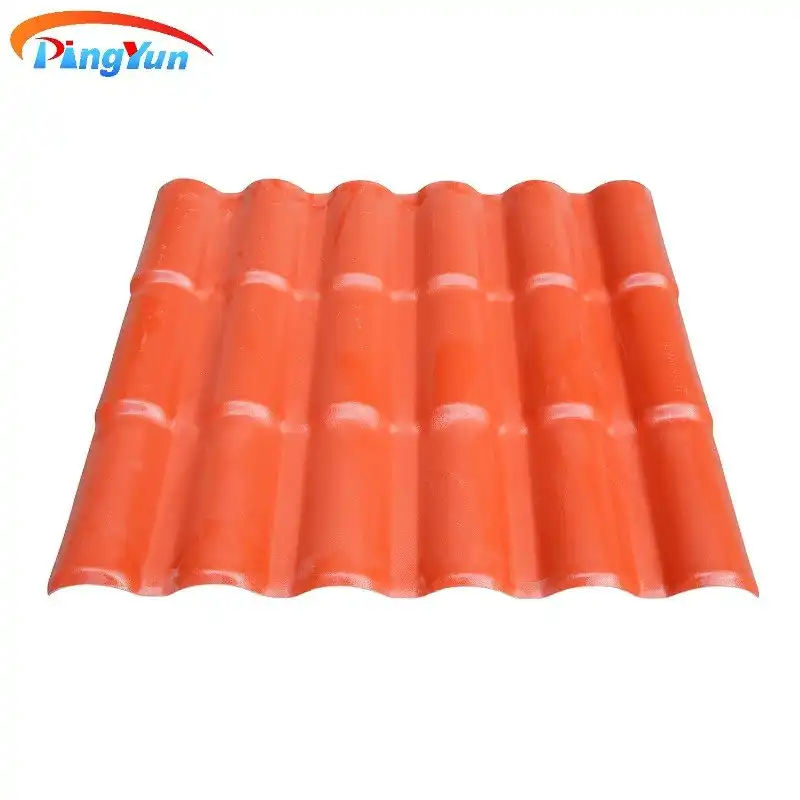
An ASA-PVC tile candidate may be appropriate when the design calls for a tile-like Spanish or Roma appearance and the supplier confirms that the named product includes the claimed ASA surface or layer. Pingyun’s website currently presents a PVC Roof Tile category with Spanish and Roma subcategories, and its product listing includes titles describing Spanish ASA-PVC composite roof tiles [3]. Those page labels establish the category and advertised identity; they do not allow the buyer to assign ASA to an unnamed wave sheet, hollow sheet or translucent product.
The 2018 Pingyun catalogue is useful as a historical example of why model identity matters. On page 3 it showed Spanish style R1050 and Roma style R1080 as ASA-PVC, while it separately showed a translucent R1050 as PVC [1]. The shared R1050 name therefore did not mean shared material or shared purpose. The same page printed historical width, thickness, length and weight entries and a thirty-year marketing guarantee. Those old figures and that old guarantee must not be presented as current specifications or current warranty policy.
For a present project, request a current data sheet stating the model, base resin or material description, surface or layer construction, thickness tolerance, width definition, available length, colour, support guidance, applicable tests and warranty. If the supplier confirms that a particular ASA product carries the current twenty-year warranty, retain that written confirmation with the order. Do not describe every PVC roof tile as ASA-PVC merely because an ASA tile appears in the same catalogue category.
Tile shape also affects layout. A decorative profile may require a particular ridge, verge or flashing treatment and may not interchange with a corrugated sheet. Check the profile drawing, not only a photograph. Ask whether the sheet is intended as the primary weathering layer, whether the tile geometry affects side laps, and whether accessories are supplied by the same source. If no current accessory schedule is available, state that the ridge, verge and flashing details remain to be designed and confirmed.
Wave and trapezoidal UPVC
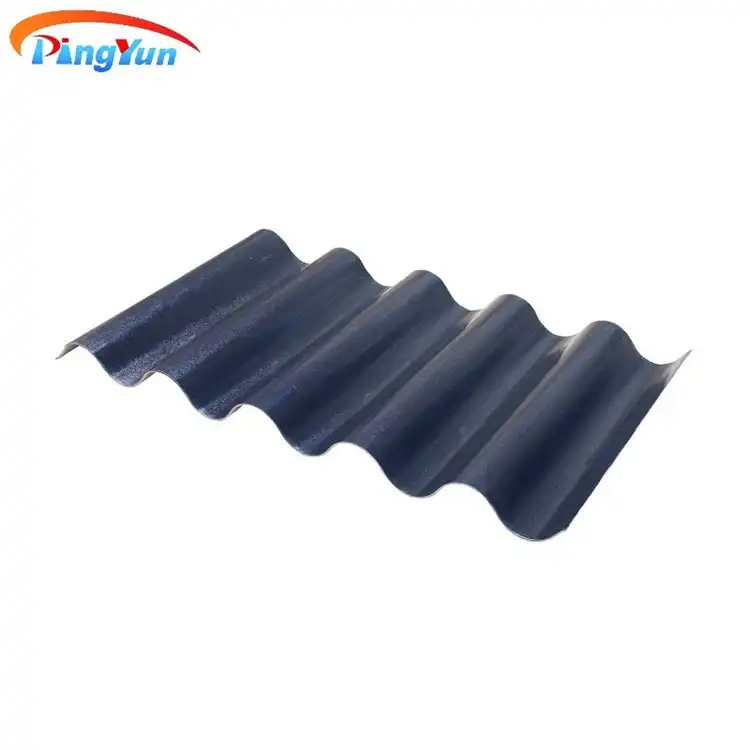
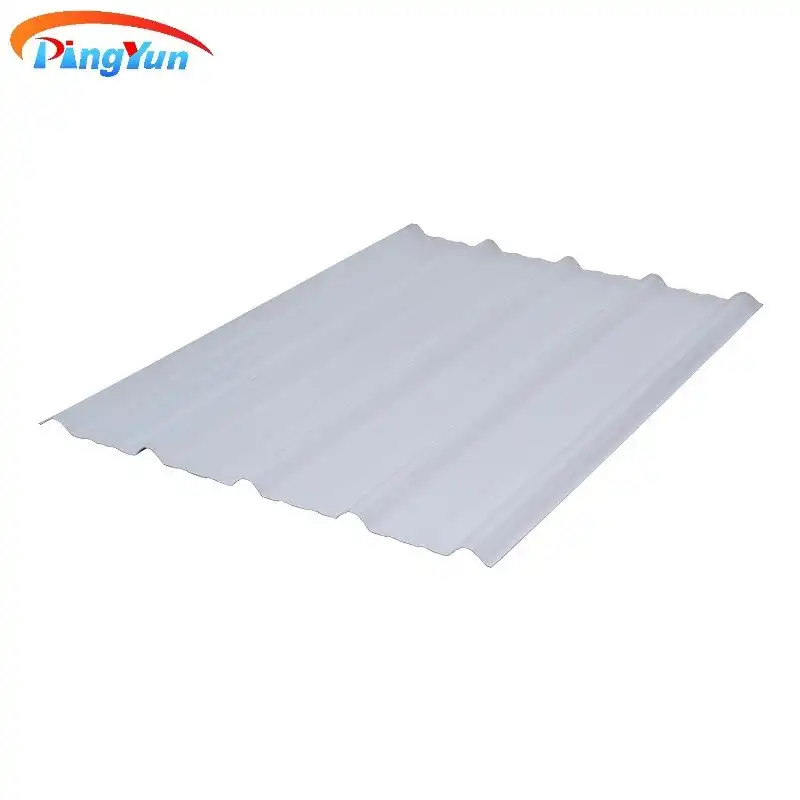
Wave and trapezoidal UPVC sheets are separate profile families even when they are sold under a general corrugated heading. A wave profile may align with an existing round corrugation, while a trapezoidal profile may need different purlin contact, side-lap treatment and flashing geometry. Pingyun’s current category lists both wave and trapezoidal UPVC roof sheets [3]. The historical catalogue also illustrated R101 and T1130 examples and described several structure choices on page 5 [2]. These references help a buyer ask precise questions, but they do not approve a present installation.
The old page 5 table printed historical nominal widths, maximum lengths, thicknesses, weights and container quantities for R101. It also printed a comparison of effective cover and purlin distance. Because those values belong to a 2018 catalogue and specific historical entries, they should not be copied into a current bill of quantities. Obtain the current overall width, effective cover, available lengths, tolerances and support limits for the offered model and thickness.
A wave or trapezoidal sheet can be the right visual and functional family when the roof needs a continuous profiled covering, but selection still depends on the support arrangement and exposure. Ask whether the proposed sheet is single-layer, multi-layer, or another construction; whether a named surface is present; how the profile is oriented; and whether the quote includes compatible fasteners, washers, closures and flashings. The supplier’s use of the word UPVC does not answer those questions.
Hollow versus translucent products
“Hollow” describes an internal geometry, not automatically a material upgrade, an insulation rating, a fire rating or an ASA surface. Pingyun’s current website lists a Twinwall Hollow PVC Roof Sheet family and identifies T860, T930 and PVC Hollow Panel subcategories [3]. The category page describes the family as lightweight and customisable, but does not provide enough model-specific information to select a sheet for a particular span, U-value, acoustic target or fire requirement. Request those values for the exact candidate.
“Translucent” describes an optical function, not a generic synonym for polycarbonate. Pingyun’s current navigation separates PVC Translucent Roof Sheet and FRP Transparent Roof Sheet under Translucent Roof Sheet, and separately lists polycarbonate products [3]. The historical catalogue page 8 likewise presented translucent PVC and transparent FRP as different entries [4]. Never replace a PVC daylight sheet with FRP or PC data when preparing a specification. Confirm material, profile, thickness, light transmission, UV treatment, fire information and compatibility with the opaque roof.
A daylighting strip may be selected as a small part of an otherwise opaque roof, or a translucent roof sheet may be considered for a larger area. In both cases, calculate the daylight and solar effects with the project designer rather than treating a catalogue transmission statement as the complete thermal design. The old page 3 entry for translucent R1050 reported a historical transmission range and dimensions [1]; that is a historical product example and is not a current promise for every translucent PVC sheet.
If the project requires insulation, ask for thermal resistance or transmittance evidence for the complete installed assembly, not just a claim that a hollow sheet has air spaces. If the project requires daylight uniformity, ask for a photometric basis and consider adjacent opaque material, orientation and shading. If the project requires a particular fire classification, request a test or classification report that names the construction. A hollow PVC sheet can be a candidate without automatically meeting any of these performance targets.
How Do You Confirm the Exact Sheet Construction?
Once a family is shortlisted, freeze the exact construction before comparing prices. A model name can be reused across pages, languages or historical catalogues, and a commercial title can combine material words that are not a full technical description. The evidence pack should make it possible for a second person to identify the ordered sheet without relying on memory or a photograph.
Material layers and surface
Request a labelled cross-section showing the number and order of layers, the nominal thickness of each relevant layer where applicable, the base material and any cap, coating or reinforcement. If the supplier uses terms such as ASA, APVC or a multi-layer structure, ask what each term means for the offered model and whether it is included in the quoted construction. A statement that four structures are available, as shown historically for UPVC products on page 5 [2], does not identify which structure is being quoted today.
Separate surface treatment from the body material. An ASA surface does not make a product identical to a solid ASA sheet, and a coloured surface does not prove UV protection. Similarly, a hollow core does not establish the material of the skins or webs. Record the construction exactly as supplied, including whether the surface is co-extruded, coated, laminated or otherwise treated if the supplier makes that distinction.
Ask for tolerances and inspection criteria. Nominal thickness is not enough for a large order if the project depends on a particular lap, fastener seat or edge detail. Request permissible variation in thickness, width, length, profile dimensions, colour and visible surface. If no tolerance document is available, put the limitation into the purchase risk register and obtain an acceptance method before production.
Colour and UV treatment
Select colour only after confirming material and surface. Request colour cards or physical samples, and ask how the supplier defines an acceptable batch variation. Photographing a screen or catalogue image is not a reliable colour approval. If the roof contains translucent or daylight sections, approve their visual appearance separately from the opaque sheets.
UV claims require product-specific wording. Ask whether the UV protection is a surface layer, additive, co-extruded cap or another treatment; which face must be exposed; and what inspection or test evidence supports the claim. The historical page 3 catalogue used strong anti-UV and colour-duration language for its ASA-PVC examples [1]. That language is not a basis for transferring a thirty-year colour claim to a current product, and it does not change the current warranty policy supplied by the user.
Pingyun’s representative confirmed the company policy for this guide: ASA products carry a twenty-year warranty, while other products carry ten years [9]. The material identity must be confirmed before applying either term. The buyer should obtain the warranty document, start date, remedy, exclusions, installation requirements, exposure limitations and claim procedure in writing. Warranty duration is not a prediction of actual service life and does not replace design or maintenance evidence.
Model identity and sample
Give each candidate an internal reference and link it to the supplier’s model number, quotation line, drawing, data sheet and sample. The record should include the material, profile, layer construction, surface, colour, thickness, overall width, effective cover, length, tolerance and intended application. If any item is pending, mark the candidate as not approved rather than filling the space with a guess.
A sample is a useful identity check. Inspect the profile, colour, surface, edges, visible layers and any printed or labelled information. If the sample is cut, retain enough of the edge to see the construction. Ask whether the sample represents the production lot, and establish how deviations will be handled. Pingyun’s representative confirmed that samples are free and customers pay freight [9]. Free freight is not implied, and a sample is not a substitute for a batch inspection or a product test report.
Use the sample to identify contradictions early. A sample marked translucent PVC should not be accepted against a quotation naming FRP. A sample showing an ASA cap should not be treated as proof that every thickness or colour in the quote has the same cap. If a sample cannot be labelled with a model, material and date, request a corrected sample record before approval.
How Do You Check Roof Coverage and Layout?
Coverage is a purchasing and detailing issue, not just a multiplication of roof dimensions. A quote can look inexpensive when it lists overall width but the installed roof depends on effective cover after side laps, end laps, cuts and perimeter waste. Use a layout drawing or marked roof plan for each candidate. It should show sheet direction, starting edge, lap direction, ridge termination, valley or gutter termination, openings and the location of non-standard cuts.
Overall versus effective cover width
Always ask for both overall width and effective cover width. Overall width is the physical edge-to-edge dimension of an uninstalled sheet. Effective cover is the width that remains available after the specified side-lap arrangement. They are not interchangeable. A historical page 5 comparison used different effective-cover language for R101 and T1130 [2], which is a useful warning that coverage depends on profile and lap, not on a generic “one metre sheet” description.
In a quotation, require the supplier to state how effective cover was determined, including the side-lap direction and any closure or seal that changes the usable width. The project estimator can then compare candidates on the same roof plan. Do not copy a historical coverage percentage into a new calculation, and do not derive a current quantity from a product photograph.
A written layout example is more reliable than a bare percentage. Suppose a roof plan requires several parallel runs. Candidate A has a larger physical width but a more substantial side lap; Candidate B has a smaller physical width but a different profile and lap. The commercial comparison must show how many sheets each candidate needs, how the selected length covers the slope, what pieces are cut, and what remains as waste. The result can only be approved after the current data sheet and installation detail confirm the lap.
Check whether the proposed effective width includes a factory edge, a cut edge or a shaped overlap. Ask how the first and last sheets are treated at a verge. Confirm whether an end lap is required by the available length, and whether the supplier’s length is a maximum, a standard stock length or a made-to-order length. A dimension printed in an old catalogue is not evidence that the same length can be supplied today.
Length, laps and openings
Measure the slope length and identify all discontinuities. A single long sheet may reduce end laps, but it may also affect handling, packaging, lifting, thermal movement and access. A shorter sheet may be easier to handle but needs a verified end lap and a drainage-safe detail. Ask the supplier for current maximum and standard lengths, permissible length tolerance, cutting service, packaging limit and handling guidance.
Do not assume that a longer sheet eliminates every leak risk. The eave, ridge, side laps, penetrations and flashings remain critical. The designer should set the lap arrangement based on the exact profile, pitch, exposure and local requirements. If an end lap is unavoidable, document its direction and sealing or closure treatment. If the supplier has not issued a current lap detail, the layout is not ready for final purchase.
Mark skylights, rooflights, vents, chimneys, pipes, solar equipment and maintenance hatches before ordering. Each opening requires an edge condition and a weatherproof transition. A sheet that is easy to cut may still need reinforcement, a curb, a flashing or a compatible sealant. The cutting plan should state which pieces are factory cut and which are cut on site. Do not assume the translucent section can simply replace an opaque sheet at the same profile unless its profile and joining detail have been confirmed.
Review the layout for drainage. Side laps should not oppose the main flow without a designed reason, and cuts should not leave an unsupported or exposed edge. The roof plan should identify gutters and downspouts; Pingyun’s current product navigation lists PVC gutter and downspout categories, but that category listing does not prove that a selected roof sheet, gutter, seal and flashing form an approved system [3]. Obtain the interface details for the project.
Accessories and cut plan
List every accessory separately: ridge or top-ridge treatment, verge or barge-board treatment, eave closure, flashing, valley detail, wall abutment, penetration flashing, gutter connection, sealant, closure strip, washer, fastener, spacer and any daylight transition. Pingyun’s historical installation page illustrated a transparent roofing sheet, top ridge, UPVC roof sheet, barge board and wall cladding [5]. The image demonstrates the range of interfaces that must be considered; it does not establish a current accessory kit or approved installation detail.
Request an accessory schedule with model compatibility. A ridge made for a Spanish tile should not be priced as though it fits a trapezoidal UPVC sheet. A fastener washer should suit the support and sheet, and a sealant should be checked for chemical compatibility. If an accessory comes from another source, record that fact and obtain written compatibility confirmation from the responsible designer or supplier.
The cut plan should include orientation, edge protection, minimum retained dimensions, offcut use and disposal. Keep offcuts away from the roof until the installer confirms that the planned detail works. Small offcuts are not automatically suitable for closure pieces because their profile, edge quality or colour may differ. Include spare material only after the designer or purchaser determines a reasonable project allowance; do not hide excessive waste inside an apparently low unit price.
Which Performance Claims Need Product-Specific Evidence?
Create an evidence register instead of copying attractive claims into the specification. Each claim should identify the exact model, construction, thickness, colour or surface, test method, test date or revision, exposure assumptions and the person responsible for acceptance. A brochure may be a starting point, but a brochure line is not automatically a classification, a structural capacity or a regulatory certificate.
| Proposed claim | Evidence to request | Project decision |
|---|---|---|
| Long-term colour or UV stability | Current warranty wording, weathering evidence and identified surface construction | Supplier confirms scope; designer checks exposure and colour requirement |
| Chemical or corrosion resistance | Compatibility statement or test evidence for the named chemical and concentration | Process owner and designer approve the actual environment |
| Thermal insulation or acoustic benefit | Model-specific thermal or acoustic data for the construction and, where needed, the complete assembly | Building designer checks the target and assembly |
| Daylight performance | Current light-transmission data, colour and surface definition | Designer checks daylight, glare and solar effects |
| Fire performance | Applicable current classification or test evidence naming the offered construction | Authority and responsible designer determine compliance |
| Wind, snow or impact capacity | Model-specific test or engineering data with support and fastener conditions | Structural designer verifies the roof layout |
| Warranty | Current written warranty with model, term, exclusions and claim procedure | Purchaser retains it with the order |
Weathering and chemicals
Weathering evidence must match the surface that will face the environment. Ask whether the report concerns a bare PVC body, an ASA-PVC construction, a translucent sheet, a coating or another product. Confirm specimen thickness, colour, exposure orientation and evaluation criteria. An old product page can show that a claim was once marketed, but it cannot establish current production or current warranty.
For chemical environments, list the material in contact with the roof and the expected cleaning routine. Animal housing, coastal buildings, swimming facilities, workshops and factories may expose a roof to different agents. “Anti-corrosive” can be a useful product positioning phrase, but it does not identify resistance to a particular solvent, acid, alkali or disinfectant. Ask for a written compatibility response and protect the sheet from incompatible sealants, cleaners and treatments.
Keep the word ASA precise. It is not a synonym for all UV-resistant PVC, and it is not a licence to transfer the warranty or weathering evidence of an identified ASA product to an unnamed UPVC sheet. The policy directly confirmed by Pingyun’s representative is twenty years for ASA products and ten years for other products [9]. First establish the material identity, then apply the correct warranty term and conditions.
Thermal and daylight
A sheet can be described as heat insulating, hollow or translucent without meeting a specified building-energy target. For a thermal decision, ask for the relevant thermal value and the test or calculation basis. Confirm whether the number applies to the sheet alone or to a roof assembly that includes air spaces, supports, fasteners, membranes and internal lining. A hollow geometry may influence heat transfer, but it does not prove a particular performance level.
Daylight decisions need equal discipline. Ask for light transmission by product, thickness, colour and surface. A historical page 3 entry reported a transmission range for a translucent R1050 PVC example [1], while page 8 separately described translucent PVC and transparent FRP [4]. These examples reinforce the need to keep material identities separate. They do not justify using a historical value for a current SKU or substituting FRP or PC data for PVC.
Also consider glare, solar gain, privacy, colour rendering, condensation and the balance between opaque and daylight panels. The project designer should decide how much daylight is appropriate and whether shading or ventilation is needed. A clear-looking sample alone cannot answer those questions. Request the evidence in a format that can be compared with the project brief.
Fire, load and support
Fire language needs an exact scope. Words such as fireproof, flame resistant or low smoke can be misunderstood unless accompanied by a current test or classification for the offered construction. Ask whether the evidence applies to a sheet, a multi-layer panel, an installed system, an accessory or a different thickness. If local rules require a classification, the responsible professional must confirm that the cited document is accepted for the building type and location.
Load data also needs boundary conditions. Ask for allowable span, wind uplift or resistance, snow loading, impact performance and fastener requirements only for the exact profile, thickness, support spacing and fixing pattern. A test value is not automatically a design value. The structural designer should consider load combinations, edge zones, support stiffness, temperature, drainage and installation quality.
Do not use a historical catalogue table as a substitute for this process. The old catalogue’s R101 and T1130 entries, the wave and trapezoidal examples, and the ThermoRoof references on page 7 are historical model examples [2, 6]. They can help the buyer distinguish profile questions, but they do not demonstrate that a current product has the same thickness, span, layer construction or test result. If the evidence is missing, write “to be supplied and reviewed” in the procurement schedule rather than inventing a value.
Can the Chosen Sheet Form a Complete Roof System?
The sheet is one component of a roof system. Selection is incomplete until the support, fixings, laps, perimeter details, drainage and interfaces are documented. A good pre-installation review follows a time sequence: establish the approved product, check the substrate and support, inspect the delivery, perform a controlled dry fit, resolve discrepancies, and only then release full installation. This sequence borrows a useful decision order from installation and commissioning checklists without importing facts from unrelated equipment.
Supports and fixings
Confirm that the support lines are in the locations shown on the approved layout and that their width, condition and alignment are suitable for the selected profile. Check timber moisture or steel condition where relevant, but use the project’s technical specification for acceptance criteria. A sheet should not be asked to bridge a gap merely because it appears stiff by hand.
The fixing schedule should name fastener type, length, washer, seal, support material, edge distance, side-lap treatment and installation tool or torque where specified. Obtain these values from the current instructions for the exact model. Do not give a universal screw spacing in a general guide. The correct pattern can vary with wind zone, profile, support spacing, edge zone, temperature, sheet thickness and local design.
Plan safe handling. Plastic sheets can be scratched, bent or damaged at edges during lifting. Agree where packs will be stored, how they will be protected from weather and contamination, and how workers will move on the roof without loading unsupported areas. A roof sheet is not a substitute for a designed walkway. The site safety plan and competent supervisor must control access, fall protection and lifting.
Ridge, eave, flashing and daylight joint
Start at the eave and follow the water path toward the ridge. Confirm where the sheet terminates, where water enters the gutter, and how the eave is closed or supported. At the ridge, check the top-ridge component, ventilation or closure requirement, fastener location and overlap direction. At verges, wall abutments and valleys, identify flashing material and movement allowance.
Use a detail for each change of material. A PVC opaque sheet meeting a translucent PVC sheet is not the same as a PVC sheet meeting FRP or polycarbonate. The historical catalogue’s page 6 installation illustration labelled a transparent roofing sheet alongside a UPVC roof sheet, top ridge, barge board and wall cladding [5]. It is a useful prompt to document these interfaces, not evidence that every modern product can be joined using the illustrated arrangement.
For a daylight joint, confirm profile, effective cover, lap, sealing, UV-facing side, colour and replacement method. Ask whether the daylight product has the same thickness and geometry as the opaque sheet or requires a transition detail. If the answer is not in the current documents, do not let a visually similar sample become an assumed system component.
Thermal movement and drainage
PVC and related plastics can respond to temperature changes. Ask the supplier and designer how the chosen construction accommodates movement through hole treatment, fixing arrangement, lap, length, support and perimeter details. Do not enlarge holes, omit washers or lock every edge based on a generic internet instruction. Use the current installation guide and design review for the exact roof.
Drainage should be reviewed after movement details are selected. Laps, closures and flashings must not create unintended dams or trap debris. Check that gutters are correctly aligned, downspouts have an adequate route and roof penetrations discharge safely. If a roof is shallow, exposed or interrupted by multiple openings, request a project-specific water-shedding review.
A complete system review also asks how repairs will be made. Can a damaged sheet be identified and replaced without confusing it with a different material? Are spare sheets labelled by model and colour? Are sealants and washers available later? These questions matter to an importer and to the building owner even when the first installation appears straightforward.
How Should Importers Compare Quotes and Samples?
Importers and distributors should compare commercial offers line by line. The lowest unit price may reflect a different material, effective cover, thickness, length, accessory scope, packaging method, warranty or document package. Put all suppliers on one request-for-quotation form and do not accept a “same as sample” description as the only technical identification.
RFQ and commercial schedule
Send the supplier these fields:
- project country, roof use, roof pitch and exposure;
- profile family and exact model requested;
- material identity, surface or layer construction and whether ASA is included;
- nominal thickness and tolerance;
- overall width and effective cover width, with lap basis;
- standard, maximum and requested length, with length tolerance;
- colour, translucency or daylight requirement;
- support and fixing assumptions to be confirmed by the designer;
- ridge, verge, flashing, closure, gutter and daylight accessories;
- current data sheet, installation instructions and product-specific test evidence;
- packaging, labelling, pallet or bundle dimensions, loading method and shipping terms;
- sample availability, freight responsibility, lead time, minimum order and colour approval;
- warranty term, scope, exclusions, start date and claim procedure;
- inspection, non-conformity and replacement process.
Ask the supplier to identify what is standard, what is custom, what is currently available and what must be reconfirmed before production. Pingyun’s website provides category and product-page navigation, but website presence is not a statement that every model, length, colour or accessory is immediately in stock [3]. Keep a dated copy of the quotation and linked data sheets.
The quote should distinguish price per piece, price per covered area and price for accessories. If a sheet has a different effective cover from another candidate, a piece price is not a fair comparison. Include cuts, end laps, waste, freight, customs, unloading, storage and replacement allowance in the commercial review. Avoid presenting an estimated roof quantity as final until the layout and current dimensions are approved.
Approved sample and shipment
Pingyun’s representative confirmed that samples are free and the customer pays the freight [9]. Write this on the RFQ so there is no later disagreement about courier charges, destination, packaging or taxes. Request a labelled sample that states model, material, colour, thickness and date. Where the sheet has multiple layers, request a visible edge or a separate cross-section sample.
Compare the sample with the quotation and data sheet before approval. Check profile crest and trough, edge cut, surface gloss, colour, translucency, visible layers and any smell or contamination that could signal a storage problem. Record photographs with a scale and the sample label. If production is expected to match the sample, define the acceptable visual and dimensional criteria in writing.
Do not use a sample as a structural test. It cannot establish wind capacity, fire performance, chemical resistance or long-term weathering. It also cannot prove that a large production lot contains the same surface or thickness unless the supplier’s quality process and inspection plan say so. If the project is critical, request a pre-shipment inspection or agreed third-party inspection, with responsibilities and acceptance criteria stated in the contract.
Shipment documents should allow the receiver to reconcile packages to purchase-order lines. Require model, colour, thickness, length, quantity, batch or lot reference where available, packing list, invoice and care or installation information. Protect sheets from distortion, abrasion, heat accumulation and water contamination during transport and storage according to the supplier’s current guidance.
Warranty on identified products
The warranty line must match the material, model and construction in the purchase order. Pingyun’s representative confirmed the company policy: twenty years for ASA products and ten years for other products [9]. Do not apply the twenty-year term to a generic UPVC, hollow PVC, translucent PVC, PC or FRP product without written confirmation that it is an identified ASA product covered by that policy.
Request the complete warranty rather than a number alone. Check what is warranted: colour, weathering, water tightness, manufacturing defect, material integrity or another defined property. Check exclusions for installation, support, fasteners, chemicals, abnormal weather, cutting, movement, cleaning, storage and maintenance. Confirm whether claims require original invoices, photographs, inspection, samples, serial or batch information, and proof of compliance with installation instructions.
The historical catalogue must be handled carefully. Its page 3 displayed a thirty-year guarantee for ASA-PVC examples and page 5 displayed twenty years for historical UPVC examples [1, 2]. Neither historical marketing term overrides the current user-confirmed warranty policy. The old 30-year and 20-year numbers should remain historical illustrations only, not sales promises for current products. Warranty duration also does not mean the sheet will last exactly that long in every environment.
What Must Be Checked at Delivery and Trial Installation?
Treat delivery inspection as a release gate, not as a ceremonial receipt. The receiver should work from the purchase order, approved sample, packing list, drawings and current installation instructions. Inspection does not issue a material certificate or replace a laboratory test. It catches identity, quantity, packaging and visible damage problems while a remedy is still practical.
Identity and damage
Before unloading, photograph the vehicle, package condition and labels. Check package count, model, material, profile, thickness, colour, length and lot or batch information where provided. Compare the packing list with the purchase order. Look for crushed bundles, wet packaging, abrasion, impact marks, warped sheets, broken edges, contamination, unexpected holes, colour variation and signs of heat exposure.
Open enough packages to conduct the agreed inspection; do not judge every sheet from the top sheet if the contract requires a broader sample. Compare a sheet with the approved sample and cross-section record. Measure representative dimensions using a controlled method. Record any discrepancy with package number, sheet position, photograph and proposed disposition. Keep questionable material segregated until the supplier and project team decide whether it can be used.
Dry-fit and interfaces
A controlled dry fit can reveal problems before full installation. Set out a small representative area with the actual support lines, side lap, end lap, ridge or eave component, flashing, fastener, washer and any daylight sheet. Follow the current instructions and use competent personnel. The purpose is to check identity, fit, drainage direction, interface geometry, cut plan and handling, not to certify the entire roof.
Review whether the effective cover agrees with the quotation and whether the first and last sheets terminate as drawn. Check the lap direction and whether the selected closure or seal interferes with drainage. Check that the fastener lands on the intended support and that washers seat without crushing the sheet. Verify that the daylight transition does not leave a gap, reverse the weather-facing side or create an unplanned movement restraint.
If the dry fit exposes a mismatch, stop and document it. Do not solve a profile conflict by forcing the sheet, adding unapproved sealant or drilling a new pattern. A revised detail, replacement component or different model may be necessary.
Document discrepancies
Use a discrepancy log with a clear status: open, supplier response received, design review pending, accepted with condition, rejected or closed. Attach the purchase-order line, sample photograph, data-sheet revision, inspection photograph and responsible person. Ask the supplier to explain whether the discrepancy affects material identity, warranty, performance, quantity or installation.
Do not change the product name informally in a message. If a supplier proposes a substitute, require a revised quotation, data sheet, sample or written equivalence assessment, updated warranty statement and designer approval where relevant. A substitute from PC or FRP is not a PVC substitute merely because it is transparent. An ASA-PVC tile is not automatically equivalent to a standard UPVC wave sheet merely because both are plastic roof products.
What Should Be Monitored After Handover?
Handover should include the approved product identity, final layout, installation instructions, warranty, inspection records, maintenance guidance, spare material labels and unresolved-risk list. The owner or facilities team should know where water discharges, which areas are not safe to walk on, and which cleaning agents are prohibited or require confirmation.
Monitor drainage, gutters, downspouts, ridges, flashings, laps, penetrations, fasteners, washers, visible cracking, distortion, unusual movement, surface changes and signs of leakage. Inspect after significant weather and after any maintenance work that could disturb the roof. The inspection interval should follow the project risk, building use, local conditions, owner plan and product instructions; this guide does not invent one universal maintenance period.
Keep a record of repairs, replaced sheets, sealants and cleaning products. A later warranty claim is easier to assess when the owner can show which model was installed, how it was maintained and when a defect first appeared. Do not use a roof inspection as a substitute for a structural survey, fire review or professional diagnosis where those are needed.
Preguntas frecuentes
Is ASA automatically included in every UPVC roof sheet?
No. ASA must be confirmed for the exact product and construction. Pingyun’s current website presents ASA-related PVC tile product titles as well as UPVC, hollow PVC and translucent categories [3]. The historical catalogue separately identified ASA-PVC examples and a translucent PVC R1050 [1]. Ask for a current cross-section, material statement and written warranty scope. Do not assign ASA to a SKU merely because it is listed near an ASA product.
Is a hollow PVC sheet automatically insulated enough for my building?
No. Hollow geometry may affect heat transfer and weight, but it does not prove a required thermal value, acoustic result or complete-roof performance. Request current model-specific evidence and have the building designer assess the complete assembly, including supports, air spaces, internal lining, joints and thermal bridges.
Can a translucent PVC sheet replace a polycarbonate or FRP daylight sheet?
Not without a new compatibility and performance review. Pingyun lists PVC translucent, FRP transparent and polycarbonate products as separate categories [3], and its historical page 8 separates translucent PVC from transparent FRP [4]. Confirm material, profile, thickness, light transmission, UV side, fire evidence, support and lap details for the proposed sheet.
How do I confirm effective cover width?
Ask for overall width, effective cover width and the lap basis for the exact profile. Check the current installation instructions and compare them with a layout drawing showing side laps, end laps, perimeter cuts and openings. Never use overall width as installed cover, and do not copy a historical percentage from an old catalogue.
Is the thickest sheet always the best choice?
No. Thickness can affect weight, stiffness, cost, handling and other properties, but it does not by itself identify material, layer construction, fire performance, chemical resistance, support capacity or warranty. Select the exact construction against the project’s loads, exposure, support and evidence requirements.
Can I use an old Pingyun catalogue number in a new order?
Use it as a historical reference or conversation starter only. The 2018 catalogue includes model examples such as R1050, R1080, R101, T1130 and older wave, trapezoidal and hollow references [1, 2, 6]. Ask Pingyun to reconfirm the current model, dimensions, construction, availability, documents and warranty in the quotation and purchase order.
What does Pingyun’s current product website prove?
It shows current website categories and product-page labels, including PVC tile, corrugated UPVC, twinwall hollow PVC, translucent PVC, FRP and polycarbonate groupings [3]. It does not by itself prove a current stock position, a project-specific approval, a span, a fire classification, an accessory fit, or a particular test result. Obtain the applicable current documents.
Are samples free, and who pays shipping?
Under the company policy directly confirmed by Pingyun’s representative, samples are free and the customer pays freight [9]. Put that arrangement in the RFQ, including destination, courier terms and any taxes or handling charges. Label the sample with model, material, colour, thickness and date, and compare it with the final quotation.
Which warranty should I put in the purchase order?
Pingyun’s representative confirmed a twenty-year warranty for ASA products and ten years for other products [9]. Apply the term to an identified product in the purchase order and obtain its written scope. Request the complete warranty with exclusions and claim procedure. Do not use the old catalogue’s thirty-year ASA or twenty-year UPVC marketing numbers as current terms [1, 2].
Can a supplier choose the support spacing for me?
The supplier can provide model-specific installation and performance information, but the responsible designer must check the roof against local wind, snow, geometry, support and code requirements. Ask for current allowable conditions and do not accept an unsupported generic span. The final support and fixing arrangement must be documented for the selected profile and construction.
Conclusion
The right PVC roof sheet is selected through traceability, not guesswork. Start with the building, roof geometry, exposure, loads and interfaces. Then separate ASA-PVC tiles, wave and trapezoidal UPVC, hollow PVC, translucent PVC, PC and FRP. Confirm the exact layers, surface, colour, profile, overall width, effective cover, length and accessories. Require product-specific evidence for weathering, chemicals, thermal performance, daylight, fire, load and support. Finally, reconcile the quote with a labelled sample, written warranty, delivery inspection and controlled dry fit.
For Pingyun procurement, the practical output should be a named model and an evidence pack, not a generic request for plastic roofing. Historical catalogue pages can help explain why profile, material and coverage questions matter, while the current website can map the product families. Current dimensions, construction, performance, accessory compatibility, availability and warranty terms must be reconfirmed with the supplier. Once ASA status is proven, apply the current twenty-year ASA warranty policy; for other products, apply the current ten-year policy. If evidence is missing, mark the decision open and request it before ordering.
References
- Pingyun, PINGYUN New catalogue 201804.pdf, p. 3, historical Spanish R1050, translucent R1050 and Roma R1080 examples. Used for historical material and model distinctions only; historical dimensions, marketing life and guarantee wording are not current product promises.
- Pingyun, PINGYUN New catalogue 201804.pdf, p. 5, historical UPVC R101 and T1130 examples, structure illustrations and coverage language. Used as a historical example only; not used as current design values or warranty terms.
- Pingyun International, “Products,” https://www.pingyungroup.com/products.html. Current product-category navigation for PVC tile, corrugated UPVC, twinwall hollow PVC, translucent PVC, FRP and polycarbonate families.
- Pingyun, PINGYUN New catalogue 201804.pdf, p. 8, historical translucent PVC and transparent FRP entries. Used only to keep PVC and FRP identities separate.
- Pingyun, PINGYUN New catalogue 201804.pdf, p. 6, historical installation illustration showing roof interfaces. Used only as a prompt to review ridge, verge, wall and transparent-sheet interfaces.
- Pingyun, PINGYUN New catalogue 201804.pdf, p. 7, historical wave, trapezoidal and ThermoRoof profile examples. Used only as historical profile context; no old thickness, span, cost or life claim is presented as current.
- Pingyun International, “Corrugated UPVC Roof sheet,” https://www.pingyungroup.com/Corrugated-UPVC-Roof-sheet-pl3015729.html. Current category description and wave/trapezoidal UPVC navigation.
- Pingyun International, “Twinwall Hollow PVC Roof Sheet,” https://www.pingyungroup.com/Twinwall-Hollow-PVC-Roof-Sheet-pl3579300.html. Current category description and hollow PVC navigation.
- Direct confirmation by the Pingyun representative in the user conversation: ASA products carry a twenty-year warranty and other products carry a ten-year warranty; samples are free and the customer pays freight. These statements establish policy durations and sample costs, not the scope, start date, exclusions or eligibility of any unidentified SKU. Obtain current written terms for the exact product.
The cited web pages and catalogue are product-information sources. They do not replace the responsible designer’s review of local requirements, current technical documents, site conditions and installation safety.