PVC or Polycarbonate Roofing: Which Should You Choose?
- What Exactly Are You Comparing?
- Which Roofing Needs Should Be Fixed First?
- How Should Daylight and Optical Performance Be Compared?
- What About Heat, Condensation and Sound?
- How Do Exposure, Weathering and Chemical Compatibility Differ?
- Which Structural, Fire and Installation Evidence Matters?
- Can PVC and PC Be Combined on One Roof?
- How Should Importers Compare Quotes and Warranties?
- Which Choice Fits Common Project Scenarios?
- Preguntas frecuentes
- Can a translucent PVC roof sheet replace polycarbonate?
- Is hollow PVC the same as hollow PC?
- Can corrugated PVC and corrugated PC be mixed directly?
- Does a higher light-transmission number mean a better roof?
- Does a hollow panel automatically provide good insulation?
- How should I verify an ASA warranty?
- Can I walk on PVC or PC roofing?
- Can I use any silicone or roof cleaner?
- Do catalogue dimensions become current product guarantees?
- Are samples really free?
- Which product should I choose for a mixed opaque and daylight roof?
- Conclusion
- References
If the project needs an opaque tile profile, assess a specified PVC or ASA-PVC system and its exposure evidence. If it needs daylight or a particular solid, hollow or corrugated construction, assess the proposed PC system and any translucent PVC alternative using comparable optical, impact and installation evidence. Neither answer is automatic. The purchase decision should compare two complete, named roofing systems—not two material names—against the same roof geometry, climate, daylight target, structural design, fire requirements, accessories, and warranty terms.
Pingyun’s current product structure itself shows why a simple material ranking is unsafe. Its catalogue separates PVC roof tiles, corrugated UPVC sheets, twinwall hollow PVC sheets, translucent sheets, and polycarbonate solid, hollow, and corrugated sheets into different categories [1]. A historical Pingyun catalogue also places opaque ASA-PVC tiles, a translucent PVC R1050, hollow PVC ThermoRoof profiles, and several PC forms in separate descriptions [4][5][6]. The practical question is therefore not “Which plastic is best?” It is “Which specified panel and installed system can satisfy this roof’s requirements with evidence that applies to that exact panel?”
This guide is written for importers, distributors, roofing contractors, project buyers, and designers preparing a purchase. It explains how to compare PVC, UPVC, ASA-PVC, and polycarbonate without transferring an unverified claim from one product family to another. Where a catalogue gives an old product description, it is treated as historical product information, not as a current universal specification. Where no same-condition test is available, the responsible result is a request for evidence, not a numerical winner.
What Exactly Are You Comparing?
PVC, UPVC and ASA-PVC
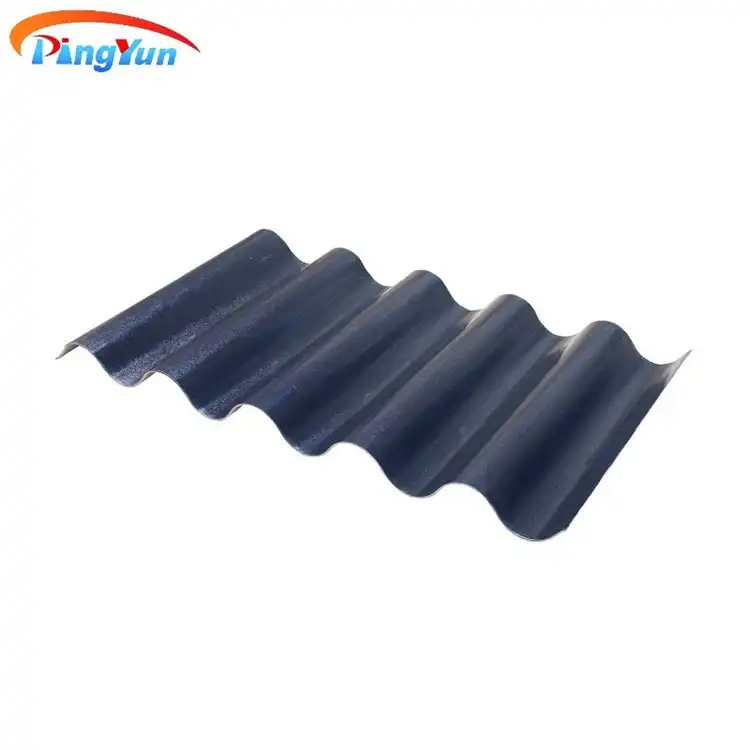
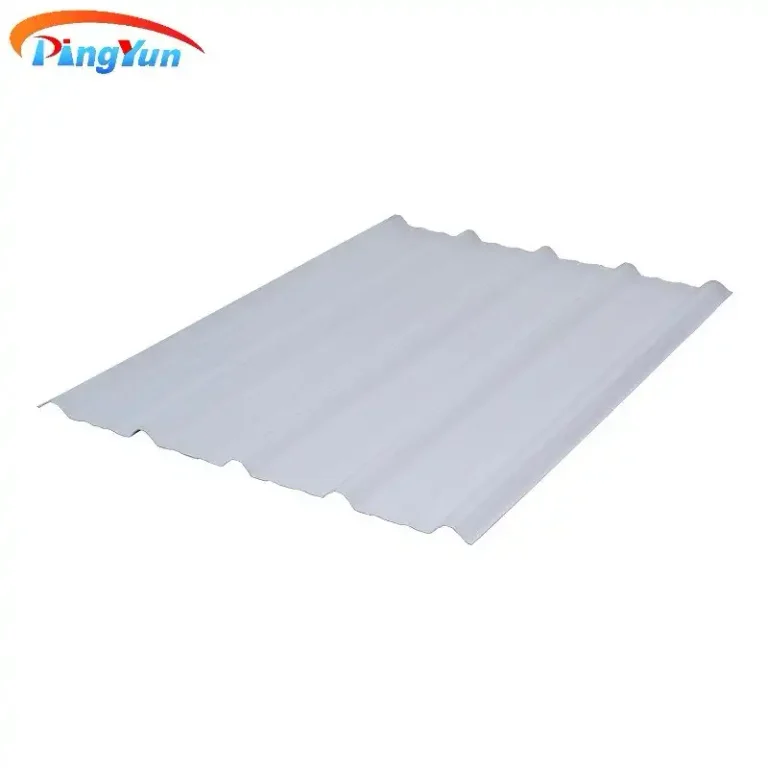
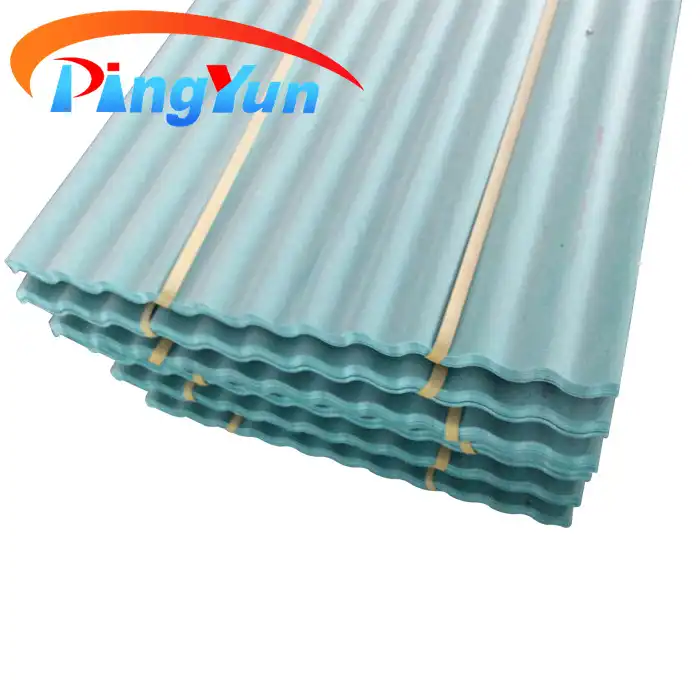
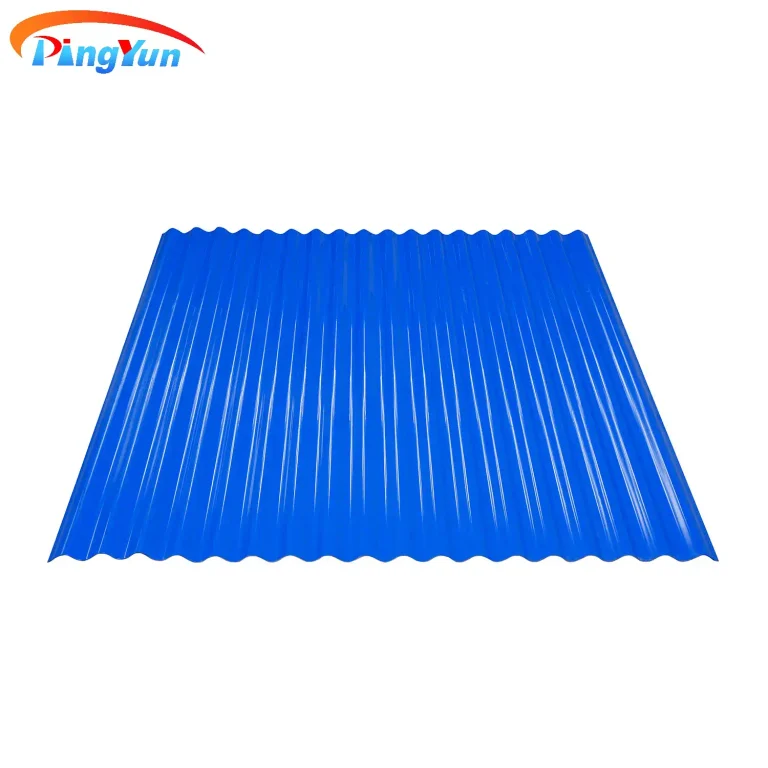
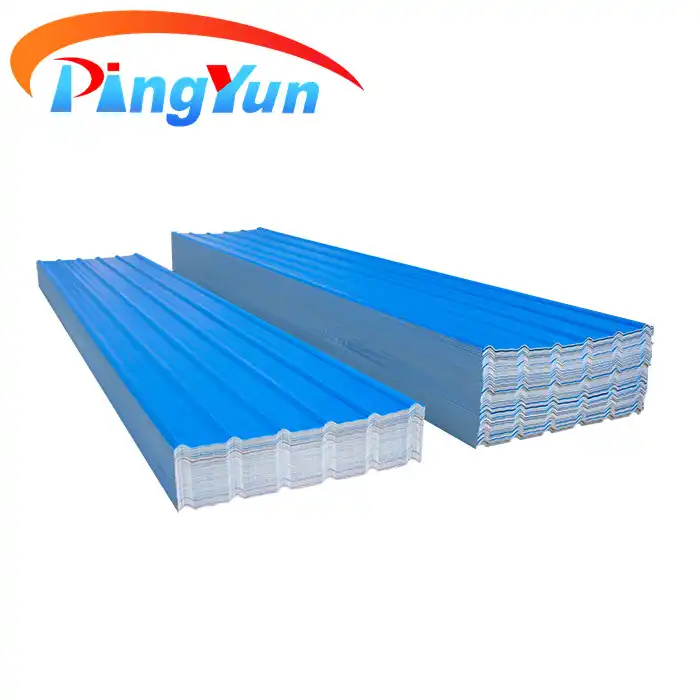
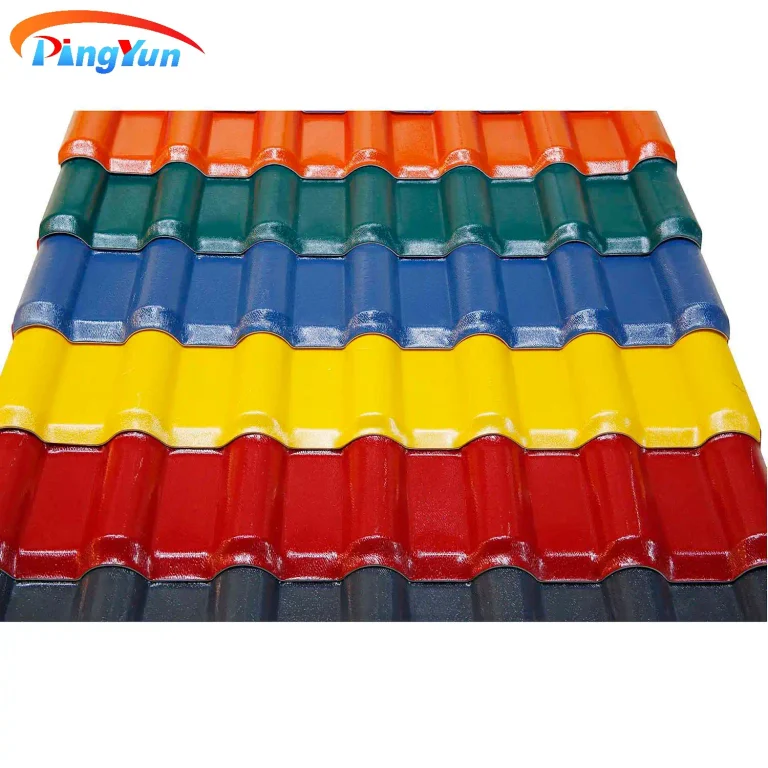
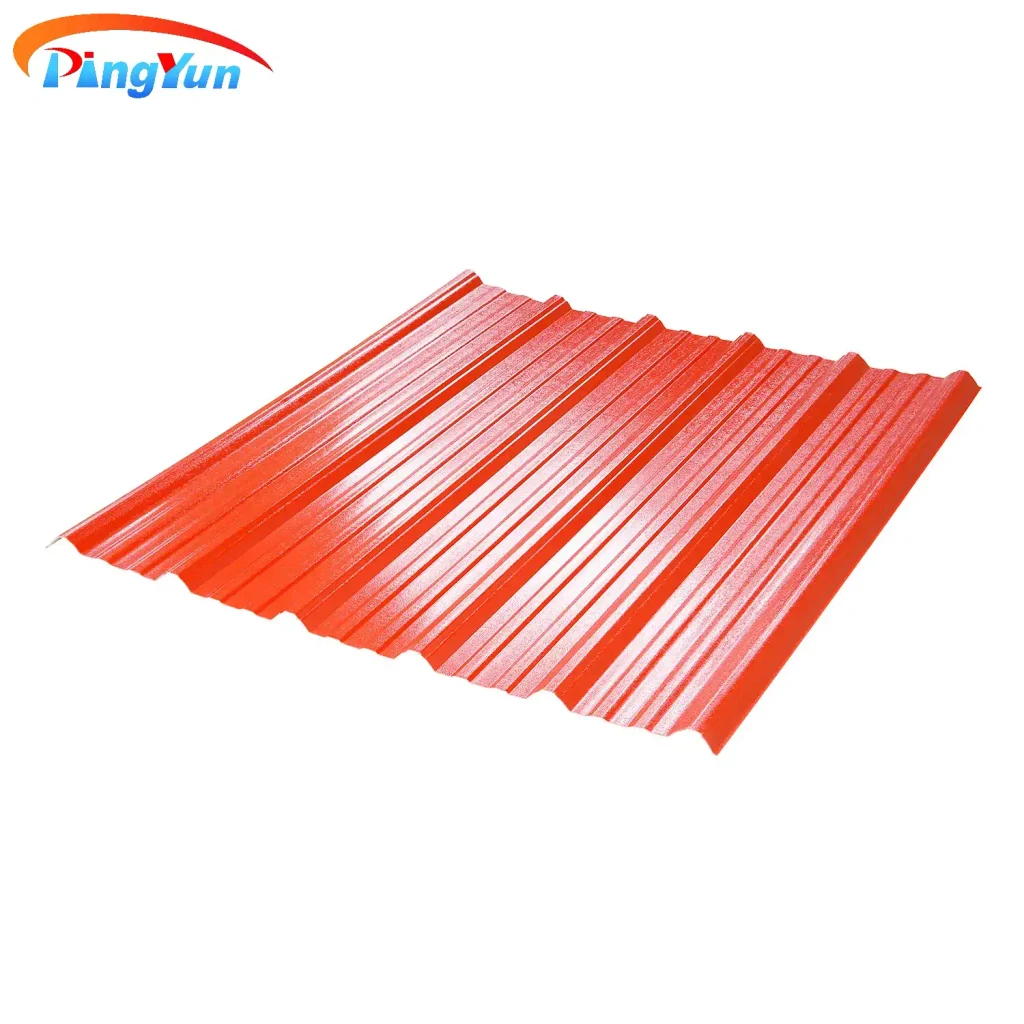
“PVC roofing” can describe several different constructions. A corrugated UPVC sheet may be a single profiled sheet. A PVC roof tile may have a tile-like surface profile. A twinwall hollow PVC sheet may use an internal cavity to change stiffness and heat flow. A translucent PVC roof sheet may be intended as a daylighting insert rather than as the same product as an opaque tile. ASA-PVC generally describes a PVC-based roof product with an ASA weather-resistant surface or layer; it should not be treated as interchangeable with every unmodified PVC or UPVC sheet.
The current Pingyun product navigation separates PVC Roof Tile, Corrugated UPVC Roof Sheet, Twinwall Hollow PVC Roof Sheet, and Translucent Roof Sheet [1][2]. That separation is useful for procurement because the profile, layer construction, color, surface, and intended application may all differ. Ask the seller to identify the exact model, nominal thickness, effective cover width, length options, color, layer structure, and accessory system. “PVC” alone is not enough information for a quotation or a structural review.
Historical catalogue examples show the breadth of the family. Page 3 describes Spanish-style R1050 and Roma-style R1080 as ASA-PVC products, while a translucent R1050 is described separately as clear PVC [4]. Page 7 lists numerous wave and trapezoidal profiles and then presents H885 and H910 as hollow ASA-PVC ThermoRoof examples [5]. These examples demonstrate product differentiation; they do not establish that every current PVC model has the same resin, surface, optical behavior, thermal performance, or warranty.
ASA is also not a magic word that removes the need for verification. It may matter for outdoor color and weathering, but the buyer still needs the exact surface description, any UV-facing side instructions, test reports, compatible fasteners, and current written warranty. Pingyun’s representative directly confirmed the current company policy for this guide: ASA products carry a 20-year warranty and other products a 10-year warranty [9]. Those are stated durations, not a promise about every mode of failure or a substitute for the applicable written terms. The old catalogue’s 30-year language is not the current policy.
Solid, hollow and corrugated PC
Polycarbonate is likewise a family, not a single roof panel. Solid sheet has a continuous section. Hollow or multiwall sheet has internal ribs or cells. Corrugated sheet has a profiled surface and may be solid or may have another internal construction depending on the product. A clear solid PC sheet, an opal twinwall panel, and a corrugated PC sheet can behave differently in daylight, thermal response, drainage, fixing, sound, and movement.
Pingyun’s current PC category presents solid, hollow, and corrugated PC as separate product types [1][3]. The historical New catalogue describes PC corrugated, PC solid, and PC multi-wall lines separately, with different thickness and width ranges [6]. The ranges printed in that old catalogue are useful evidence that the product forms were treated separately at that time; they must not be copied into a present quotation without checking current availability and the exact SKU.
The archived PC brochure also separates solid-sheet and hollow-sheet information. Its page 9 gives a hollow-sheet table by thickness with claimed transmittance and sound-insulation values, alongside a separate list of regular colors; it does not assign a distinct optical value to every color-and-thickness pairing [7]. Those values are associated with the brochure’s described hollow PC sheet table, not automatically with a solid sheet, a corrugated sheet, a different color, a different resin, or a PVC panel. A buyer should request a current datasheet and test report for the selected product rather than use a family-level marketing range as a design value.
PC is often selected for impact resistance and daylighting, but that does not mean every PC roof can be installed with minimal support or left exposed to every chemical. The sheet thickness, profile, span, support spacing, edge restraint, UV treatment, temperature movement, fixing method, and site exposure remain decisive. A material can have a strong reputation and still fail when a roof is poorly supported, incorrectly fixed, or cleaned with an incompatible product.
Why form and material labels are different
Material and form answer different questions. Material concerns the polymer family and its additives or layers. Form concerns how the material is shaped. “Hollow” describes an internal structure; “corrugated” describes a profile; neither word alone identifies the resin. Hollow PVC is not hollow PC. Corrugated PC is not necessarily the same as a flat solid PC panel. A translucent PVC insert is not a PC panel merely because both admit daylight.
This distinction is especially important in mixed roofs. A corrugated opaque PVC roof may be paired with a corrugated translucent insert, while a flat multiwall PC panel may need a different framing and flashing arrangement. The matching dimensions are not just nominal width and thickness. They include crest geometry, pitch, valley shape, lap direction, effective cover, end closure, fastener position, thermal movement, and seal design.
Before comparing price or performance, make a small matrix for each candidate:
| Procurement field | PVC or ASA-PVC candidate | Polycarbonate candidate |
|---|---|---|
| Exact product and current SKU | Required | Required |
| Material and layer construction | PVC, UPVC, ASA-PVC, translucent PVC, or other declared construction | PC solid, hollow, multiwall, corrugated, and declared UV treatment |
| Geometry | Tile or wave profile, crest pitch, effective cover, length | Flat, multiwall, or corrugated geometry and effective cover |
| Optical target | Opaque, translucent, color, target glare level | Clear, opal, tinted, or other color and target glare level |
| Thermal evidence | Exact U-value or thermal test if available; otherwise no assumed ranking | Exact U-value or thermal test if available; otherwise no assumed ranking |
| Structural evidence | Span, support, wind, snow, fixing, and deflection limits | Span, support, wind, snow, fixing, and deflection limits |
| Weather and chemical evidence | Surface, UV, corrosion, and cleaner compatibility | UV layer, chemical compatibility, and cleaner compatibility |
| Fire evidence | Applicable test and classification for exact product | Applicable test and classification for exact product |
| Warranty | Current written terms; ASA period differs from other products | Current written terms for exact product |
This matrix prevents a common procurement error: comparing a premium hollow or surface-treated product in one family with a basic single-layer product in the other and then attributing the difference to the polymer alone.
Which Roofing Needs Should Be Fixed First?
Building use and daylight
Start with the building, not the brochure. A livestock building, workshop, warehouse, carport, greenhouse, school walkway, residential extension, and chemical-processing shelter may all be called “roofing projects,” but they place different demands on the roof. Record whether the roof protects occupied space, stored goods, animals, plants, equipment, or vehicles. Note internal temperature, humidity, ventilation, lighting hours, wash-down practice, airborne chemicals, and the consequences of a leak.
Daylight needs should be described in operational terms. Does the building need enough diffuse light for daytime work, a narrow skylight strip, plant growth, visual comfort, or simply a translucent canopy? Is glare harmful? Will direct sunlight overheat goods, animals, or machinery? Is artificial lighting controlled by daylight sensors? A clear panel may transmit more light but still produce glare and solar heat. An opal or colored grade can change light distribution, but its effect on usable daylight has to be checked for the proposed product and building. The roof design, panel area, orientation, and internal surfaces all affect the result.
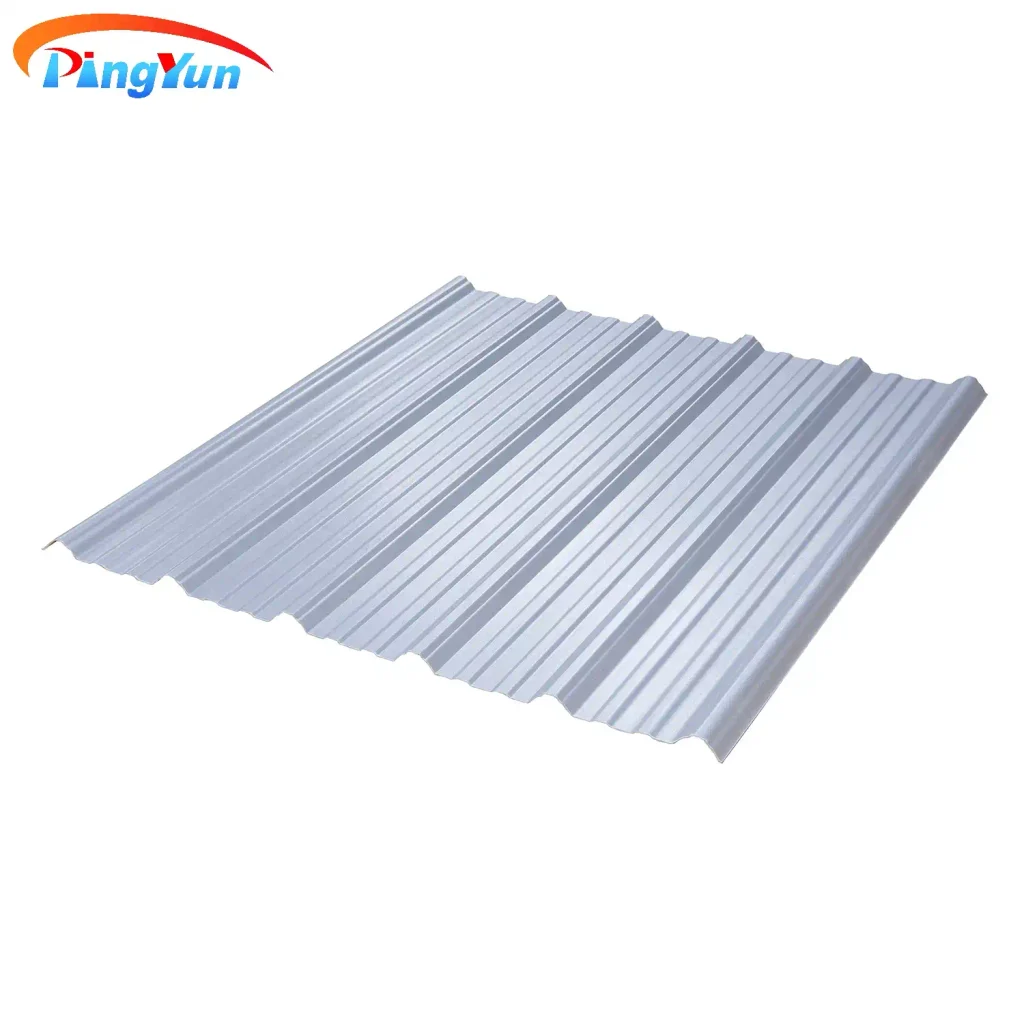
Use a daylight schedule rather than “maximum transparency” as the goal. Include the required illuminated area, acceptable glare, shading, solar-control strategy, color, cleaning access, and replacement plan. The historical PVC catalogue describes translucent R1050 as a clear PVC daylighting product and gives a historical transmission claim [4]. The PC brochure gives a color-dependent transmission range and a hollow-sheet table [7]. These are not a direct comparison because they differ in product family, color, structure, date, and test context. They can prompt a question, but they cannot produce a universal ranking.
If the roof is otherwise opaque, a limited daylighting strip may be more controllable than a fully translucent roof. If the project requires broad diffuse daylight, an appropriately colored hollow PC system may be considered. If the project needs a traditional tile appearance with occasional light entry, a compatible translucent PVC option may be considered. In each case, the candidate must be checked as an installed assembly.
Climate and chemical exposure
Record the external climate and the internal atmosphere separately. External inputs include solar radiation, UV exposure, temperature range, frost, hail, wind, snow, salt spray, dust, and rainfall. Internal inputs may include ammonia, chlorine, acids, alkalis, solvents, oils, detergents, disinfectants, fertilizer vapors, welding fumes, or manufacturing emissions. A panel that performs acceptably in ordinary air may need a specific compatibility review in an aggressive atmosphere.
Do not turn a general “anti-corrosion” description into a blanket chemical-resistance guarantee. Corrosion resistance of a non-metallic sheet may be an advantage in some environments, but the actual result depends on concentration, temperature, exposure time, stress, the surface layer, cut edges, fasteners, washers, sealants, and cleaning chemicals. Ask for a compatibility statement that names the actual chemical, concentration, temperature, and exposure method where the risk is material.
For coastal and high-UV locations, ask which side faces outward, whether a coextruded or coated UV layer is present, and how cutting, drilling, bending, and edge exposure affect protection. For cold climates, confirm impact and movement behavior at the design temperature. For hot climates, check solar absorption, ventilation, thermal expansion, and the effect of trapped heat beneath the panel.
Structure, slope and local approval
A roof sheet is not a structural design. The project engineer or responsible designer must establish the support layout and design actions under the applicable local rules. Provide roof plan, slope, purlin or rafter spacing, edge and corner zones, wind exposure, snow or maintenance load, drainage direction, openings, penetrations, and the desired service access.
The same nominal thickness does not imply the same capacity. Profile depth, rib geometry, internal webs, material stiffness, support spacing, fastener arrangement, temperature, and allowable deflection all matter. A hollow panel can have a useful section depth without being equivalent to a profiled tile. A corrugated sheet may bridge differently from a flat sheet. A strong PC material does not eliminate the need to design for uplift and local washer forces.
Approval requirements are jurisdiction-specific. Confirm required fire classification, reaction-to-fire documentation, roof assembly testing, smoke limits if applicable, energy performance, fall protection, worker access, and product labeling. A claim printed in a historical brochure is not automatically the classification accepted by the authority having jurisdiction. The brochure’s reference to a B1 level under an older Chinese standard is evidence of what the brochure stated, not a current approval for a project in another country [7].
Freeze the design inputs before asking for a firm quote. Otherwise two sellers may quote different effective cover, thickness, support spacing, accessories, and installation assumptions under the same phrase “plastic roof sheet.” That produces a low headline price and a high change-order risk.
How Should Daylight and Optical Performance Be Compared?
Opaque, translucent and clear
An opaque roof controls daylight by blocking direct transmission. It may be preferred where glare, heat gain, privacy, or stored-product protection is more important than daylight. A translucent panel passes and diffuses some light without providing a clear view. A clear grade may admit direct light and allow a view, while glare and solar gain must be assessed using its actual optical data, area and orientation. “Transparent” is therefore not automatically “better.”
Compare the optical system at roof level. Ask for total light transmission, haze or diffusion information where relevant, color coordinates or a clear color description, UV transmission or blocking information, and the test method. Confirm whether the number is measured on a new clean sample, at a particular thickness, and in a particular direction. A surface texture, internal cell wall, tint, dust layer, condensation, and angle of incidence can change the light actually reaching the space below.
The old PVC catalogue’s translucent R1050 example and the PC brochure’s color-dependent PC data should be read as product-specific historical statements [4][7]. They do not support the sentence “PC always transmits more light than PVC” or the reverse. A clear PVC candidate and a dark or opal PC candidate might have different measured transmission, but their ordering cannot be asserted without matching tests. A diffusing panel may affect glare and uniformity, yet visual comfort depends on the installed design rather than color or polymer alone.
Color, UV and test conditions
Color is an optical, thermal, and commercial decision. White, opal, blue, green, brown, gray, and clear sheets do not have the same solar response. A translucent color can reduce glare while changing perceived brightness. A dark opaque roof can absorb more solar energy than a light roof. A UV layer may protect the exposed surface while also changing which side must face the sun.
Request samples large enough to assess appearance under the project’s lighting. A small sample under showroom light can conceal haze, color variation, surface texture, or the way ribs create shadows. Review samples at a low and high sun angle if the roof is a major daylight source. For a distributor, retain an approved reference sample and record its product code, batch information if available, color name, and approval date.
Keep optical claims tied to a test condition. Ask whether the reported value is normal transmission, direct transmission, diffuse transmission, or a marketing estimate. Ask whether the sample includes the full layer construction and whether the stated thickness and color match the quotation. Do not use a range from a general brochure to promise a particular result for a custom color.
Lighting layout
Daylighting should be coordinated with artificial lighting. A roof with a narrow translucent strip may create bright and dark zones. A large clear area may cause glare on screens or polished floors. Diffuse panels can improve visual uniformity, but the required area depends on roof height, internal reflectance, obstruction, orientation, and local climate.
Use a simple room-by-room schedule: floor area, roof area, daylight panel area, target activity, internal reflectance, glare-sensitive locations, and artificial-light controls. If the project has a light-sensitive use, request a daylight or solar study from the design team. Do not use the panel’s nominal transmission as a substitute for the whole-building calculation.
For a mixed PVC and PC roof, compare the visible appearance of both panels from below. Even when the nominal color names match, differences in haze, rib shadow, surface gloss, and aging can make the insert conspicuous. Approve both the daytime view and the view after artificial lights are on.
What About Heat, Condensation and Sound?
Panel versus installed roof
A panel’s thermal description is not the same as the energy performance of an installed roof. Visible-light transmission, solar heat gain and U-value describe different phenomena; another sheet manufacturer explains why they should not be treated as interchangeable design inputs [8]. Heat transfer also depends on the panel construction, thickness, cavities, joints, fasteners, framing, ventilation and interior conditions. Enclosed cavities can contribute to thermal resistance, but a comparison with a single sheet needs data for the exact constructions under comparable conditions; neither result establishes a whole-roof value.
The historical PVC catalogue calls H885 and H910 hollow ASA-PVC ThermoRoof products and includes model-specific thickness, weight, and purlin-distance entries [5]. Those entries show that the product was designed as a hollow roof construction, but they are not current design values for every hollow PVC panel. The PC brochure describes a hollow structure as contributing to thermal insulation and gives a historical table for specific hollow-sheet examples [7]. Neither source permits a cross-family U-value ranking.
Ask for the declared thermal conductivity, thermal transmittance, or resistance only when it is measured or calculated for the exact construction and boundary conditions. Check whether the number covers a panel alone or a roof assembly. Identify the direction of heat flow, air spaces, test temperature, moisture condition, and whether joints are included. For a conditioned building, have the designer compare the complete roof build-up rather than select by a marketing phrase such as “heat insulation.”
Solar heat gain deserves separate attention. A panel can have a low conductive heat flow and still admit substantial solar radiation. Conversely, an opaque roof can block daylight but may become hot at its exterior surface. Compare shading, color, ventilation, insulation, reflective layers, and daylight area together.
Hollow geometry and condensation
Hollow panels have cavities, ribs, and edges that need careful orientation and closure. Condensation depends on indoor humidity, outdoor temperature, panel surface temperature, vapor movement, thermal bridges, ventilation, and leaks. A cavity is not automatically dry, sealed, or condensation-free. If moisture enters a cavity through an unsealed cut edge or an unsuitable closure, appearance and durability may suffer.
Ask how the selected product handles end closure, drainage, perforated or solid tape where applicable, top and bottom orientation, weep paths, and cleaning. Confirm whether the panel is intended for a roof slope and climate with the proposed edge treatment. Do not fill or seal cavities with an unapproved material merely to stop visible moisture; that may interfere with movement or drainage.
PVC hollow and PC hollow panels can look similar from a distance while differing in rib design, edge accessories, and thermal movement. Use the exact manufacturer installation instructions. If no current instructions are available, treat the product as not ready for a final installation decision.
Rain noise evidence
Rain noise is an assembly issue. Roof pitch, panel mass, cavity structure, purlin spacing, fasteners, ceiling lining, insulation, and interior reverberation can all affect the sound heard below. A brochure statement that a hollow PC panel has sound-insulation properties does not establish the indoor noise level in a particular warehouse or workshop [7]. A PVC roof also cannot be declared quiet or noisy without comparable test conditions.
If noise matters, specify the target room, frequency range or rating method, roof build-up, and ceiling condition. Ask for a test report or a calculation that matches the proposed assembly. A site sample or mock-up may be more informative than comparing material names. For livestock, residential, or occupied spaces, coordinate roof selection with acoustic design rather than relying on the panel alone.
How Do Exposure, Weathering and Chemical Compatibility Differ?
UV and aging
Outdoor aging is controlled by more than the polymer name. The exposed surface, UV stabilizer, coextruded cap, pigment, thickness, orientation, temperature, stress, cleaning regime, and local radiation all contribute. A product may retain color while experiencing a different change in gloss, impact behavior, flexibility, or sealing performance. A warranty period is not identical to a guaranteed service life, and a service-life expectation is not identical to a promise that a roof will look new.
The historical PVC catalogue describes the R1050 and R1080 examples as ASA-PVC and uses weathering and color-stability language [4]. It also describes a hollow ThermoRoof product with an ASA surface intended to resist UV [5]. Pingyun’s representative directly confirmed the current policy: ASA products carry a 20-year warranty, while other products carry a 10-year warranty [9]. Buyers must identify whether the quoted SKU is actually an ASA product and obtain the current written warranty. Do not use the old catalogue’s 30-year statement as the current Pingyun policy.
The PC brochure describes a UV layer on its product page [7]. That statement should lead to questions: Is the layer coextruded, coated, or otherwise formed? Which side faces outward? Is the protection continuous after cutting and drilling? Does the current SKU use the same construction? What exposure and color conditions were used in any weathering test? A generic phrase such as “UV protected” is not a substitute for a product-specific datasheet and installation instruction.
For an importer, keep weathering evidence with the exact product record. Record panel type, thickness, color, surface treatment, production date or batch where available, and approved application. If a customer later requests a similar-looking replacement, do not assume it has the same UV layer or warranty category.
Corrosive site conditions
PVC-based roofing is often considered where metal corrosion is a concern, and Pingyun product pages use anti-corrosion language for some PVC roof products [2]. That can be a sensible screening criterion, but “anti-corrosion” should be translated into the actual site chemistry. Ask what is in the air, what is sprayed or washed onto the roof, and what metals remain in the system. The panel may resist an atmosphere while screws, flashings, gutters, cut edges, or support members do not.
PC also requires chemical review. Polycarbonate can be sensitive to some solvents, alkaline cleaners, aromatic compounds, plasticizers, and sealant ingredients, especially under stress. Compatibility depends on concentration, temperature, duration, stress, and the exact formulation. Never approve a cleaning agent merely because it is described as a general-purpose roof cleaner. Request written compatibility confirmation for the panel, sealant, gasket, washer, coating, and any disinfectant used on site.
Agricultural buildings deserve particular care. Fertilizers, pesticides, disinfectants, ammonia, humidity, and biological deposits can combine with heat and stress. A greenhouse may need high daylight and plant-compatible cleaning, while an animal house may need ventilation and resistance to a very different internal atmosphere. A roof selected for an ordinary warehouse should not be copied into those environments without review.
Sealants and cleaners
A roof can fail at an accessory even when the sheet itself is suitable. Sealant chemistry, gasket material, washer design, fastener coating, flashing, ridge closure, and gutter connection must all be compatible with the panel and with one another. Some sealants release chemicals during curing; others lose adhesion under movement or UV. A stiff sealant may restrain thermal movement, while an unsuitable gasket may stain or embrittle a surface.
Ask for the approved sealant and gasket list, curing conditions, surface preparation, bead geometry, and replacement procedure. If the supplier names a generic silicone, obtain its exact product identity and compatibility statement. Do not substitute a locally available product without approval, particularly on PC panels under stress.
Cleaning instructions should specify water temperature, pressure, cloth or brush type, detergent, and prohibited solvents. The roof design should make cleaning possible without walking directly on unsupported sheets. Dirt, algae, and biological deposits can reduce daylight and change the roof surface; cleaning should not create a chemical or mechanical failure.
Which Structural, Fire and Installation Evidence Matters?
Loads and support
Request a structural table for the exact panel and profile. It should state support spacing, load direction, edge conditions, fastener assumptions, allowable deflection, wind uplift approach, and temperature or span limitations. A catalogue’s purlin-distance line is useful only for the listed product and its stated conditions. The historical H885 and H910 entries, for example, list different maximum purlin distances [5]; they cannot be transferred to a different PVC hollow profile or to a PC panel.
The designer should check positive pressure, suction, edge and corner zones, snow, maintenance actions, construction loads, and the weight of any attached equipment. Include openings, rooflights, parapets, valleys, ridges, and penetrations. Thin sheets can be damaged by concentrated loads even when distributed loads appear acceptable. The installation plan should identify where workers may stand and how temporary access is provided.
PC’s impact reputation is not a walking permission. The brochure describes good toughness and impact resistance [7], but a panel can still crack at a hole, deform at a support, or fail around a washer. PVC’s light weight does not remove the risk of local pull-through or wind uplift. Use the manufacturer’s fixing pattern and the responsible engineer’s design.
Fire test scope
Fire claims must be matched to the jurisdiction and assembly. Confirm whether the evidence addresses reaction to fire, resistance to fire, external fire exposure, smoke, droplets, or another requirement. A material classification under one national test method may not be accepted as an equivalent in another country. The exact thickness, color, layer structure, support, orientation, and assembly can affect the result.
The PC brochure refers to a B1 level under GB8624-1997 [7]. That is a historical brochure statement about the described product. It is not a universal current fire classification for every Pingyun PC sheet, and it should not be represented as approval under a different country’s standard. Ask for the current report, its scope, test specimen, date, laboratory, and applicability to the quoted SKU and roof assembly.
Do the same for PVC and ASA-PVC. Do not infer fire performance from the polymer name, a supplier’s general statement, or an old product image. Where a building authority or insurer requires evidence, have the design team review the document before order placement.
Movement, joints and drainage
Plastic roofing expands and contracts with temperature. Long sheets, dark colors, hot climates, and restrained fixings can make movement significant. The installation details should state hole size or movement allowance, fastener type, washer position, lap arrangement, joint spacing, and whether the sheet is fixed through a crest or valley. Follow the product instruction rather than applying a metal-roof detail by habit.
End laps and side laps must shed water under the actual roof slope and wind direction. Do not assume that a PVC corrugation and a PC corrugation share the same crest pitch or lap width. A sealant cannot compensate for an incompatible profile. At ridges, valleys, walls, and penetrations, use compatible flashings and closures that permit movement while maintaining drainage.
A rooflight insert should not block the drainage path of the main roof. Check where water lands after it leaves a panel, whether debris can collect, and whether gutters and downspouts have adequate capacity. Pingyun’s current category structure includes PVC gutters and downspouts [1], but a category listing does not establish that every gutter accessory matches every profile. Confirm the connection details with the selected system.
Can PVC and PC Be Combined on One Roof?
Daylighting insert compatibility
Yes, a mixed roof can be considered, but only as a designed system. An opaque PVC roof with translucent PVC or PC inserts may give a useful balance between weather protection and daylight. The insert must match the main roof’s geometry or be framed as a separate curb or opening. The fact that both materials are plastic, or that both are described as corrugated, does not prove compatibility.
Begin with the section drawing. Compare crest pitch, profile height, sheet width, effective cover, lap direction, thickness, bend radius, thermal movement, and the positions of fasteners. Then compare surface temperature, color, optical appearance, UV-facing side, and expected aging. A visually acceptable sample can still leak if the lap and closure are wrong.
Ask who is responsible for the interface. The main-sheet supplier may warrant its own sheet but not a third-party insert or custom transition. The daylighting supplier may require a proprietary profile. The contractor may be asked to fabricate a flashing that neither manufacturer has approved. Put the interface detail and warranty responsibility into the purchase documents.
Profile, edge and accessory matching
A mixed roof requires more than a compatible panel width. Check ridge caps, barge flashings, valley gutters, end closures, foam fillers, gaskets, fasteners, washers, sealants, and insulation interfaces. Confirm that the accessory material will not stain, soften, crack, or chemically attack either panel. Check whether a closure needs ventilation or a drainage path.
Make a physical mock-up for a non-standard combination. Include the main roof panel, insert, laps, fastener, washer, closure, flashing, and sealant. Test water flow at the proposed slope and inspect movement after temperature cycling where practical. Record the approved orientation and installation sequence.
Do not mix product names casually. Historical R1050 information illustrates why: an ASA-PVC R1050 and a clear PVC R1050 appear as different material descriptions despite sharing a style number [4]. A shared profile label does not mean the same material, warranty, or fixing detail. Likewise, a current category may list hollow PVC and PC products separately [1]. Treat each SKU as a separate controlled component.
How Should Importers Compare Quotes and Warranties?
Same-scope RFQ table
Send each seller the same roof information and request the same fields. A useful RFQ should include:
- Project location, roof use, climate, chemical exposure, and local approval requirements.
- Roof plan, slope, dimensions, openings, edge conditions, purlin spacing, and design loads.
- Required opaque and daylighting areas, color, glare preference, and internal lighting goal.
- Exact product code, material, layer construction, profile, nominal thickness, effective cover, and length.
- Weight per area, packing method, maximum transport length, and permissible cutting or drilling method.
- Fasteners, washers, gaskets, sealants, closures, ridge and edge accessories, gutters, and flashings.
- Support and fixing assumptions, installation guidance, and any design responsibility retained by the seller.
- Current datasheet, test reports, safety information, fire evidence, chemical-compatibility evidence, and warranty.
- Unit price basis, minimum order, sample policy, production lead time, packaging, freight terms, insurance, duties, and payment terms.
- Replacement, shortage, color variation, damage-on-arrival, and claim procedures.
Ask for effective coverage, not only gross sheet width. A low price per gross square meter may become expensive after laps, trimming, closures, special flashings, and freight are included. Compare the delivered and installed system cost under the same measurement basis.
Samples, delivery and acceptance
Pingyun’s representative confirmed that samples are free while the customer pays freight [9]. State this clearly in the RFQ and confirm whether the sample is representative of the quoted production. Ask who pays for custom color or profile samples, whether sample size is sufficient for installation testing, and how sample approval affects later claims.
Define acceptance before production. Agree on profile, color, thickness tolerance, effective cover, surface defects, edge condition, packaging, labeling, and permitted variation. Photograph packaging and inspect for cracks, abrasion, distortion, wet cartons, and missing accessories on arrival. Record lot or batch information where available. Do not install damaged or visibly non-conforming material before notifying the seller.
For an importer, the shipping document should identify the actual product family and SKU rather than use only “plastic sheet.” Packing lists should separate PVC, ASA-PVC, translucent PVC, solid PC, hollow PC, and corrugated PC. Mixed cartons should be marked so that installation crews do not substitute panels by appearance.
Warranty versus service life
Warranty and service life answer different questions. A warranty is a contractual commitment subject to its written scope, start date, exclusions, claim procedure, installation requirements, and remedy. Service life is an expectation based on design, exposure, maintenance, and evidence. Neither should be summarized as “will last exactly X years.”
Pingyun’s representative directly confirmed a 20-year warranty for ASA products and a 10-year warranty for other products [9]. Confirm the selected SKU’s ASA status and obtain the current written document. Do not cite the historical 30-year language from the 2018 catalogue as current policy [4]. Do not imply that a 20-year warranty covers every accessory, installation error, storm event, chemical exposure, color change, or consequential loss unless the written terms say so.
The buyer should ask:
- What product and surface construction does the warranty identify?
- When does the term start: shipment, delivery, installation, or another date?
- What defects or performance failures are covered?
- What installation, slope, support, UV orientation, and maintenance conditions apply?
- What events are excluded, including chemical attack, abnormal weather, impact, unauthorized modification, and incompatible cleaning?
- What evidence must accompany a claim?
- Is the remedy repair, replacement, refund, or another measure, and how are labor and freight handled?
A seller should not be asked to promise a warranty for a roof assembled from unapproved products. Mixed PVC and PC interfaces need an explicit written allocation of responsibility.
Which Choice Fits Common Project Scenarios?
Warehouse or canopy
For an opaque warehouse or canopy, start with the required thermal, daylight, structural, and corrosion performance rather than with a transparent material preference. A profiled PVC or ASA-PVC system may be a candidate when a lightweight, opaque, corrosion-conscious roof is suitable and the exact profile meets the load and fire requirements. A solid or corrugated PC system may be a candidate where daylight, impact resistance, or a transparent appearance is important.
If the warehouse needs a few daylight strips, compare an opaque PVC roof with compatible translucent inserts against a broader PC daylight system. Check glare, solar gain, rooflight area, movement, and interface details. For a canopy, inspect edge uplift and water drainage carefully; apparent simplicity does not reduce wind exposure.
The decision remains conditional. Without current same-condition load, fire, optical, and chemical evidence for the proposed SKUs, a buyer should not declare either material universally superior.
Greenhouse or daylighting roof
A greenhouse or daylighting roof usually prioritizes light distribution, plant or occupant comfort, ventilation, condensation management, UV behavior, and cleaning. PC may be considered where a specified hollow or solid construction provides the desired diffusion and structural arrangement. A translucent PVC product may be considered where its optical behavior, profile, and environmental compatibility meet the design.
Do not use maximum transmission as the only target. Crops, shading systems, ventilation, internal humidity, seasonal sun angles, and heat removal all matter. Request optical data for the chosen color and structure and verify how the UV layer affects the plant environment. Confirm that cleaning agents and agricultural chemicals are compatible.
A greenhouse roof also needs a condensation and edge strategy. Check cavity orientation, closures, drainage, ventilation, and replacement access. Use a mock-up if the roof combines profiles or materials.
Aggressive environments
In a coastal, agricultural, wastewater, chemical, or industrial environment, first map the exposure. PVC or ASA-PVC may be shortlisted where its current product evidence addresses the atmosphere and the support/accessory system can also resist it. PC may be shortlisted where its impact, daylight, or geometry advantages are needed and a chemical-compatibility review supports the actual chemicals and cleaners.
Do not infer that a non-metallic roof makes the entire roof corrosion-proof. Fasteners, flashings, purlins, gutters, and sealants can remain the weak points. Ask for a written compatibility review and select maintenance procedures before order placement. If the chemistry is uncertain, provide a sample to the manufacturer or an independent laboratory and document the exposure assumptions.
Preguntas frecuentes
Can a translucent PVC roof sheet replace polycarbonate?
Sometimes, but not by material name alone. Compare the exact PVC and PC products for light transmission, diffusion, solar behavior, impact, span, UV exposure, chemical compatibility, fire evidence, profile, and warranty. A translucent PVC sheet may be suitable for a compatible daylighting strip; a PC sheet may be better for a specified solid or hollow assembly. Obtain current data for both exact SKUs.
Is hollow PVC the same as hollow PC?
No. “Hollow” describes internal geometry, not polymer identity. Hollow PVC and hollow PC may differ in ribs, stiffness, movement, optical performance, edge treatment, chemical behavior, and accessories. They must be quoted, tested, and installed as separate products.
Can corrugated PVC and corrugated PC be mixed directly?
Not unless the profile and interface have been verified. Corrugation is a shape description, not a universal standard. Check crest pitch, height, effective cover, laps, fasteners, washers, movement, closures, and flashings. Use an approved transition or separate framing when direct lapping is not supported.
Does a higher light-transmission number mean a better roof?
Not necessarily. More transmission can bring glare and solar heat. Lower transmission or greater diffusion may improve visual comfort. Compare color, haze, orientation, roof area, shading, internal reflectance, and the building’s actual task. Use comparable test conditions and an installed daylight assessment.
Does a hollow panel automatically provide good insulation?
No. Hollow geometry can change heat flow, but roof performance also depends on thickness, cells, joints, support, ventilation, insulation, solar exposure, and indoor humidity. Request an exact panel or assembly thermal value and do not transfer a hollow PC claim to hollow PVC, or vice versa.
How should I verify an ASA warranty?
Ask the seller to identify the exact quoted SKU as ASA and provide the current written warranty. Confirm the term, start date, covered defects, installation conditions, exclusions, claim process, remedy, and treatment of accessories and labor. Pingyun’s representative confirmed 20 years for ASA products and 10 years for other products [9]. The historical 30-year catalogue language is not current policy.
Can I walk on PVC or PC roofing?
Never assume that you can. Many sheets are not designed for concentrated foot traffic, and a profile or hollow panel may crack, deform, or pull out at a fixing. Provide designed walkways, crawl boards, edge protection, and fall protection as required by local rules. Follow the exact installation manual and site safety plan.
Can I use any silicone or roof cleaner?
No. Sealants, gaskets, detergents, solvents, and disinfectants must be checked against the exact panel and surface layer. PC in particular should not be exposed to an unverified chemical under stress. Obtain a named compatible product and follow curing and cleaning instructions.
Do catalogue dimensions become current product guarantees?
No. Historical dimensions can help identify product families and structures, but current availability, tolerance, formulation, testing, and warranty must be confirmed for the quotation. A historical brochure is not a current certificate or a substitute for project-specific design evidence.
Are samples really free?
Pingyun’s representative confirmed that samples are free while customers pay freight [9]. Confirm sample size, courier cost, customization charges, representativeness, and whether the approved sample is tied to the production SKU before placing a bulk order.
Which product should I choose for a mixed opaque and daylight roof?
Freeze the opaque panel, daylight panel, profile, support spacing, color, and interface detail first. Then compare the complete assemblies for drainage, movement, optical appearance, chemical exposure, fire, structural loads, and warranty responsibility. If the two manufacturers do not approve the interface, use a designed curb or separate framing rather than improvising a lap.
Conclusion
PVC and polycarbonate roofing should be chosen by project requirements and exact system evidence. PVC or ASA-PVC can be a sensible candidate for an opaque, profiled, lightweight, or corrosion-conscious roof when the selected product’s structure, exposure, fire, load, and installation evidence are adequate. Polycarbonate can be a sensible candidate where a specified solid, hollow, or corrugated panel provides the required daylight, impact, or visual performance. Translucent PVC can also serve a daylighting role; it is not automatically equivalent to PC.
The next procurement step is to freeze two named candidates, one PVC-family system and one PC-family system where comparison is useful. Request current datasheets, test reports, profile drawings, support and fixing tables, accessory details, chemical compatibility, fire evidence, optical data, delivery terms, samples, and written warranty terms. Compare effective installed cost and risk, not only polymer price. Confirm ASA status before applying Pingyun’s directly confirmed 20-year ASA warranty; the policy for other products is 10 years [9]. Keep the historical 30-year catalogue statement in its historical context.
A defensible decision is one that a designer, contractor, importer, and end customer can all trace back to the same SKU, same roof boundary, same test conditions, and same written responsibilities. If those inputs are missing, the correct choice is not a confident material ranking. It is to obtain the missing evidence before the order or design is locked.
References
[1] Pingyun International, “Products,” product category page. https://www.pingyungroup.com/products.html
[2] Pingyun International, “PVC Roof Tile,” product category page. https://www.pingyungroup.com/PVC-Roof-Tile-pl3880300.html
[3] Pingyun International, “Polycarbonate Sheets,” product category page. https://www.pingyungroup.com/Polycarbonate-Sheets-pl3379300.html
[4] Pingyun International, PINGYUN New catalogue 201804.pdf, p. 3, historical Synthetic Resin Roof Tile and Translucent R1050 descriptions.
[5] Pingyun International, PINGYUN New catalogue 201804.pdf, p. 7, historical profile list and PVC Hollow Thermo Roof descriptions.
[6] Pingyun International, PINGYUN New catalogue 201804.pdf, p. 9, historical PC corrugated, solid, and multi-wall product descriptions.
[7] Pingyun International, archived Polycarbonate Sheet brochure in the supplied Pingyun AI library (original PDF title recorded in the separate Chinese source audit), p. 9, historical product features and separate solid/hollow PC specifications table.
[8] Palram, “The Importance of Understanding Solar Properties in Architecture.” Used only for the distinction between visible-light transmission, solar heat gain and U-value; its product data do not describe Pingyun sheets. https://www.palram.com/blog/construction-architecture/the-importance-of-understanding-solar-properties-in-architecture/
[9] Direct company-policy confirmation provided by the Pingyun representative in the user conversation: ASA products carry a 20-year warranty; other products carry a 10-year warranty; samples are free while customers pay freight. The confirmation does not specify coverage, exclusions, start dates, remedies or current SKU eligibility.