Should You Choose PVC Roof Sheets or Metal Roofing?
Both PVC roof sheets and metal roofing can be the right answer, but neither wins by material name alone. Choose the system whose exact profile, support spacing, fixing pattern, drainage details, fire evidence, and written terms fit the building and its climate. PVC merits investigation where corrosion exposure, load, daylight or acoustic requirements matter; a specified steel or aluminum system likewise deserves assessment against structural, fire, appearance and local construction requirements. None of those outcomes follows from the material name alone. Compare a named PVC or ASA-PVC model with a named metal panel and a complete bill of materials. The decision should follow site evidence, not a generic claim that one material is always better.
Table of Contents
- What Exactly Is Being Compared?
- Which Specifications Must Be Matched Before Comparing Prices?
- How Does the Site Environment Change the Choice?
- What Can Be Said About Temperature, Daylight and Noise?
- How Should Load, Fire and Local Rules Be Verified?
- Which Installation Details Affect Both Options?
- How Do Buyers Compare Complete Quotes and Written Terms?
- Which Situations Favor Further Investigation of Each System?
- FAQ
- Conclusion
- References
A roof is not a sheet in isolation. It is a weather boundary assembled from panels, laps, fasteners, flashings, closures, gutters, penetrations, supporting members, insulation, ventilation and workmanship. A credible comparison therefore starts by fixing the project boundary. If one quotation covers only sheets and the other includes flashings, delivery and installation, the lower number has no useful meaning. The same is true of a weight, span, warranty period or thermal statement that belongs to a different profile or assembly.
This guide is written for importers, distributors, contractors and project buyers who need to turn a broad material question into a documented purchasing decision. Pingyun’s current website separates PVC roof tiles, corrugated UPVC roof sheets, twinwall hollow PVC sheets, polycarbonate sheets, translucent sheets and FRP sheets into different categories [1]. Those categories are not interchangeable. Metal roofing is also not a single product: coated steel, aluminum, zinc-coated steel, aluminum-zinc coated steel and stainless steel can have different design, compatibility and maintenance requirements. The metal discussion below is industry guidance, not a Pingyun metal product specification.
What Exactly Is Being Compared?
Pingyun PVC, UPVC and ASA-PVC families
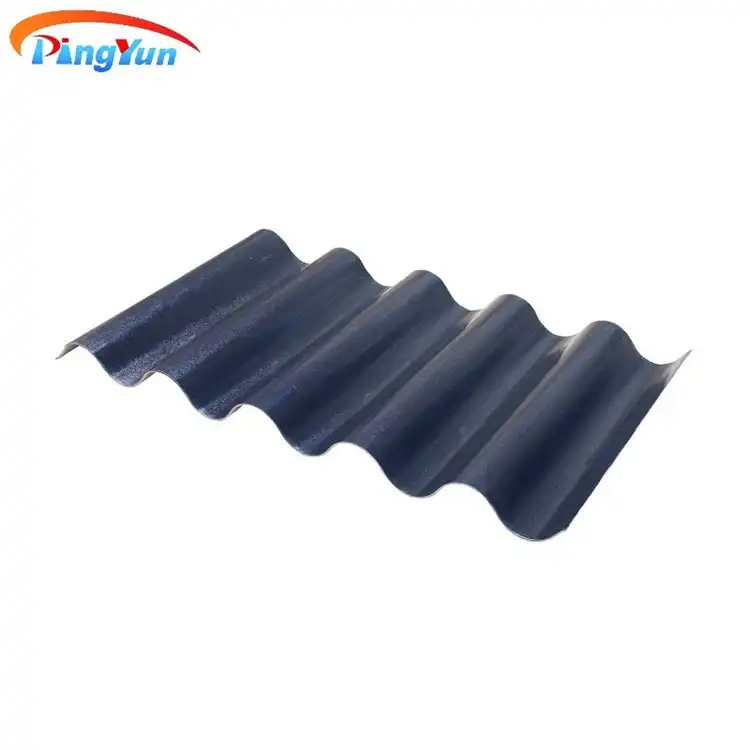
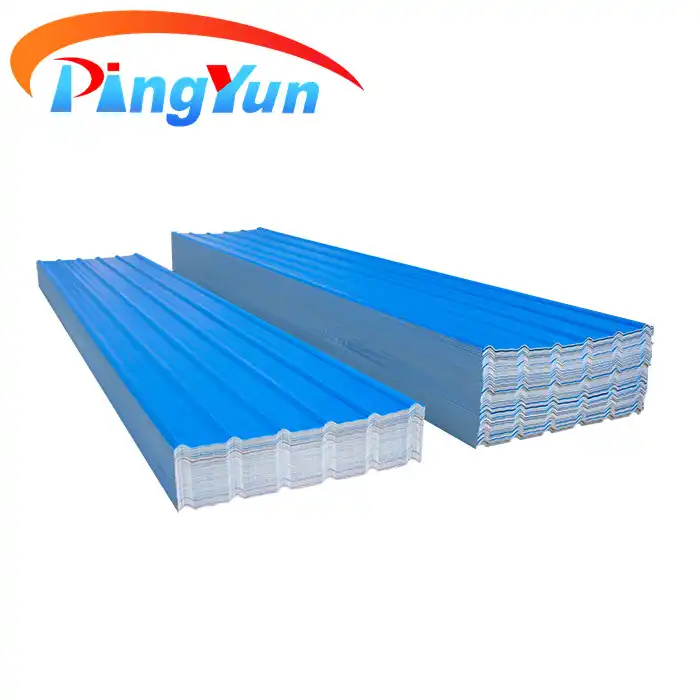
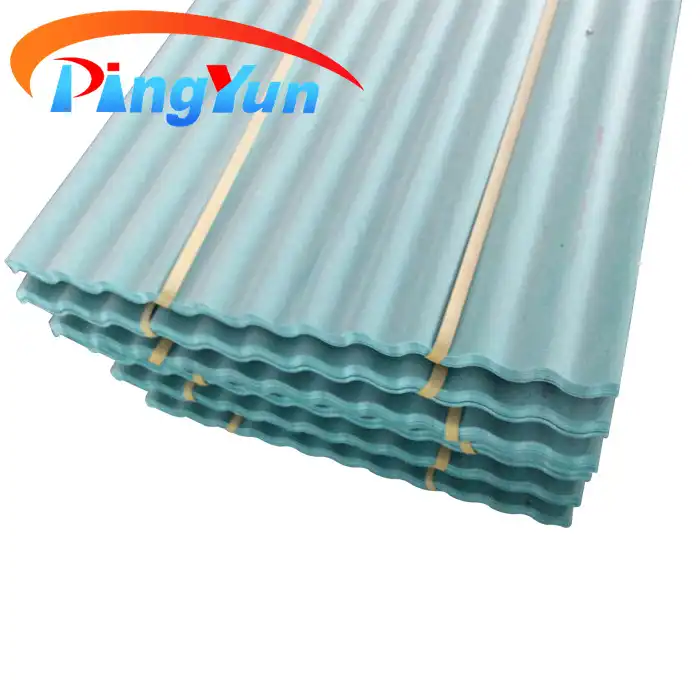
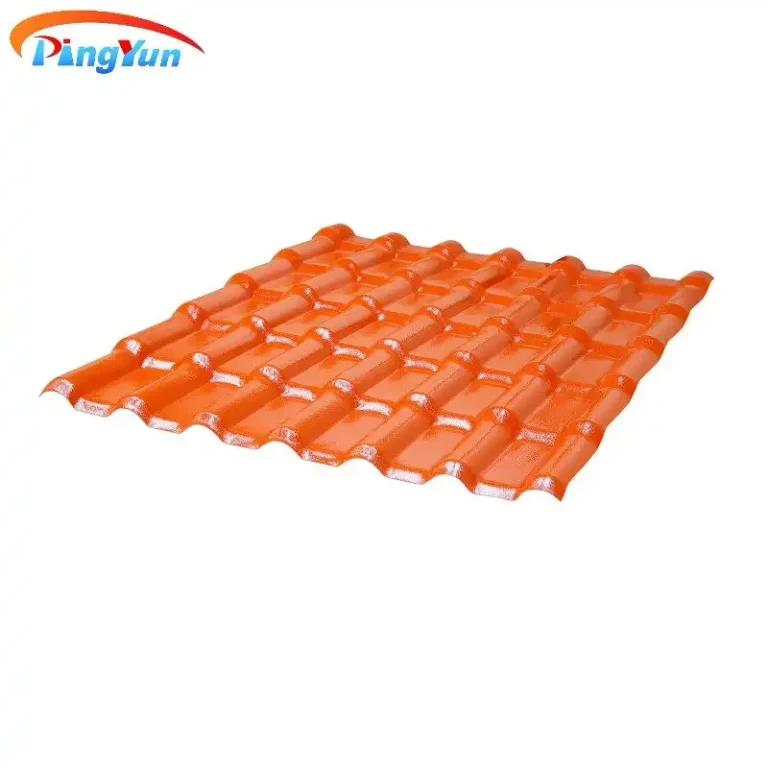
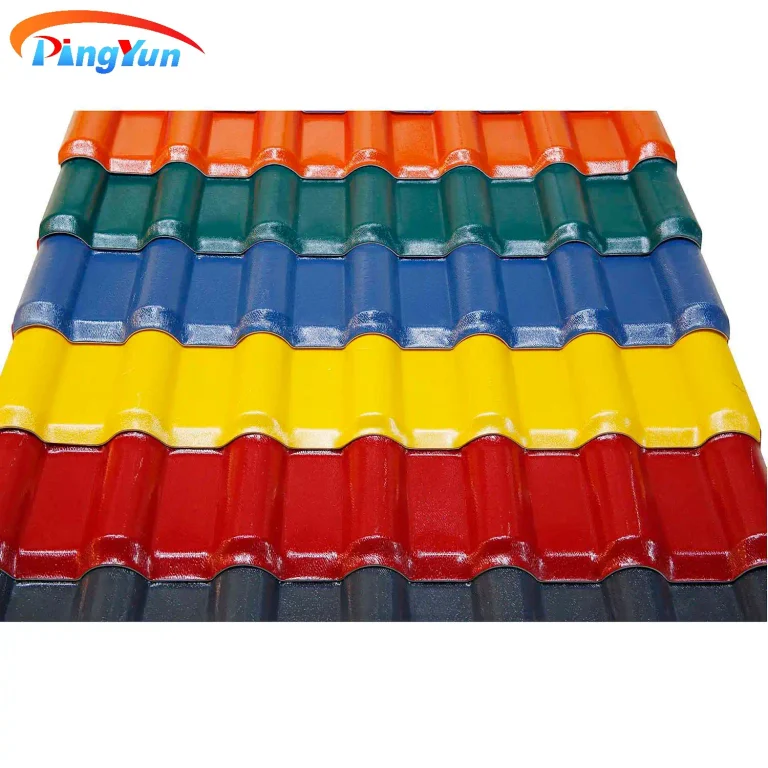
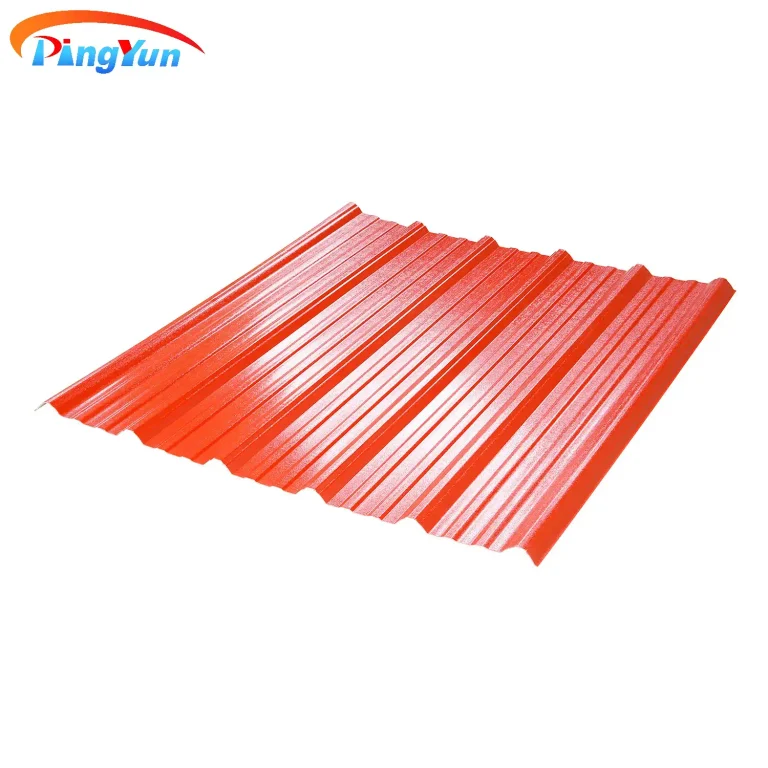
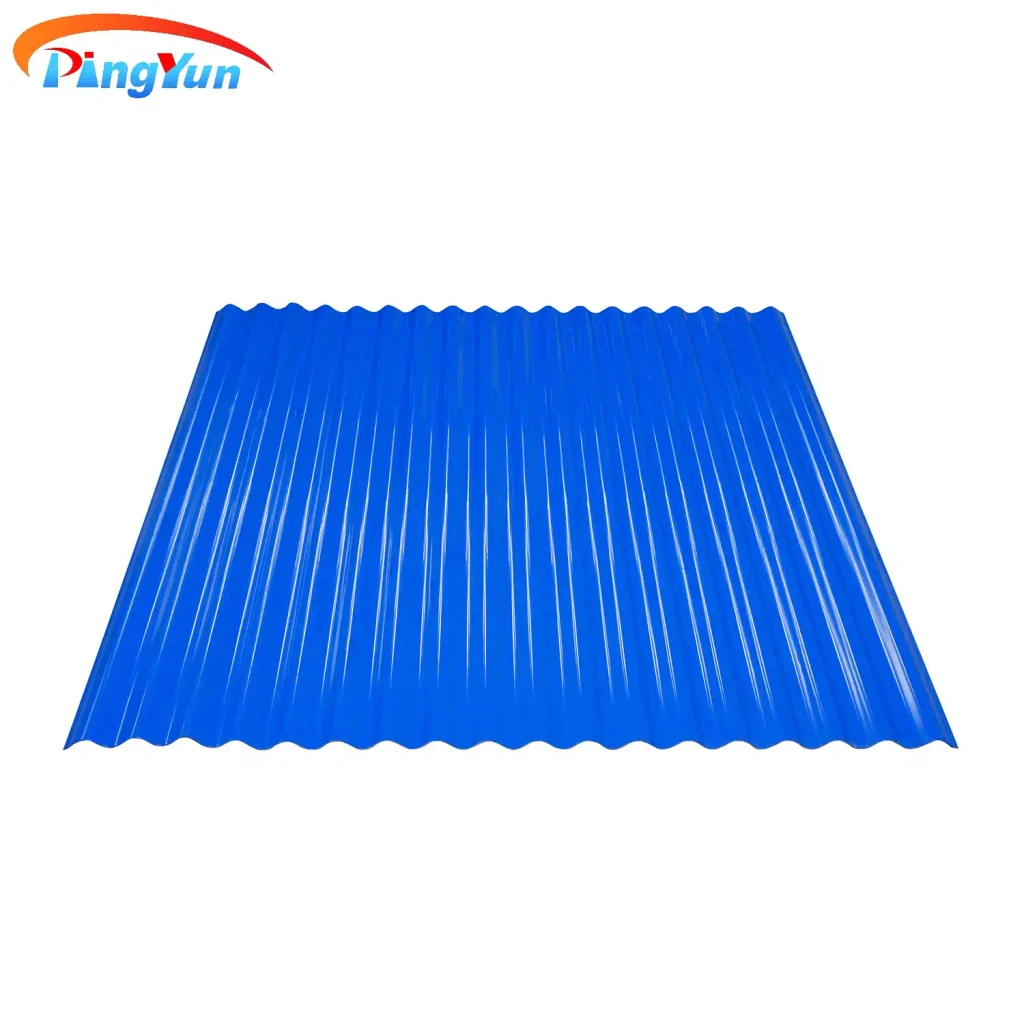
The phrase PVC roof sheet can conceal several different constructions. A solid corrugated UPVC sheet, a trapezoidal UPVC sheet, a tile-shaped ASA-PVC sheet and a hollow twinwall PVC panel do not have the same geometry or evidence package. The live Pingyun product navigation identifies Spanish and Roma PVC roof tile groups, wave and trapezoidal UPVC roof sheets, and hollow PVC roof sheets as separate families [1][2]. A buyer should request the current product data sheet rather than infer today’s specification from a model name seen in an old catalogue.
The historical PINGYUN New catalogue 201804 provides useful examples of that variety. Its page 3 shows R1050 and R1080 as ASA-PVC examples and separately shows a translucent R1050 in PVC. Page 5 shows UPVC examples including R101 and T1130, plus a four-structure illustration. Page 7 lists wave and trapezoidal profiles and gives historical examples of hollow ASA-PVC designs. These pages demonstrate why “PVC” is too broad for a purchase order. They do not establish current dimensions, current loading, current production availability or current commercial terms.
ASA is a surface or material designation that must be tied to the quoted model and written specification. Do not assume that every ordinary UPVC sheet has an ASA layer. The Pingyun representative directly confirmed that only ASA products carry a 20-year warranty, while other products carry a 10-year warranty; the applicable written terms remain to be identified for the quoted model [5]. That statement does not turn a non-ASA UPVC sheet into a 20-year product, and a warranty is not the same thing as a guaranteed service life. Ask the supplier to identify the exact ASA model, warranty scope, exclusions, remedy and start date in writing.
The old catalogue also contains historical marketing statements and tables. They can help a buyer recognize profile families, but they should not be used to carry forward old promises. In particular, do not use its historical 20-year or 30-year promotional language as a current non-ASA or general Pingyun commitment. Do not copy old thickness, weight, cover width, support spacing, daylight transmission, loading or container quantities into a current quotation unless the supplier confirms that they apply to the exact current model and revision.
Polycarbonate and FRP require a separate boundary. Pingyun lists polycarbonate sheets and FRP transparent roof sheets alongside PVC categories [1], but a polycarbonate daylight sheet is not evidence for a PVC sheet, and an FRP sheet is not evidence for either PVC or metal. If a roof includes a translucent strip, specify its material, profile, location, fire evidence, fixing method and replacement expectation separately from the opaque roof panels.
Coated steel and aluminum are not one product
Metal roofing should be named by substrate, coating, profile and finish. “Metal roof” might mean a painted galvanized steel panel, an aluminum panel, a zinc or aluminum-zinc coated steel product, stainless steel, or another system. These materials differ in stiffness, thermal movement, surface chemistry, fastener compatibility, availability and local approval documents. Even within one substrate, gauge, rib geometry, coating system, paint finish, seam design and support spacing change the result.
A metal supplier should state the base metal and coating system, not merely provide a color name. The quotation should identify whether the panel is exposed-fastener, concealed-fastener, standing seam, tile profile or another design. It should also state whether the panel is intended as the weather layer over purlins, over a deck, over insulation, or as part of a tested roof assembly. A metal panel’s bare material properties do not describe the performance of a completed roof.
The Metal Construction Association warns that chemically contaminated water, trapped moisture and galvanic reaction between dissimilar metals can accelerate corrosion in roof installations [4]. That is a reminder that metal selection and detailing are linked. It is not a reason to assume every metal roof corrodes quickly, nor a reason to assign one universal metal life. A compatible, correctly detailed system in one setting cannot be represented as proof for every coating, climate or interface.
What belongs in each roof package
Define both options using the same project schedule. The package should include the primary sheets or panels; ridge, hip, verge, eave and valley pieces; sidewall and headwall flashings; closures and sealants; gutters and downpipes where included; fasteners, washers and clips; insulation and underlay; translucent panels; trims around skylights and equipment; delivery, unloading and storage; installation labor; access equipment; waste allowance; inspection; maintenance instructions; and warranty documents.
Also record the building geometry and exposure assumptions. Required inputs include roof plan dimensions, slope, roof shape, support type and spacing, purlin or deck material, design wind, snow, rain and hail conditions, internal pressure, temperature range, coastal or industrial exposure, chemical releases, drainage route, rooftop equipment, access needs and local code jurisdiction. If an input is unknown, mark it as an open design item rather than allowing each bidder to make a different assumption.
A roof that mixes materials needs an interface schedule. For example, a PVC roof with metal flashings, gutters or fasteners still has metal components that need compatible selection and maintenance. A metal roof with translucent strips has interfaces where movement, lap sealing, fastener choice and water runoff need review. The person comparing bids should ask who designs each interface and who owns the risk if a component supplied by another trade invalidates a warranty.
Which Specifications Must Be Matched Before Comparing Prices?
Overall and effective cover width
Overall width is the physical width of a sheet. Effective cover width is the width remaining after side laps and other overlap. The number of sheets needed depends on effective coverage, not the headline width. End laps, cuts, valleys, hips, penetrations and waste also affect the purchased quantity. A buyer should require both overall and effective cover width for the exact current profile and should ask how the bidder calculated the quantity.
A profile code alone is not enough. Historical catalogue pages show that different profiles and materials can sit under similar naming conventions. The page 3 R1050 example, for instance, distinguishes an ASA-PVC roof tile from a translucent PVC example even though the style identifier is similar. The page 5 R101 and T1130 comparison is historical promotional material and cannot substitute for a current drawing or installation manual. The correct comparison is two drawings, two bills of quantities and one agreed roof geometry.
Use a common takeoff sheet with these fields:
| Item | PVC or ASA-PVC bid | Metal bid | Buyer check |
|---|---|---|---|
| Exact manufacturer and model | Named current model | Named current model | No generic material label |
| Overall sheet or panel width | Supplier value | Supplier value | Confirm drawing revision |
| Effective cover width | Supplier value | Supplier value | Include side-lap convention |
| Length and end-lap rule | Supplier value | Supplier value | Check transport and thermal movement |
| Thickness or gauge | Exact product value | Exact product value | Do not compare unlike measures |
| Profile and finish | Drawing and finish | Drawing and coating | Tie color to system |
| Quantity and waste | Takeoff | Takeoff | Same roof geometry |
| Accessories | Full list | Full list | Include trims and closures |
The table is a procurement control, not a cross-material scorecard. A thicker plastic sheet is not automatically equivalent to a particular metal gauge, and a greater nominal width is not automatically a lower installed cost. Effective coverage, structural design, joints and labor all matter.
Panel, finish and corrosion exposure
Request the product composition and finish in terms that can be checked. For a PVC offer, ask whether the sheet is solid, hollow, multilayer or co-extruded; identify the material designation; identify any ASA surface; state color and surface finish; and provide the current technical data sheet. For a metal offer, identify substrate, coating, paint system, profile, thickness or gauge, and the manufacturer’s exposure limitations.
Do not turn a general anti-corrosion phrase into a site-specific approval. PVC itself does not rust, but roof performance still depends on sealants, fasteners, flashings, gutters, supporting members, airborne contaminants, heat, impact and drainage. Some chemical environments can damage plastics, and a supplier’s generic statement cannot replace compatibility evidence for the actual substance and concentration. Ask for a chemical-resistance statement or test evidence relevant to the process, washdown chemicals, fumes and cleaning agents at the site.
For a metal roof, exposure classification and coating choice require equal discipline. Salt, industrial pollutants, standing water, aggressive condensate, masonry dust and incompatible runoff can damage a coating or substrate. The MCA bulletin specifically describes chlorides in seawater or de-icing salt as strong electrolytes and discusses contaminated water, condensate, copper runoff and alkaline materials as risks to particular metal systems [4]. These are reasons to ask the panel manufacturer for an approved material and detail, not reasons to assign a universal corrosion score.
Support, wind and snow data
Every bidder needs the same structural design inputs. Provide support spacing, purlin orientation, edge and corner zones, roof slope, design pressure, suction, snow load, maintenance load, hail requirement where applicable, and any imposed equipment load. Ask for a span or load table for the exact profile, thickness, fixing pattern and support condition. A load table without its test method, limit state, deflection criterion and fastening assumptions is incomplete.
The historical catalogue’s page 7 gives purlin spacing for two hollow ASA-PVC examples, but that is historical product information, not permission to use the same spacing for another profile or a current project. The page 5 table also contains historical weights and dimensions for R101 examples, but they should not be transferred to a current purchase without written confirmation. These examples illustrate the level of detail a buyer should request; they are not a substitute for project engineering.
Ask the metal bidder for equivalent information. A metal panel can be strong in one direction and vulnerable to local buckling, fastener pull-out, clip movement or seam behavior in another. A roof assembly can fail at an edge, lap, penetration or connection even when the sheet itself appears robust. The structural engineer should verify the supporting frame and the panel system together.
For fair pricing, each bidder should state which design work is included. “Suitable for the building” is not a calculation. If the supplier cannot provide current span and fixing evidence, the roof should remain in investigation rather than being selected on a marketing comparison.
How Does the Site Environment Change the Choice?
Chemicals, salt and cleaning
Start with an exposure register, not a material preference. List coastal salt, de-icing salt, animal waste, fertilizer, acids, alkalis, solvents, smoke, process vapors, dust, pressure washing and rooftop equipment discharge. Note where each contaminant originates, how often it reaches the roof, and whether it is washed away or remains in joints and gutters. A roof under a poultry house, fertilizer store, swimming facility, coastal warehouse or industrial exhaust may need a different review from a dry residential building even when the roof area and pitch are identical.
A PVC or UPVC sheet may avoid rusting of its polymer surface, but that does not prove resistance to every chemical. Confirm the polymer construction, temperature range, cleaning method and concentration for the particular environment. Ask whether the claim is based on a named test, a product data sheet or general experience. Check the other parts of the roof as well: a chemical that does not attack the sheet may attack a sealant, washer, flashing, gutter or support coating. A roof with a nonmetallic weather sheet can still have a corrosion problem at its edge details.
Metal requires an exposure-specific specification. The MCA bulletin explains that rainwater and snowmelt can act as electrolytes, that airborne sulfurous and nitrous oxides can become acidic in precipitation, and that chloride-bearing seawater or de-icing salt can be particularly aggressive [4]. It also warns about copper runoff, condensate, treated wood, rubber pads, cementitious materials and strong alkaline cleaners in relevant situations. Those observations do not establish a single metal ranking. They establish why the panel manufacturer and installer must review the actual interfaces before ordering.
Cleaning is part of the design. Specify who chooses detergents, how runoff is controlled, how quickly spills are removed and whether pressure washing is prohibited. For a metal roof, alkaline cleaners and masonry residues can create a special risk for aluminum-containing coatings, while acids used by masonry trades can attack many metals [4]. For PVC, verify that the proposed cleaner is compatible with the sheet and any protective surface. Keep a record of the cleaning product and method rather than relying on a verbal assurance that the roof is washable.
Material and fastener compatibility
Fasteners deserve their own line in the specification. Identify screw or clip material, washer material, coating, head type, thread, length, corrosion category if applicable, and whether the fixing is approved for the panel. State whether the fastener passes through a crest, valley, rib or clip, and whether a clearance or oversized hole is required for movement. Do not copy a PVC fixing detail into a metal system or a metal fixing detail into a PVC system.
The MCA explains that galvanic corrosion requires dissimilar materials and an electrolyte, and that the relative areas of the coupled metals can affect the rate of corrosion [4]. Its example of a small zinc-coated nail in a large aluminum surface shows why a seemingly minor connection can matter. The bulletin also notes that copper contact and runoff can be especially harmful to zinc, aluminum and aluminum-zinc coated steel. The practical purchasing response is to obtain a compatibility schedule, use approved fasteners and prevent uncontrolled runoff across unlike metals.
A polymer panel is not automatically an electrical or chemical barrier for every surrounding component. Metal flashings may be exposed at a lap, a screw may be surrounded by a washer, and water may carry contamination from an upper roof or piece of equipment. If a barrier or isolating layer is proposed, specify its material, continuity, thickness and installation responsibility. The MCA cautions that common prepainted metal roofing products are not generally coated to serve as a sufficient barrier between dissimilar metals [4].
Avoid details that trap water. Pads, blocking, dirt, leaves, sealant dams and poorly drained laps can keep moisture against a surface. The MCA specifically warns that protective pads and wood blocking on coated steel or aluminum can promote capillary moisture entrapment [4]. A good detail lets water drain, allows inspection, accommodates movement and avoids creating an unventilated pocket. The same discipline helps plastic roofs, where retained moisture can affect adjacent components and conceal leaks.
What Can Be Said About Temperature, Daylight and Noise?
Solar heat and full-roof thermal performance
Color and material name do not predict indoor temperature by themselves. Solar exposure, roof orientation, pitch, ventilation, insulation, air tightness, ceiling construction, internal heat gains, HVAC operation and local climate all affect the building. A hollow PVC profile can change the path of heat through the sheet, but it does not automatically provide the thermal performance of a complete insulated roof. A metal panel can be used with insulation and a ventilated cavity, but the bare panel is not the whole assembly either.
Ask for thermal data using a stated test method and boundary condition. Depending on the design, relevant information may include thermal transmittance of the assembly, solar reflectance, emissivity, cavity ventilation, insulation type and thickness, condensation control and thermal bridge treatment. Compare like with like: a twinwall plastic sheet alone is not equivalent to a metal panel over a continuous insulation system. If suppliers provide different metrics, have the design team translate them into the project’s required assembly performance rather than creating a simple material score.
Historical Pingyun material describes “heat insulation” for UPVC and a hollow ThermoRoof design. Page 7 describes historical H885 and H910 hollow ASA-PVC examples, including profile thickness and historical purlin-distance information. That evidence can explain why construction matters, but it does not establish a current U-value, indoor temperature result or universal energy saving. Request the current model’s thermal test or calculation and state whether it covers the sheet only or the complete roof.
Metal roof color and coating can influence solar absorption, but no universal result follows from the word metal. A light-colored coated panel with insulation and ventilation may perform differently from a dark panel installed tightly over an uninsulated space. A responsible quote identifies finish, insulation, air space and ventilation assumptions. When operational energy is important, compare whole-roof simulations or documented assembly values under the same climate and usage assumptions.
Daylight strips
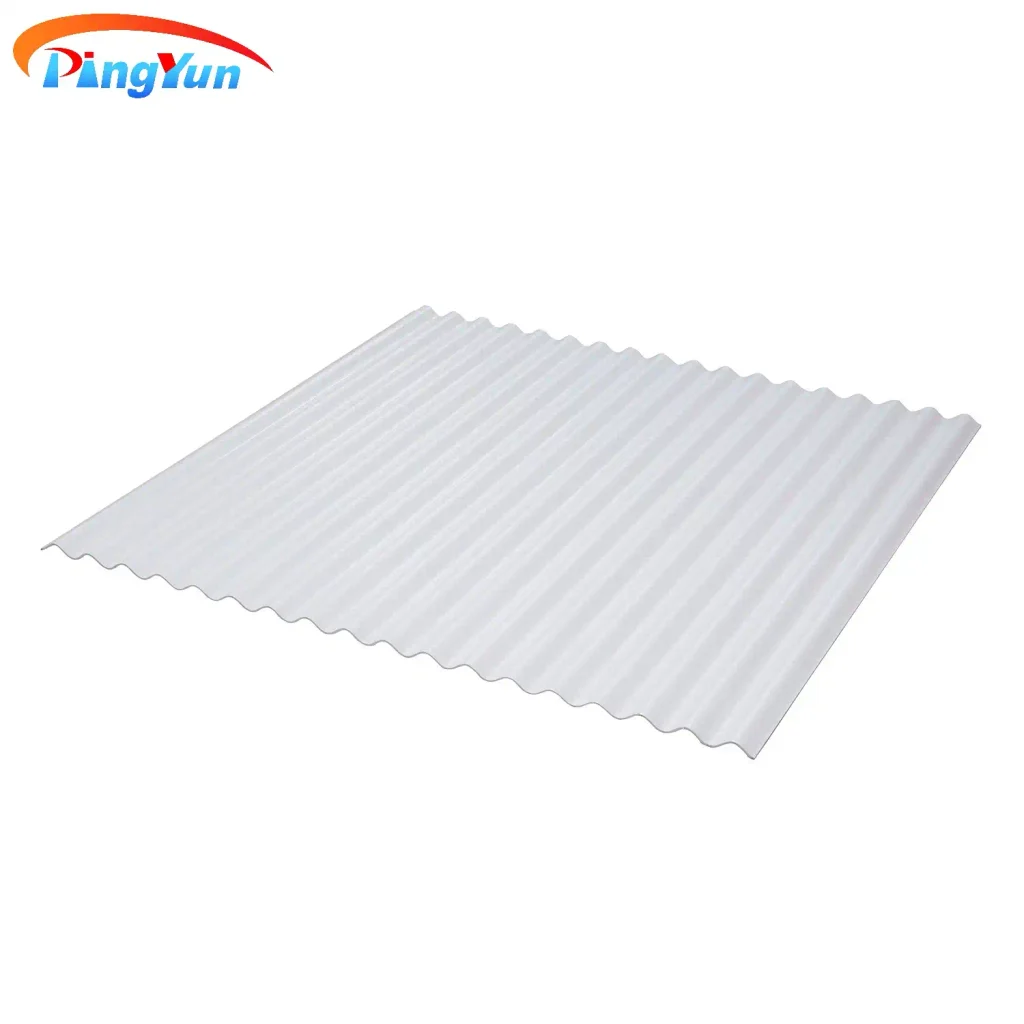
Daylight can reduce electric lighting during suitable hours, but it can also increase solar gain, glare and localized heat. A translucent strip must therefore be designed as part of the roof rather than added as an afterthought. Specify material, profile compatibility, visible transmission if relevant, UV exposure, fire evidence, width, spacing, orientation, lap arrangement, sealants and replacement access. The strip should be included in the same wind, rain, maintenance and aging review as opaque sheets.
The historical catalogue page 3 distinguishes a translucent PVC R1050 example from an ASA-PVC R1050 example and reports a historical transmission description for that translucent product. That old information cannot be used for a different current model or for polycarbonate and FRP. Pingyun’s current website also lists PVC translucent and FRP transparent roof categories separately [1]. Ask for the exact translucent product data sheet and do not borrow transmission or durability values from another polymer.
A daylight layout should consider the building’s use. Storage, livestock, manufacturing, retail and office spaces may have different glare, heat and maintenance priorities. Place strips away from likely equipment penetrations where possible, provide safe access for replacement, and verify that the lap seal and fasteners are compatible with both materials. If the daylight strip is a different polymer or metal interface, include a written compatibility detail.
Rain noise and the complete assembly
A sheet label is not an acoustic specification. Rain noise depends on roof pitch, sheet profile, support spacing, fastener condition, insulation, ceiling, lining, cavity depth, rain intensity and interior use. A lightweight roof may sound different from a heavier assembly, but there is no universal noise value for all PVC sheets or all metal panels. A brochure phrase such as soundproof, quiet or good sound-proof is not a project acoustic result.
If noise matters, define the room and performance target. Ask for test evidence for a comparable roof assembly, including the support and ceiling build-up. Consider rain impact, mechanical equipment, wind-driven movement and drainage noise separately. A suspended ceiling or acoustic liner may be more important than the exposed weather sheet. Ask the acoustic consultant to assess the complete construction instead of selecting a material from a generic promise.
How Should Load, Fire and Local Rules Be Verified?
Supporting structure and loads
The supporting structure should be checked before material selection is finalized. Confirm whether the building has steel purlins, timber members, a concrete deck, a masonry interface or another substrate. Check member spacing, alignment, edge conditions, existing corrosion, fastener pull-out, deflection and access. For a replacement roof, inspect the old supports rather than assuming that a lighter new sheet solves every structural problem.
Request current load tables and installation instructions for each exact product. The evidence should state profile, thickness or gauge, support condition, span direction, fastening pattern, test or calculation basis, deflection limit and load type. Wind uplift is often critical at corners and edges, while snow or maintenance load may govern in the field. A supplier should not present a single maximum span without explaining its assumptions.
A PVC panel’s weight must be compared with the exact metal option under the same roof build-up; weight is only one structural input. Flexibility, local crushing at fixings, thermal movement, impact and uplift resistance also matter. Metal panels can be relatively light compared with the complete structural system, yet their behavior depends on profile, gauge, seam, clips and fasteners. Do not approve either option from a mass-per-area number alone.
Fire evidence
Fire performance must be identified by the applicable jurisdiction and assembly. Do not state that all PVC roofs have one fire rating, or that all metal roofs automatically satisfy every fire requirement. Metal panels can be part of assemblies with different insulation, membranes, liners and supports. Polymer sheets can have different formulations, profiles and test results. A product-level reaction-to-fire classification is not necessarily the same as a roof assembly fire-resistance rating.
Ask for the current fire test or classification document, its standard, specimen construction, field of application and limitations. Check whether it covers the exact thickness, surface, joint, insulation, underlay and support. Ask the authority having jurisdiction or a qualified fire designer to confirm what is required for the building type, boundary conditions, occupancy, height, separation distance and local code edition. If a translucent strip is present, include it in the fire review rather than assuming that the opaque panel evidence applies.
Pingyun’s historical catalogue includes “fire proof” among a list of features for a historical UPVC example, but that marketing label is not a current project classification. It cannot be used to invent a fire rating, and it should not be used as evidence for ASA-PVC, PC, FRP or a different model. Likewise, the existence of a steel or aluminum substrate does not by itself provide a universal assembly rating. Ask for documents that a building official can evaluate.
Destination-market requirements
The importer or contractor should identify the destination country, state or province, municipality and approving authority at the beginning of the RFQ. Requirements may address structural design loads, product marking, reaction to fire, roof assembly testing, energy, condensation, worker safety, lightning, drainage, snow retention, wind zones and coastal exposure. They may also affect language, units, documentation and inspection.
A supplier can provide technical documents, but the buyer remains responsible for checking local acceptance with the design professional and officials. Ask for current revision dates, test laboratory identity, scope and conditions. Keep the approved documents with the purchase order. If a document is only a general brochure, label it as product orientation rather than compliance evidence.
Which Installation Details Affect Both Options?
Laps and drainage
A roof should drain by gravity without depending on a sealant bead to correct an unsuitable slope or profile. Confirm minimum slope for the exact product, side and end lap arrangement, closure placement, ridge ventilation, eave support, valley construction, gutter position and discharge route. These values must come from the current installation manual or project design. They should not be borrowed from another profile because similar-looking sheets can have different lap geometry.
The historical Pingyun page 6 installation illustration labels a transparent roofing sheet, top ridge, UPVC roof sheet, barge board and wall cladding [3]. Its value for today’s buyer is that it makes the system boundary visible: the sheet is accompanied by ridge and edge components and may interface with wall work and daylighting. The illustration does not provide a universal fixing schedule, overlap, slope or sealant instruction. Request the current detail drawings for the quoted model.
Metal roofs also require more than a field panel. Standing seams, exposed fasteners, ridge vents, closures, valleys, eaves, penetrations and flashings have different drainage and movement behavior. Check whether the metal supplier designs custom trims or expects the installer to fabricate them. If a PVC roof is attached to a metal gutter or wall flashing, specify the transition and water path. Never let a bidder omit a difficult valley or penetration from the initial comparison.
Movement, fixings and penetrations
Plastic and metal expand and contract differently. The exact movement allowance depends on length, temperature range, material, profile, restraint and fixing method. The current product instructions should state how to place fixings, whether holes need clearance, where fixed points are permitted, how end laps are treated and how flashings accommodate movement. A screw that is too tight can damage a plastic sheet; an unsuitable restraint can distort a metal panel or seam.
Penetrations need a designed curb, boot, collar or flashing, not only a sealant patch. List every rooflight, vent, pipe, cable tray, fan, HVAC support, solar support, snow guard and access hatch. Confirm who supplies the detail, who installs it, and whether the warranty covers the interface. Pay special attention to runoff from copper or treated components onto metal roofs; the MCA identifies those interfaces as corrosion concerns [4].
For PVC, check compatibility of gaskets, sealants, tapes and adhesives with the exact polymer and finish. For metal, check fastener coating, galvanic pairing, cut-edge treatment and the manufacturer’s approved accessories. The request for quotation should require a fixing schedule and a sample detail for a lap, ridge, eave and penetration. Those four details often reveal whether the bid is a system or merely a sheet price.
Safe access
Roof access is a design requirement, not just a construction issue. State whether maintenance staff may walk on the roof, where walkways are required, whether panels need stepping supports, and how inspection of gutters and penetrations will occur. A panel that is not designed for foot traffic should be protected from casual access. Follow the manufacturer’s instructions and local fall-protection rules.
Include unloading, storage and handling. Long sheets can be damaged by bending, dragging, heat or poor support. Plastic panels may need protection from concentrated loads and high-temperature storage; metal panels may suffer scratches, wet storage staining or edge damage. Require the supplier and installer to describe storage orientation, protective film removal, cutting tools, swarf control, lift plan and inspection at delivery.
How Do Buyers Compare Complete Quotes and Written Terms?
Same-scope RFQ
Issue one structured RFQ to both suppliers. Give each the same roof plan, areas, slope, support spacing, design loads, environment, daylight requirement, insulation brief, delivery location, desired completion date and documentation requirements. Ask each bidder to return the same schedule instead of accepting a free-form price. This avoids comparing a PVC material package with a metal supply-only package.
Use the following RFQ checklist:
| RFQ line | PVC or ASA-PVC supplier must state | Metal supplier must state |
|---|---|---|
| Identity | Exact current model, profile and material | Exact panel, substrate, coating and profile |
| Geometry | Overall and effective cover width, length and laps | Same, including seam or side-lap method |
| Structural evidence | Span, uplift, fixing and support assumptions | Span, uplift, clip or fastener assumptions |
| Environment | Chemical and UV limitations | Exposure category, coating limits and compatibility |
| Accessories | Ridge, barge, eave, valley, closure and gutter | Same accessory scope and fabrication responsibility |
| Daylight | Exact PVC product, transmission data and interface | Compatible daylight strip or exclusion stated |
| Thermal scope | Sheet versus complete assembly data | Panel, insulation and ventilation assumptions |
| Fire scope | Current classification or test and limitations | Current classification or assembly test and limitations |
| Fixings | Approved screws, washers, spacing and movement detail | Approved fasteners, clips, seams and movement detail |
| Quantity | Takeoff, laps, cuts and waste | Same takeoff basis |
| Logistics | Packing, storage, unloading and delivery | Same logistics information |
| Commercial terms | Unit prices, currency, taxes and validity | Same commercial fields |
| Service terms | Written warranty, exclusions and remedy | Written warranty, exclusions and remedy |
Require a marked list of exclusions. Common exclusions include structural reinforcement, crane hire, scaffolding, flashing fabrication, sealants, gutters, disposal, permits, testing, local taxes, customs clearance and installation. A low quote with many exclusions is not a low complete cost. Ask for alternates separately so the base bids remain comparable.
Samples and delivery
The Pingyun representative confirmed that samples are free while the customer pays freight [5]. Confirm the sample’s exact model, color, thickness, finish and whether it is representative of the proposed production item. A sample is useful for profile, color, handling and interface review, but it does not prove structural, fire, chemical or long-term performance. Record sample approval in writing and do not let a sample silently change the quoted specification.
Confirm delivery terms, packaging, maximum lengths, unloading access, replacement policy for transit damage, inspection window and responsibility for customs or local charges. A long sheet may have attractive effective coverage but be difficult to unload or store at the site. Ask whether the stated length is a standard supply length, a maximum option or subject to production confirmation. Do not infer production capacity from an old catalogue table.
Metal quotations need the same logistics review. Coil availability, color batch, panel length, protective film, edge protection and fabrication lead time may affect schedule. If one bidder offers a stock panel and another offers a custom profile, show those differences openly rather than hiding them in a unit price.
Warranty versus service life
A warranty is a written commercial promise with scope and exclusions. Service life is a performance expectation under stated conditions. Neither should be used as a substitute for the other. Ask what defect is covered, whether the remedy is repair, replacement or refund, whether labor and freight are included, how a claim is made, what maintenance records are required, and whether the warranty transfers with the building.
The Pingyun representative confirmed the current policy as 20 years for ASA products and 10 years for other products [5]; obtain written terms for the exact quoted product. The buyer must first verify that the quoted model is an ASA product and then obtain the applicable warranty document. Do not write that ordinary UPVC receives 20 years. Do not use the historical page 3 30-year language or page 5 20-year language as a current promise for products outside the confirmed policy.
Do not compare Pingyun’s confirmed warranty numbers with an invented metal warranty. Metal warranties vary by substrate, coating, finish, location, installer, maintenance and manufacturer. Request the metal supplier’s actual document and compare scope rather than headline years. Also ask what happens after a warranty expires: who can supply replacement components, whether color matching is possible, and what inspection interval is recommended.
Which Situations Favor Further Investigation of Each System?
Corrosive industrial roofs
A PVC or UPVC option deserves further investigation when the site’s main concern is rusting of the exposed sheet and the supplier can document resistance to the actual chemicals, temperatures and cleaning regime. It still needs compatible fixings, flashings, gutters and supports. A PVC roof should not be selected merely because a brochure says anti-corrosive. Confirm the full system and obtain an engineer’s view where fumes, hot discharge, solvents or concentrated washdown are present.
A metal option deserves further investigation when the manufacturer can match the substrate, coating, fasteners and details to the exposure and provide a maintainable system. In some environments, a specified metal and coating may be appropriate; in others, runoff, trapped moisture or dissimilar-metal contact may rule out a proposed combination. The MCA’s compatibility guidance supports an interface review, not a blanket metal rejection [4].
If neither supplier provides exposure evidence, pause the purchase. Obtain a written chemical review, sample compatibility information and a maintenance plan. The cost of a second technical review is small compared with replacing a roof whose sheet survives while its fasteners or flashings fail.
Spans and retrofit constraints
PVC merits investigation for a retrofit where low dead load, available profile geometry, daylight or corrosion considerations are important, provided the current span and fixing data satisfy the design. A lightweight sheet does not remove wind uplift, access, edge-zone or deflection checks. Hollow profiles may change support requirements, and a profile with a favorable historical spacing cannot be assumed to work on the existing purlins.
Metal merits investigation where the desired system, structural frame, seam behavior, fire assembly or local trade base is well established. A retrofit still requires checks of existing supports, corrosion, fastener pull-out, penetrations and drainage. Do not assume that replacing a heavy roof with any metal or plastic sheet will solve the underlying problem. The design must address the complete load path and weather boundary.
Appearance and daylight
An ASA-PVC tile or colored UPVC profile may be worth investigating when the project prioritizes a particular tile appearance, low-corrosion surface or daylight arrangement. Confirm color stability evidence, cleaning, sample approval and replacement matching. The old catalogue’s color and profile examples are historical identifiers, not current guarantees.
Metal may be worth investigating where the project needs a particular seam, rib, finish, trim language or architectural detailing. Confirm color availability, coating, repair method and the appearance of cut edges and flashings. If daylight is important, compare the light layout and solar effect of both systems rather than judging one isolated transparent panel. Aesthetics should be recorded as acceptance criteria, not left to a late substitution.
FAQ
Is PVC completely corrosion-proof?
No. The exposed PVC polymer does not rust like steel, but the roof system still includes fasteners, flashings, gutters, sealants and supports. Chemical attack, heat, impact, ultraviolet exposure, trapped moisture or incompatible accessories can still cause failure. Obtain evidence for the exact product and environment.
Is metal roofing always stronger?
No universal conclusion is safe. Strength depends on substrate, gauge, profile, support spacing, fasteners, seams, edge conditions and design loads. A metal panel and a PVC panel must each be checked using current evidence for the quoted model and assembly. Do not use material name as a substitute for structural data.
Does every Pingyun PVC sheet have ASA?
No. Pingyun’s product families include ordinary PVC or UPVC, ASA-PVC examples and separate polycarbonate and FRP categories. Ask for the exact material and surface construction in writing. A model name or color alone does not establish an ASA layer.
Can I compare a 20-year PVC warranty with a 10-year warranty and choose the longer one?
Not by itself. The Pingyun representative confirmed 20 years for ASA products and 10 years for other products [5], subject to written terms for the quoted model. Verify the quoted model and compare exclusions, remedy, maintenance duties and project conditions. Do not treat warranty length as service life or as proof that one system is structurally or fire-wise suitable.
How do I verify effective cover width?
Request the current drawing or installation manual for the exact profile. Have the supplier show overall width, side lap, effective width, end-lap rule, quantity, cuts and waste on the same roof plan. Do not rely on a historical percentage or a nominal width copied from another model.
Can I use the old catalogue’s thickness, weight or spacing?
Only as a historical profile example, never as an automatic current specification. Pages 3, 5, 6 and 7 of PINGYUN New catalogue 201804 were reviewed for model and installation context. The buyer must obtain current confirmation for the exact model, revision, load case, fixing pattern and commercial terms.
Can I use PC or FRP daylight data to price a PVC strip?
No. Pingyun lists polycarbonate, PVC translucent and FRP transparent products separately [1]. Request the data sheet for the actual material and profile, including fire, transmission, UV, fixing and replacement information. Similar appearance does not make the data transferable.
What should I ask about metal fasteners?
Ask for fastener material, coating, washer, clip or seam type, approved substrate pairing, spacing, movement detail and corrosion compatibility. Also check runoff from copper, HVAC condensate, treated wood and other materials. The MCA warns that dissimilar-metal contact and contaminated water can accelerate corrosion [4].
Is a translucent strip automatically a skylight system?
No. It is a roof component that must be coordinated with opaque panels, laps, structure, drainage, fire evidence, glare, solar gain and safe replacement. Specify the exact strip and its interface detail rather than treating daylight as a free add-on.
Who should make the final structural and fire decision?
The project’s qualified structural and fire professionals, with the supplier’s current technical documents and the local authority’s requirements. This guide supports procurement questions; it does not replace design calculations, code review or installation instructions.
Conclusion
The practical answer to “PVC roof sheets or metal roofing?” is a documented conditional choice. First identify the exact PVC, UPVC or ASA-PVC model and the exact metal panel system. Then compare effective coverage, support and wind data, exposure, fasteners, drainage, thermal assembly, daylight, fire evidence, logistics, maintenance and written terms on one common roof plan. Use the historical Pingyun catalogue only to understand product-family examples and installation components, not to revive old dimensions or guarantees. Pingyun’s representative confirmed ASA products at 20 years and other products at 10 years, plus free samples with customer-paid freight [5]. Obtain the exact model’s warranty terms and confirm sample arrangements in the quotation.
If either bidder cannot provide current evidence for a critical item, keep that option in technical review. A complete, compatible and locally acceptable roof is a better purchase than the cheapest sheet or the longest headline warranty. Request the two evidence packs, resolve the interfaces, have the responsible professionals approve the design, and only then compare the complete installed cost.
References
[1] Pingyun International, “Products” and current product category pages, including PVC Roof Tile, Corrugated UPVC Roof Sheet, Twinwall Hollow PVC Roof Sheet, Polycarbonate Sheets, Translucent Roof Sheet and FRP Transparent Roof Sheet. https://www.pingyungroup.com/products.html
[2] Pingyun International, “PVC Roof Tile” category page. https://www.pingyungroup.com/PVC-Roof-Tile-pl3880300.html
[3] PINGYUN, New catalogue 201804, pages 3, 5, 6 and 7, uploaded source document. Page 3 provides historical ASA-PVC and translucent PVC examples; page 5 provides historical UPVC examples and a historical comparison illustration; page 6 provides an installation illustration; page 7 provides historical profile and hollow-roof examples. These pages are used only as historical product-family and detail context, not as current general dimensions, performance values or warranty promises.
[4] Metal Construction Association, “Dissimilar Metal Corrosion in Roofing Installations,” Technical Bulletin, version 2, June 2022. https://www.metalconstruction.org/view/download.php/online-education/education-materials/roofing-educational-materials/dissimilar-metal-corrosion-in-roofing-installations
[5] Direct policy confirmation from the Pingyun representative in this conversation: only ASA products carry a 20-year warranty; other products carry a 10-year warranty; samples are free while the customer pays freight. This confirms the durations and sample-cost allocation, not the coverage, start date, exclusions, claim remedies or an unspecified model’s ASA status. Buyers should obtain the applicable written warranty and agree on sample availability and shipping arrangements.