How Do Spanish and Roman PVC Roof Tiles Differ?
- What Do Spanish and Roman Mean in This Comparison?
- Which Pingyun Profiles Can Buyers Compare?
- What Must Be Fixed About the Roof Before Choosing a Style?
- How Do Profile Geometry and Coverage Affect the Takeoff?
- How Should Laps, Fixings, and Accessories Be Checked?
- What Structural Evidence Does Each Named Tile Need?
- Are Weathering, Comfort, and Warranty Style Differences?
- How Should Importers Request Comparable Quotes?
- Which Style Should Be Shortlisted for Common Jobs?
- FAQ
- Are Roman and Roma PVC roof tiles the same thing?
- Is every R1050 tile Spanish and every R1080 tile Roman?
- Can a Spanish sheet be lapped directly with a Roma sheet?
- Can I order by a width printed in the old catalogue?
- Is translucent R1050 made of the same material as opaque R1050?
- Which style provides better insulation or rain-noise control?
- Does the warranty change because a tile is Spanish or Roma?
- What should I request before approving a mixed rooflight detail?
- Are samples free, and what must the sample identify?
- What is the most useful side-by-side comparison to obtain?
- Conclusion
- References
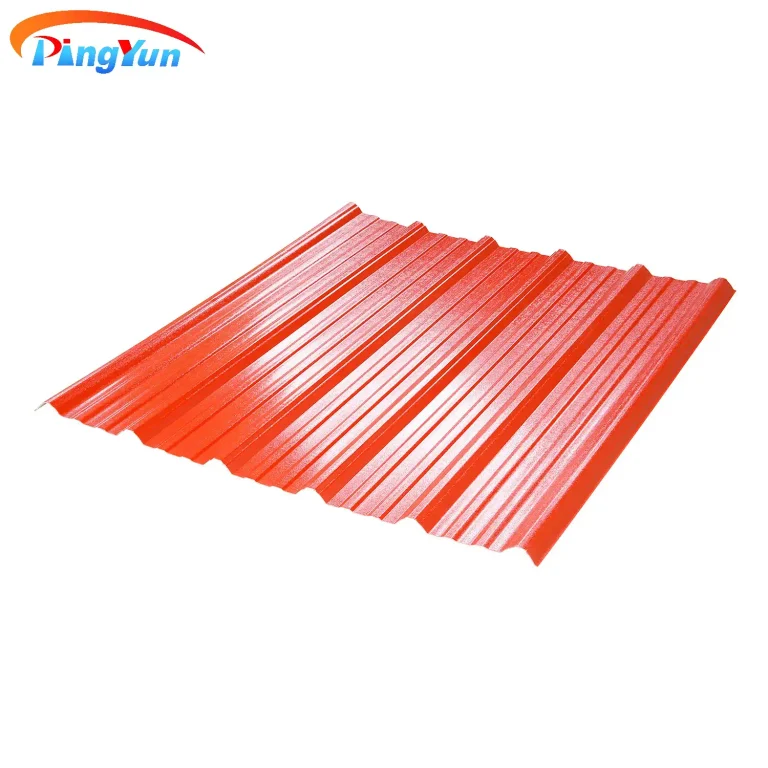
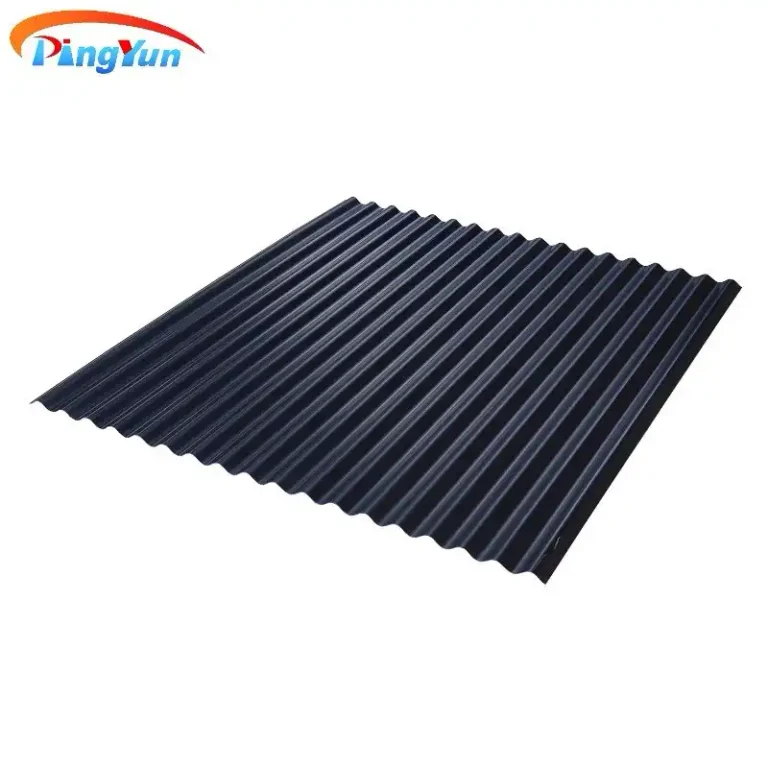
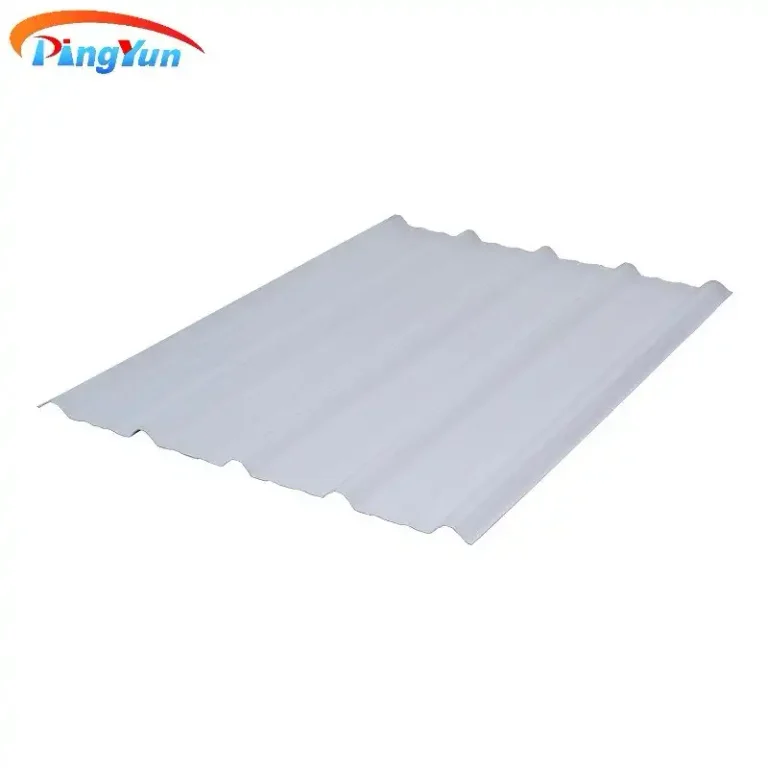
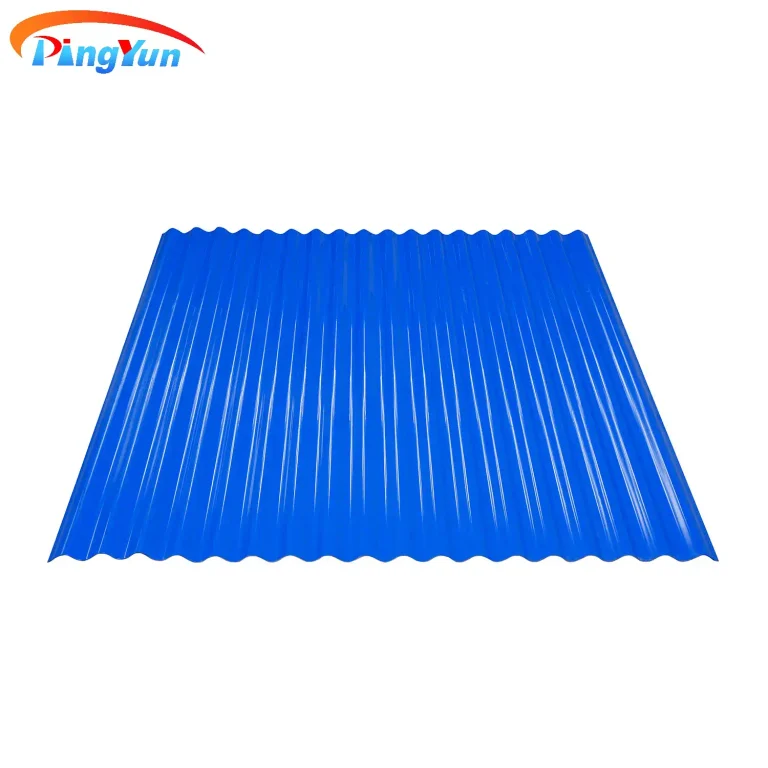
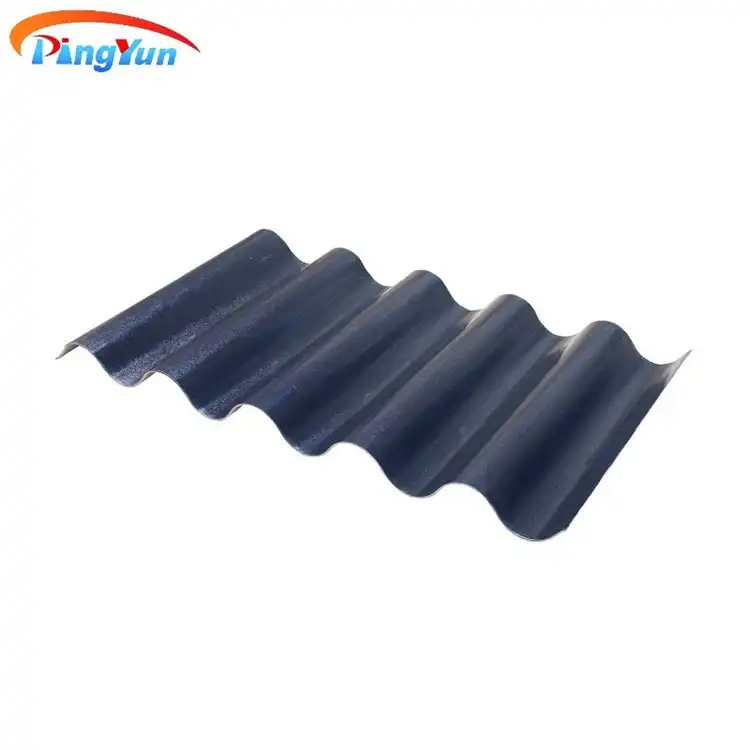
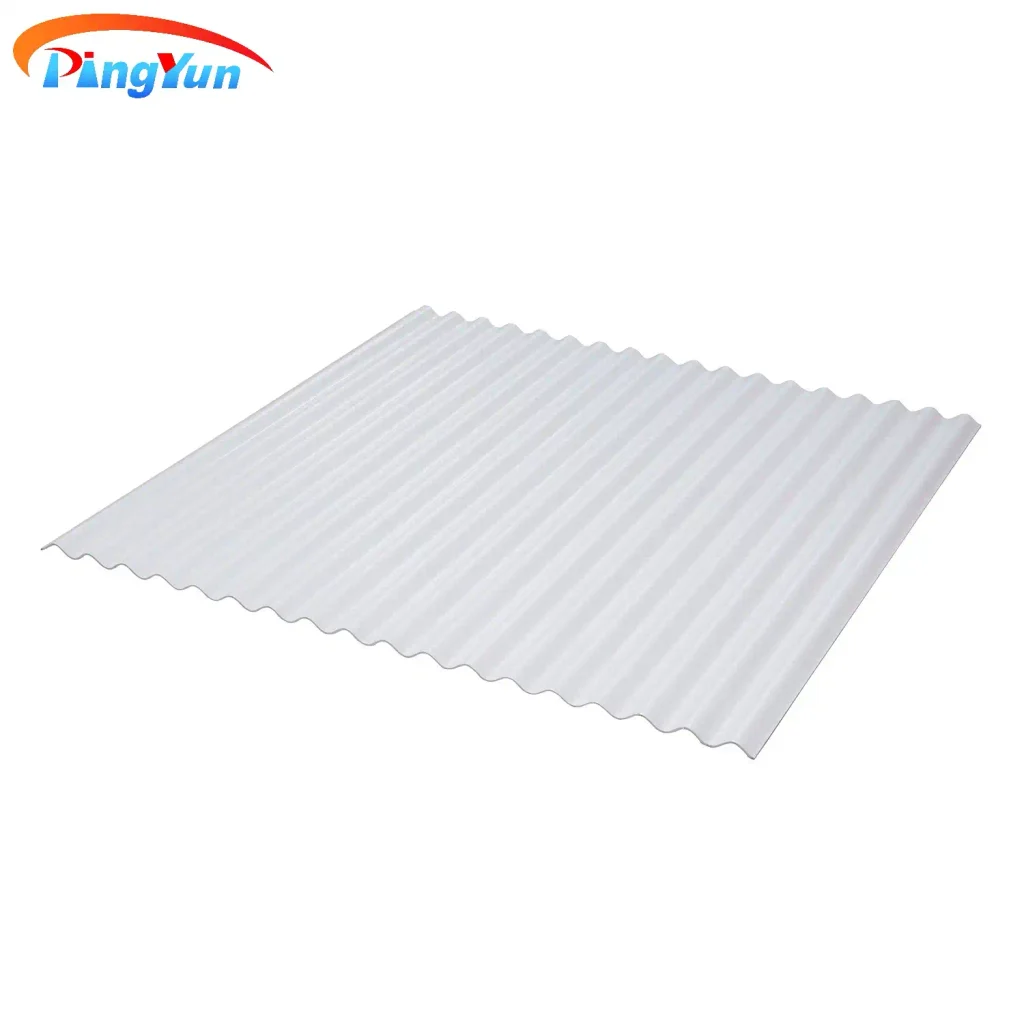
Spanish and Roman PVC roof tiles differ primarily in their tile-like profile designs and the matching roof details a buyer must specify. In Pingyun’s archived catalogue, Spanish style R1050 and Roma style R1080 are separate illustrated examples; the company’s website also has separate Spanish and Roma categories [1][2][3]. Those labels do not, by themselves, establish current coverage, structural capacity, drainage performance, material construction, price, or interchangeability. Compare two named products using current drawings, installation instructions, project requirements, and complete system quotations—not a style name alone.
A distributor looking at samples may first notice the repeating roof pattern. An installer will ask a different set of questions: Where does one sheet overlap the next? Do the ridge and verge pieces actually fit? What is the installed cover rather than the overall sheet width? A project buyer must also decide whether a proposed sheet can be supported, fastened, transported, and accepted under the same project conditions. This guide turns a visual comparison into a practical procurement process. It uses Pingyun’s published product families and an archived catalogue as evidence of what those materials say, while keeping present-day performance and supply claims subject to confirmation [1][2][3].
What Do Spanish and Roman Mean in This Comparison?
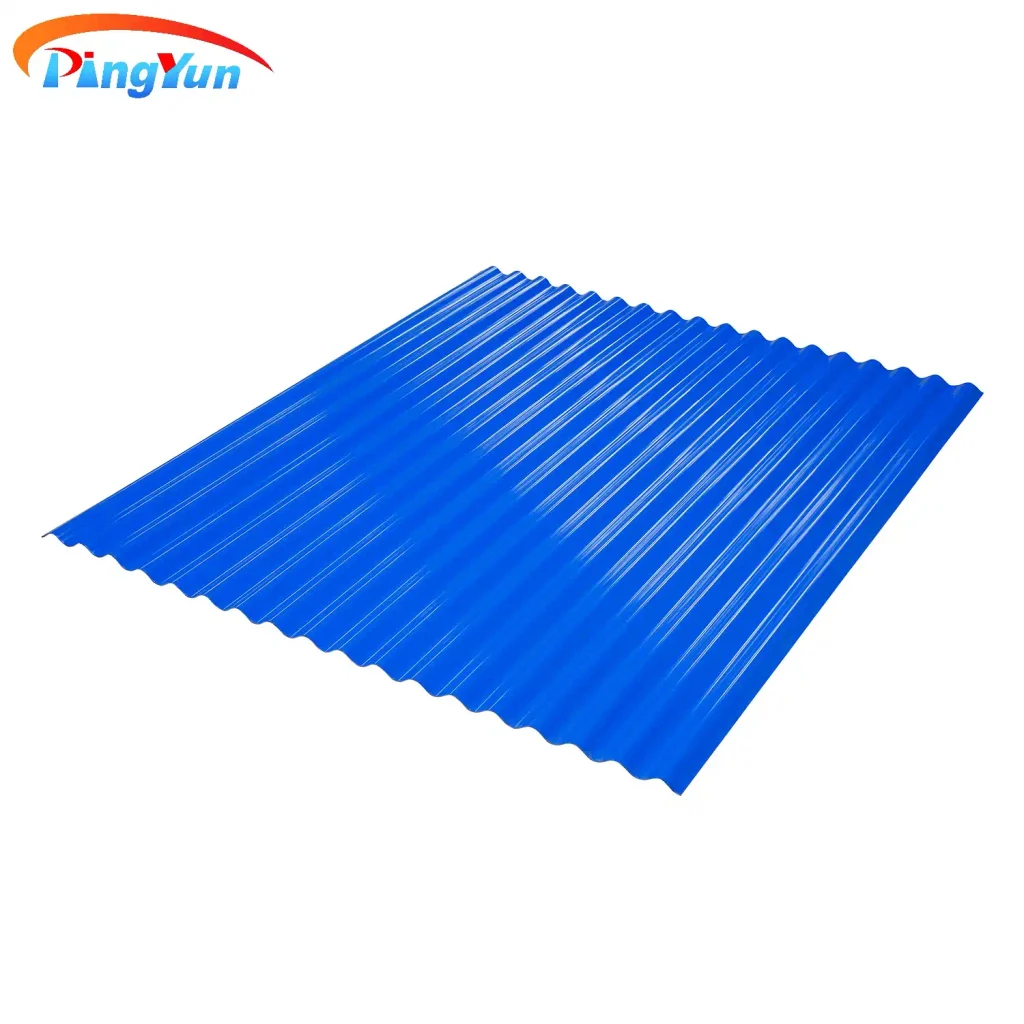
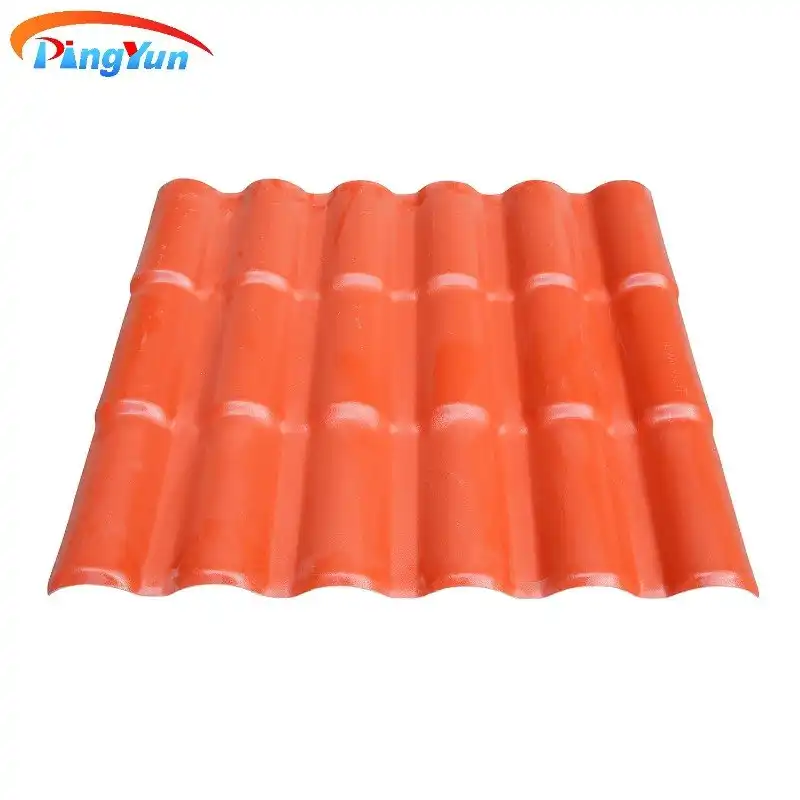
The words are useful starting points for discussing appearance, but they are incomplete product specifications. Pingyun labels one current category Spanish PVC Roof Tile and another Roma PVC Roof Tile. Its earlier catalogue uses Spanish style R1050 and Roma style R1080 as examples [1][2][3]. This article uses “Roman” in the question to match buyer language, while “Roma” reflects Pingyun’s published category and archived wording. Neither name should be mistaken for a universal technical classification that fixes every profile dimension.
Style names versus technical identifiers
A style describes the intended look of a roof surface. A model identifier, cross-section drawing, material description, and dated quotation identify what would actually be supplied. Two sheets can resemble traditional tiles without sharing the same crest geometry, side-edge shape, longitudinal pattern, or matching accessory set. Conversely, visually different finishes may be offered within one profile family. Treat a product photo as an aid to identification, not as a dimensional drawing.
For a meaningful comparison, request a front view, a full transverse section including both edges, a longitudinal section showing the repeating tile pattern, and a named list of compatible accessories for each candidate. Put the model code and drawing revision on the same sheet as the material construction. If the supplier cannot establish which drawing applies to the quotation, the difference between Spanish and Roman remains descriptive rather than suitable for a purchase order.
The title also says “PVC roof tiles,” but the products under discussion can be long, profiled roofing sheets designed to imitate rows of smaller traditional tiles. Do not assume that each visible tile is a separately shipped piece. Establish the supplied unit, ordered length, overlap arrangement, and handling limits before calculating freight or installation quantities. Pingyun’s archived catalogue tabulates R1050 and R1080 as sheet-style products with length entries, while the present order still needs its own approved schedule [3].
Roman, Roma, and overlapping listings
Pingyun’s current Roma category describes R1080, whereas its Spanish category describes R1050 [1][2]. That makes the pair useful examples, not a rule that every R1050 listing must be Spanish or every Roman-sounding listing must be R1080. The Roma category currently includes a product title containing “Roma R1050,” illustrating why a search-result label cannot be the sole identifier [2]. Other site listings also mix style labels with sales descriptors. A buyer should therefore ask the supplier to identify the actual section shown in the quoted offer, not infer it from a URL or category breadcrumb.
This distinction matters when distributing stock across markets. A sales team may refer to a tile as Roman because customers use that word for a familiar architectural appearance, while a quotation or carton uses Roma, R1080, or a more specific internal code. An agent who treats those terms as interchangeable without checking samples risks listing one profile but delivering another. Keep the approved photograph, section drawing, code, color, and packaging description together in the product record.
What PVC and ASA-PVC do not tell you
Material and appearance are separate questions. The archived catalogue lists an ASA-PVC Spanish R1050, an ASA-PVC Roma R1080, and a translucent PVC R1050 as different entries [3]. A shared R1050 designation therefore does not guarantee the same surface layer, light transmission, weight, warranty eligibility, or fixing detail. In the catalogue, the translucent entry is described as clear PVC, not as the same ASA-PVC construction as the opaque roof tile [3]. The historic statements are not current test certificates, but they establish why the identification question is essential.
Ask whether the actual quoted product has an ASA surface, which side must face outward, how many layers or components are specified, and whether the sample matches the production specification. Do not attach a thermal, acoustic, fire, ultraviolet, or corrosion claim to the words Spanish or Roman. Each claim needs evidence for the exact product and, where applicable, the installed roof assembly. A roof may use the same broad polymer family yet behave differently because the product construction and junction details differ.
Which Pingyun Profiles Can Buyers Compare?
Pingyun provides enough public material to establish that the two named families exist, but not enough consistent, current project-specific evidence to declare an overall winner. Its Spanish and Roma website categories establish how products are presented online [1][2]. The page of PINGYUN New catalogue 201804.pdf that presents synthetic resin roof tiles places Spanish R1050 and Roma R1080 side by side with historical diagrams and tables [3]. Those are valuable identification clues, not a present-day substitute for an approved shop drawing.
Archived R1050 and R1080 examples
The older catalogue records different illustrated patterns for Spanish R1050 and Roma R1080. It also shows legacy overall widths and other dimensions [3]. The relevant editorial conclusion is not that one published number should be copied into every current RFQ. It is that the two profiles were depicted and tabulated separately, so an estimator must not combine their profile, width, and accessory assumptions. A historic chart can help formulate questions about the spacing of visible tile features, the shape of the lateral seam, and how much material is lost to an overlap.
A bidder using that archive for an existing-roof match should mark it “historical reference only.” The current quotation should include a dated drawing for the product actually available, including both profile edges and all dimensions used for takeoff. If the old R1050 or R1080 is no longer supplied in the illustrated form, the new drawing—not the old pattern—governs the comparison. An archive can establish a family lineage without proving manufacturing continuity or present stock.
The same page also tabulates a translucent R1050 separately from its opaque ASA-PVC counterpart [3]. Do not insert that translucent sheet into a Spanish tile roof merely because the number matches. Ask whether there is a currently available light-transmitting product with an explicitly approved joint or whether a framed rooflight detail is required. Light-transmitting areas introduce questions about orientation, glare, support, movement, condensation, and inspection that cannot be answered by the profile label alone.
What the current category pages actually show
The current Spanish category introduces Spanish Style R1050, and the Roma category introduces ASA Roma Style R1080 [1][2]. These pages support a narrow statement: Pingyun publishes both families and relates those example labels to them. They also contain broad marketing language about weathering, insulation, appearance, and possible applications. A category page does not provide a controlled bill of materials for every product in the category. It cannot certify that a particular proposed length, color, thickness, fastener arrangement, or load condition is approved.
Individual product listings supply further clues but also reveal why the buyer should request a fresh technical package. A Spanish R1050 page describes ASA PVC yet displays a warranty field that differs from the company’s policy directly confirmed by its representative. A Roma R1080 page displays different width labels in different parts of the same page [4][5][6]. These inconsistencies are not solved by assuming the most convenient number is correct. Rather than reproducing conflicting fields as reliable engineering data, ask the supplier to identify the revision-controlled SKU, current nominal and effective widths, and written warranty for the specific quotation.
A model-number and evidence matrix
Use a compact comparison record before involving a designer or contractor:
| Identification item | Spanish candidate | Roman or Roma candidate | Evidence required |
|---|---|---|---|
| Seller’s exact product name and SKU | Fill from current offer | Fill from current offer | Dated quotation and product schedule |
| Transverse and longitudinal geometry | Attach approved drawings | Attach approved drawings | Drawing numbers and revisions |
| Material and surface construction | Identify actual supplied version | Identify actual supplied version | Current material description |
| Overall and effective cover | Record separately | Record separately | Approved section and lap detail |
| Fixings, supports, and accessories | List all components | List all components | Installation manual and parts list |
| Performance and warranty | Record product-specific evidence | Record product-specific evidence | Applicable reports and written terms |
The table deliberately contains no prefilled performance ranking. It keeps a visually appealing sample from standing in for a complete roof system. If one offer lacks a drawing, mark the cell unresolved rather than borrowing a number from the competing style. This is especially important when a distributor wants to advertise a family of products under one short description: the catalogue name alone should not become an unqualified promise about every variant.
What Must Be Fixed About the Roof Before Choosing a Style?
A style decision has little engineering meaning without a defined roof. Send both candidates the same project pack: location, use, roof plan, slope, dimensions, openings, existing structure, exposure, design actions, required appearance, construction sequence, and destination approvals. That pack is an input for requesting evidence, not a declaration that either tile is suitable. A designer responsible for the project should review structural and code requirements before the buyer commits to an order.
Drawings, slope, and exposure
Start with the roof plan and elevations. Record each slope separately, the true run from ridge to eave, valleys and hips, the position of walls and penetrations, and where water is meant to leave the roof. The required sheet length can change around dormers or irregular edges even when two products share a catalogue width. A long apparently simple elevation may still have transport, lifting, thermal-movement, or site-access constraints that change the rational ordering length.
For both styles, request the manufacturer’s current minimum slope and lap requirements under the specified project conditions, then have the project designer decide whether those instructions are appropriate. Do not transplant a slope rule from a clay-tile guide or a different plastic profile. Local weather, wind-driven rain, roof geometry, and joint details all matter; a term such as “waterproof tile” does not define a universal roof slope. If the project has aggressive atmosphere or unusual cleaning chemicals, identify actual exposures and ask for compatibility evidence covering fasteners, sealants, flashings, and the tile as a system.
Design loads likewise require a common basis. State the jurisdiction and the actions the design team has established rather than asking which shape is “stronger” in the abstract. Wind uplift at an edge may govern a detail that differs from the central roof field; maintenance access can create a concentrated load issue unrelated to whether a tile is Spanish or Roma. No load figure or allowable support distance from an old category description should be assumed valid for a different installation arrangement.
Replacement versus new installation
A replacement roof requires more than a visual match to the old tiles. Survey the condition, location, and spacing of existing supports; measure the roof plane rather than estimating it from a sales photograph. Identify the existing ridge, verge, eave, gutter, wall junction, and openings. Establish which elements are to be removed or retained, and whether the supporting structure is designed for the proposed replacement and fixing method. A lightweight-looking sample is not permission to reuse unknown purlins.
On a partial replacement, compare the old roof and proposed panel as physical sections. A Spanish-looking sheet need not lap with every legacy Spanish-profile sheet. A Roma-looking sheet need not accept the existing ridge piece. If the old product cannot be identified or its section is unavailable, plan for an engineered transition or replacement of a coherent roof area rather than an improvised seam. Document who designs and warrants that transition before calculating the final price.
For new construction, the designer may have more freedom to select the profile and lay out supports and accessories around it. That freedom does not eliminate evidence requirements; it changes their timing. Freeze the intended style early enough to coordinate eave lines, ridge height, fascia, solar or rooflight openings, and handling access. Revisions after framing has been fabricated may create costs not visible in a price-per-sheet comparison.
Local design and approval responsibilities
The manufacturer supplies product information, but destination requirements are determined by the project and jurisdiction. Ask the design team which structural, fire, weather, and documentation requirements apply. Then request reports or declarations that identify the relevant product, test specimen, date, scope, and installation conditions. A certificate mentioned in a generic listing cannot be presumed to cover every ASA-PVC variant, every thickness, or a mixed roof assembly.
Write the responsibility allocation into the enquiry: who confirms design loads, approves the installation detail, issues or checks shop drawings, and reviews substitutions? A quotation can be commercially attractive yet unsuitable if it excludes necessary accessories or leaves the interface with another trade undefined. When the evidence package is incomplete, request it before naming a final tile, not after a contractor has been asked to build around a chosen appearance.
How Do Profile Geometry and Coverage Affect the Takeoff?
The order quantity should follow installed coverage on a particular roof, not the nominal face area of a panel in a brochure. In the historic catalogue, the Spanish R1050 and Roma R1080 illustrations and width entries differ [3]. The catalogue’s drawings are useful reminders to ask the right questions, but they do not establish today’s manufacturing dimensions or the approved cover after overlapping. A buyer should refuse an unsupported conclusion that a wider named profile necessarily uses fewer sheets or costs less to install.
Overall width versus effective width
Overall width describes the entire sheet measured across its edges. Effective cover describes the roof width that one sheet contributes after the specified lateral joint is made. These can differ; the difference depends on the actual side-lap geometry, approved overlap, and any tolerances or project-specific details. Compare effective cover on the current drawing at the same measurement condition for both proposals. Do not subtract an arbitrary universal lap amount from an archived gross width.
The width label on a product listing can also be ambiguous. One current Roma product page presents one width near its headline specifications and a different “Total Width” in its details table [5]. Without a controlled drawing, it is unclear which entry applies to the actual quotation or how either relates to installed cover. Ask the supplier to reconcile the two entries explicitly. If the resolution is a different version of the product, record the corrected version on the offer; do not quietly choose the number that makes a cost estimate look better.
For a rectangular roof plane, the estimator should identify the actual roof width to be covered, then lay out the selected effective sheet width from one reference edge. Edge trims and a starting sheet may change the number or cut width of the final panel. Repeat for each separate plane and direction. Complex geometry, penetrations, and hips need a marked layout rather than a simple area divided by the advertised square meters per piece. This is an estimating method, not a Pingyun-specific performance claim.
Tile pattern, ordered lengths, and end laps
A tile-look sheet can have a repeating raised pattern along its length. The archived R1050 and R1080 drawings show different longitudinal labeling and illustrated patterns [3]. When a roof needs an end lap, ask how that lap relates to the pattern and which end of the sheet is intended to face upslope. A cut can interrupt a visually important row even where the material technically covers the roof. For exposed rooflines, an appearance mock-up may reveal this before many sheets are ordered.
Request the minimum and, where conditions change, increased lap details for the actual product. Establish how an end lap is supported, sealed if required, and fastened. Then compare the resulting usable length per sheet, not just the cut length. If a seller proposes full-length sheets, check whether their length can be produced, packed, shipped, unloaded, maneuvered onto the roof, and accommodated for thermal movement. The old catalogue listed legacy maximum lengths, but availability for the intended current SKU and destination must be confirmed in the order [3].
Create a length schedule by roof plane. For each line, record the measured slope length, eave projection, ridge treatment, required cutting allowance, number of sheets along the slope, and approved end-lap loss. Do not assume identical row counts for Spanish and Roma when their longitudinal appearance or end detail differs. A layout that avoids a joint in one zone may require a different lifting plan or shipping method; both choices belong in a whole-project comparison.
Cut waste, packaging, and freight
Waste is not a fixed percentage that can be copied from a product flyer. It depends on roof geometry, ridge or hip intersections, penetrations, the orientation of the pattern, allowable reuse of offcuts, and the exact ordered lengths. Ask the contractor to mark cuts on both alternatives. Separate unavoidable profile-end waste from waste caused by ordering the wrong length. If a manufacturer requires a directional face or specific orientation, an offcut that appears to fit geometrically may not be suitable elsewhere.
For imports, ask how the panels are nested or stacked, what protective packaging is used, and whether the accessory pieces ship with the sheets. Record the packaging quantity and freight basis for the specified length and thickness rather than lifting an old container capacity from a different catalogue line [3]. Breakage allowances, unloading equipment, storage space, and local last-mile handling can materially affect the installed decision even when the sheet prices are close. None of these logistics are guaranteed advantages of a style name.
A fair takeoff record should show four layers: gross sheet dimensions, approved installed coverage, number of ordered sheets and cut lengths, and the accessories and services needed to complete each roof plane. If an offer contains only a square-meter price, return it for clarification. A low figure per gross square meter can conceal a different cover width, additional joints, longer trim runs, or delivery limitations. Compare the resulting accepted roof area and complete scope.
How Should Laps, Fixings, and Accessories Be Checked?
Spanish and Roma examples are illustrated as different profiled designs in the old catalogue [3]. Therefore, every joint and finishing item should be checked against the exact selected section. It is unsafe to assume a ridge cap, closure, transparent insert, or fixing plan is universal merely because both products are PVC-family roofing. A current installation sheet should specify the detail, support condition, accessories, and scope of any sealant or washer used.
Side joints and end laps
Obtain a drawing of the installed side lap, showing which sheet edge goes over the other, how the tile-like relief meets at the seam, and where the fasteners are placed. The same gross width can produce a different effective cover if the approved overlap changes. Small mismatches may be difficult to detect in a small color sample yet become obvious across a long roof or during rain. Keep left- and right-edge identification on the drawing, especially if the installation has a prescribed starting side.
An end lap adds a different set of questions: What is the minimum support beneath the joint? How do the raised rows meet? Are the fasteners placed in a designated part of the pattern? Is a closure or sealant required, and where should it stop to avoid trapping water? The correct answer depends on the specific product and project. Do not import a lap length or fastener count from a generic plastic roofing guide, a clay-tile detail, or the other style’s old catalogue entry.
It is useful to request a small assembly sample that includes both side edges, not just a central section. If the buyer needs to approve an end lap, ask for pieces long enough to show at least one complete pattern repeat and the proposed joint. Record the result photographically, but do not treat a tabletop mock-up as a structural or weather-tightness certification. It is a tool for detecting geometry and instruction gaps before bulk production.
Ridge, hip, verge, eave, and penetrations
The roof is not only the main sheet. At the ridge and hip, a buyer needs matching caps or an approved fabricated detail that covers the actual relief. At the verge, the edge must be finished without leaving a gap or restraining movement incorrectly. At the eave, sheet overhang, drip path, gutter entry, and ventilation or closure requirements need to be coordinated. Wall junctions, valleys, pipes, and equipment bases introduce further interfaces.
Pingyun’s older installation illustration names a top ridge, barge board, and flashing among other components [7]. It demonstrates that the roof was depicted as an assembly, not as bare sheets. It does not establish a current universal ridge or flashing geometry for Spanish and Roma tiles. Request a bill of materials keyed to the selected SKU. For each part, ask whether it is an official matching accessory, a third-party item, or a project-designed fabrication. State who reviews fit and who bears responsibility if a junction fails.
Penetrations are particularly vulnerable to decisions made by separate trades. A photovoltaic installer, plumber, ventilation contractor, or antenna contractor may plan to cut a panel after the roofing order is placed. Identify these locations on the tender roof plan, specify the approved penetration detail, and coordinate loads and access. A tile-like embossed face can complicate a generic flat flashing’s contact area; a detail must address the actual surface rather than rely on an attractive photograph.
Transparent inserts and approved transitions
The archived catalogue separately describes a translucent PVC R1050 and an opaque ASA-PVC Spanish R1050 [3]. That is a reason to investigate a daylighting option, not permission to assume direct lapping between current versions. Confirm current availability, the full section and lap geometry, material-specific movement, intended orientation, support, and the supplier’s written approval for the exact pairing. Ask whether the visible color and gloss difference is acceptable to the owner as well as whether the interface is watertight by design.
A Roman or Roma roof may require a differently profiled insert or a framed opening. Where no matching transparent panel is approved, a designed curb or separate rooflight system may be more defensible than trying to overlap unrelated profiles. The transition must keep a continuous drainage path and address movement. Identify who supplies flashings and warranties for both materials. Do not let the phrase “transparent R1050” in an old brochure override current incompatibility or an absent detail.
Thermal expansion deserves explicit instructions whatever style is chosen. Ask for the specified hole, washer, fixing pressure, free movement, sheet length, and sequence details for the quoted materials. Avoid prescribing a universal drilling oversize or screw density without a current Pingyun installation manual for the exact product and a review of the relevant project conditions. A fastener that holds a sheet down must not create a crack or lock a long panel against the movement allowed by its approved design.
What Structural Evidence Does Each Named Tile Need?
A roof profile participates in transferring load to its supports, but a marketing comparison of two silhouettes cannot establish allowable span or uplift resistance. The actual response also depends on thickness, formulation, support spacing, fastening arrangement, edge conditions, test method, and the loads required by the project. Request comparable evidence for both quoted variants under the same assumptions. If it is unavailable, keep the difference unresolved rather than asserting that Roman or Spanish is inherently stronger.
Support and fastening assumptions
For each product, ask for the current support schedule, minimum bearing, purlin orientation and condition, recommended fixing positions, fastener specification, and any limitation on sheet length or overhang. Show these assumptions on the roof plan. A structural result determined with closely spaced supports should not be used to justify a wider spacing without the manufacturer’s documented approval and design review. Likewise, an installation tested with one washer or screw type is not automatically validated with an available local substitute.
The old catalogue supplies dimensions and weight entries for specific historic versions [3], but it is not a current span table or a structural report for an order now under consideration. A current product page may show a purlin distance without explaining the complete test assembly or destination loading [5]. This article therefore gives no Pingyun-wide allowable span. The contractor and designer should first agree which load case and support condition require verification; the supplier should then provide evidence for the proposed SKU and fastening pattern.
Ask what happens at eaves, ridges, corners, hips, and penetrations where the support or fastening pattern may change. Do not extrapolate a roof-field instruction to an edge zone. If supports are not straight, a patterned sheet may be forced out of its intended shape; that can affect lap contact and fastener seating. A pre-installation inspection of the framing is more useful than a late argument about whether a style had been advertised as easier to install.
Wind, other loads, and safe access
Wind can create suction at parts of a roof that differ from a simple downward load on a central span. The project designer should identify applicable actions and require a fixing schedule that addresses them. Also consider snow or rain accumulation where relevant, equipment, and planned maintenance routes. Request reports with the specimen, span, support and fixing pattern, thickness, test date, and failure or deflection criteria, then check whether those conditions match the proposed assembly. A product title containing “wind resistant” is not that evidence.
The roof is not a working platform merely because the sheet survived a laboratory load case. Agree on protected access for installers and future maintenance. Do not permit direct foot traffic by inference from a generic “tough” or “impact resistant” claim. If workers must cross the roof, the contractor should provide a safe access plan and any approved load-distributing equipment or walkways. This is a project safety issue rather than a Spanish-versus-Roman brand distinction.
Why shape alone cannot rank strength
It is tempting to reason that one visibly higher ridge must be stiffer. That argument ignores thickness, section spacing, material formulation, support configuration, and local joint behavior. Even if one specimen performs better under one test, that result may not predict another roof width, fastener pattern, exposure, or thickness. Do not publish an unqualified ranking unless there are directly comparable, current documents for the exact versions and conditions under discussion.
A defensible comparison table records each candidate’s evidence and its assumptions. If the Spanish offer includes a current load report but the Roma offer supplies only a marketing page, mark the Roma column “evidence not supplied”; do not convert the missing document into a statement that the product fails. If both are documented under different test conditions, ask for a normalized comparison or obtain a designer’s project-specific assessment. Keep technical uncertainty visible before commercial commitment.
Are Weathering, Comfort, and Warranty Style Differences?
The broad answer is no: these are not properties conferred automatically by the words Spanish or Roman. The roof material, exposed surface, color, dimensions, joints, substructure, and environmental conditions all affect what evidence is needed. Pingyun describes ASA-PVC versions in both product families on its website and in its archive [1][2][3]. That establishes how those examples are labeled; it does not give a universal measured comparison of heat, sound, weathering, or fire behavior between all members of the two families.
Material and ASA surface identity
Ask the seller to identify the exposed surface and substrate for each quoted SKU. A specified ASA surface is relevant to a warranty allocation that applies to ASA products, but the surface label alone does not quantify how a given roof will age in a particular climate. Obtain any applicable weathering report, test conditions, color change criterion, and documented maintenance and installation requirements. A claim about an earlier formulation cannot automatically be transferred to a newly quoted color or production variant.
Do not merge similarly named products into one specification. The archived Spanish R1050 entry describes ASA-PVC, while a separate translucent R1050 entry describes PVC [3]. If a quotation states “R1050 roof tile,” the buyer still needs to establish whether it refers to the opaque product, the translucent product, or a later variant. The same discipline applies to R1080 and any product placed within the Roma category. A label identifies a conversation; a current SKU with a confirmed construction defines what is being ordered.
The material identity also has a practical maintenance consequence. Cleaners, sealants, gaskets, paints, and other chemicals may contact the actual surface, not an abstract category. Request compatibility guidance for the proposed materials and expected site exposure. If the building is near an industrial process, coastal atmosphere, livestock operation, or harsh cleaning regime, describe the particular substances and concentrations rather than assume either style is resistant to all exposures. Neither name implies that fasteners or supports are corrosion-proof.
Thermal, acoustic, and fire evidence
An attractive claim that a tile keeps an interior cooler or quieter should be tied to a measurable test or a defined building assembly. Compare the same color, roof build-up, insulation, ventilation, ceiling, and test method where such performance matters. A test of a hollow panel, a different polymer, or a complete insulated roof should not become a claim for a particular Spanish or Roma solid-profile sheet. The buyer may ultimately choose a tile for appearance while specifying separate insulation and acoustic measures; the two decisions need not be conflated.
Fire performance is equally product- and jurisdiction-sensitive. Website marketing describes some tiles as “fireproof” or gives category-level ratings, but such wording is not a substitute for a current, applicable fire report and assembly review [4][5]. A fire classification under one scheme cannot simply be relabeled as approval elsewhere. Ask for the report identifier, version, sample description, thickness, layer construction, test laboratory, classification system, and any installation conditions, then have the responsible local professional determine whether it answers the project’s requirement.
For rain noise, a contractor may need to assess the complete roof assembly, including insulation, supports, ceiling, and occupancy. For thermal comfort, daylight openings, ventilation, solar exposure, and the building’s interior condition may matter more than a marginal change in decorative relief. This guide therefore makes no comparative temperature, decibel, transmission, or energy-savings claim for Spanish versus Roma. The right evidence is a comparable current report or a project design calculation, not a style-dependent assumption.
Written warranty versus service life
Pingyun’s representative directly confirmed the current company-policy distinction: ASA products have a 20-year warranty, and other products have a 10-year warranty [6]. Apply that statement only after the seller identifies the exact supplied SKU as an ASA product or otherwise. Obtain current written terms for the relevant product, including start date, covered defects, exclusions, installation obligations, remedies, and treatment of accessories and labor. A Spanish designation alone does not grant or deny ASA status; neither does a Roma designation.
This policy supersedes the older catalogue’s general 30-year promotional language [3][6]. Some current website product fields also state different warranty periods for ASA-described items [4][5]. Their inconsistency is a reason to get the current signed or otherwise authoritative document, not to publish the most favorable number. The distinction between a warranty and service life is important: a contractual warranty does not state that every installed roof will fail or remain unchanged precisely when the term ends. Nor does a marketing “lifespan” claim expand written contractual coverage.
When comparing two bids, separate material warranty, accessory warranty, workmanship warranty, and liability for a mixed-profile transition. If a third-party closure, transparent sheet, or installer-made flashing creates a problem, a generic sheet warranty may not allocate responsibility for the interface. Agree who inspects and accepts the installed system, what evidence is needed for a claim, and who pays for freight or labor if replacement is warranted. These issues are more useful to a purchaser than an unsupported promise about which decorative style “lasts longer.”
How Should Importers Request Comparable Quotes?
An importer or project buyer should send the same roof information to suppliers of both candidate styles and request matching response fields. This does not mean the two systems must have identical accessories or installation labor; it means the proposal must cover the same finished roof scope and describe its differences openly. A line item for bare sheets cannot be compared fairly with an offer that includes matching ridge pieces, cut lengths, hardware, drawings, and delivery. Pin every technical statement to the named SKU and revision.
A same-scope RFQ checklist
A useful request for quotation should contain these grouped items:
- Project basis: site, destination jurisdiction, roof use, plans and elevations, pitch, dimensions, openings, exposure, design loads supplied by the designer, expected construction dates, and whether this is a replacement roof.
- Identity: Spanish or Roma candidate name, exact product and manufacturing code, material and surface construction, color, intended visible finish, and revision-controlled cross- and lengthwise drawings.
- Geometry: overall width, effective cover under the approved side lap, longitudinal pattern, cut lengths, end-lap detail, permitted overhang, and any limitation on orientation.
- Installation: support requirements, fastener and washer specification, fixing locations and quantities under the stated design, movement allowance, handling instructions, and approved details for all unusual junctions.
- Accessories: ridge, hip, eave, verge, closures, flashings, penetrations, gutter transition, daylighting components, and an itemized account of what is included or excluded.
- Evidence: current product datasheet, applicable test reports, installation manual, any declaration required at destination, written warranty for the named SKU, and the name of the party responsible for project design approval.
- Commercial terms: order unit, cut-to-length charges, colors, sample arrangements, production timing, packaging, freight and insurance basis, delivery and unloading responsibility, taxes and duties where relevant, acceptance conditions, and claim procedure.
The supplier may ask clarifying questions and propose a better configuration. Record the resulting change to the common project basis and send the revised basis to both bidders. Otherwise, one seller may quote a long sheet without an end lap while the other quotes shorter lengths with a supported joint; their price comparison would describe different roofs. Define the inclusion of design services explicitly, particularly when local approvals cannot be supplied by an overseas manufacturer.
Samples and mock-ups
Pingyun’s representative confirmed that samples are free and customers pay shipping [6]. Confirm the sample size, selected SKU, color, surface, profile edge, and dispatch arrangements with the supplier. A center-cut color chip may help an architect judge appearance but is inadequate for testing a side lap. Ask for pieces that show the cross-section and edge geometry; if the choice involves a daylight panel, request the actual proposed opaque-to-transparent interface as well.
Use a labeled sample approval record. Record who approved the pattern, which face should be exposed, the accepted color and finish, and how the sample maps to the production SKU. Verify whether approval applies only to visual appearance or also to a physical fit-up. If site lighting or neighboring roofs strongly affect perceived color, view a mock-up under the actual intended conditions. A photo alone may not capture gloss or relief across several joined sheets.
A mock-up can reveal misaligned tile rows, difficult ridge seating, unexpected visible fasteners, and a rooflight joint that cannot be closed as proposed. It should contain a realistic sequence of supports, sheet edges, fixings, closures, and finishing parts. Do not claim that a mock-up proves wind resistance or code compliance unless it has been subjected to the relevant controlled test and reviewed as such. Treat it as a practical design check alongside, not instead of, the formal evidence.
Acceptance, damage, and delivery documentation
Write the acceptance criteria before shipment. The purchase documents should identify the exact profile, material and surface, color or approved sample, dimensional tolerances supplied by the seller, length schedule, accessory schedule, packaging method, marking, and documentary evidence due before dispatch. Agree how a change to an approved drawing or formulation will be communicated. Without these controls, a color sample and a broad category page may be the only things a receiving team can compare to the shipment.
At receipt, inspect a representative selection of bundles and accessories before installation. Check labels against the packing list, visible damage, edge deformation, abrasion, color inconsistencies, missing trim, and whether long pieces were protected during unloading. Record nonconformities immediately under the agreed process rather than cutting or fixing disputed sheets into the roof. A concealed mismatch at the side edge may not be apparent until several rows are installed, so trial-fit the actual delivered sections early.
Freight is part of the comparison. For long cut lengths, request confirmation of loading equipment, handling points, permitted stacking, and delivery access. A promised maximum manufacturing length on a website is not proof that a particular shipment can reach a particular site without damage. Put the logistics plan beside the takeoff and installation method. If a shorter length changes end-lap quantity, cost and installation detail, update the comparison instead of treating the new shipment as an equivalent substitution.
Which Style Should Be Shortlisted for Common Jobs?
The following are conditional buying paths, not accounts of completed Pingyun projects. Neither product should be selected solely because its marketing page lists villas, pavilions, or residential buildings as possible applications [1][2]. Begin with the roof, the desired appearance, and the documents each proposal can actually supply. A shortlist means that the candidate merits a full check; it is not a structural or regulatory approval.
Existing tiled roof
When the owner wants the replacement to resemble an existing roof, compare full-size samples of the proposed Spanish and Roma panels with the surrounding structures, not just a close-up product image. Identify whether the project replaces all visible planes or only a portion. For a partial roof, retaining the visual rhythm may matter, but the seams and transition details matter more: a similar-looking relief does not guarantee matching joints, pitch, or section height. Request a surveyed detail through the old and new construction.
If the old roof used individual clay tiles, neither profiled PVC-family sheet should be described as a direct tile-for-tile replacement without assessing supports, ventilation, eave, ridge, hips, and flashing. A sheet that imitates tile rows is a different assembly. Determine whether the old framing can accept the new fastening plan and roof loads; have the project designer review any change. The choice may ultimately favor a profile whose approved accessories can resolve a difficult boundary, even if the other sample looks slightly closer in a catalog.
An importer working with renovation contractors should keep distinct sales language for a visual alternative and an engineered replacement. “Similar appearance” is a product-positioning description. “Compatible with this roof” is a project-specific finding supported by drawings and instructions. Ask for the latter before quoting a turnkey renovation or representing that old gutters, battens, and ridge pieces will be retained.
New villa or pavilion
A new small building may allow both roof structure and visible pattern to be coordinated from the outset. Have the architect or owner choose an appearance preference using samples, then ask both candidates for complete roofs with ridge, hip, eave, verge, and opening details. The installer can assess whether the pattern works around short slopes and corners. Long sheets may look continuous, but their handling and movement still need to be designed, especially where a small pavilion has many short roof planes.
The decision can turn on finish consistency and the details visible from the ground. For example, an exposed pavilion edge makes a verge closure and underside appearance particularly important; a villa with multiple intersections makes hip and valley coordination important. These are project-design observations, not claims that one Pingyun family has a universal advantage. Compare the actual available trims and the finish of a small assembled sample rather than assuming accessories are interchangeable.
Ask for a full bill of materials and a roof-plane schedule. A higher per-panel price might accompany a proposal with fewer missing components, while a cheaper panel might require more custom fabrication. Neither inference should be accepted until the bids are made comparable. The roofing contractor should state whether the proposed detail is approved by the supplier and who owns any remaining special-fabrication design.
Roof with daylighting
If daylight is requested, first define the intended opening area and the designer’s requirements for glare, internal comfort, drainage, and safety. The historical translucent R1050 listing suggests a question to ask Pingyun about a present matching option, but it does not certify an up-to-date accessory or interface [3]. Request the current opaque and transparent sections together and confirm which side, end, support, and movement details are approved. Do not use a similarly numbered panel as evidence of fit.
A Roma-style appearance does not preclude daylight, but it may need a framed opening rather than a directly lapped insert if no matching translucent sheet has an approved joint. In the alternative, an architect may locate daylight in a separate roof plane or vertical surface. Compare these designs on the same basis: useful daylight, waterproof detailing, structural openings, installation sequence, cleaning access, and responsibility for the junction. Avoid promising a lighting result without appropriate optical information for the exact sheet and building design.
The procurement record should identify whether the main roof supplier, rooflight supplier, contractor, or design team owns the interface. A transparent insert with an attractive sample can still create a claim gap if neither supplier warrants the junction. Resolve that allocation before a purchase order gives one party authority to substitute an apparently equivalent translucent panel.
FAQ
These answers address common decisions that remain after a buyer has viewed the two styles. They distinguish what a published name establishes from what must be confirmed for an actual purchase.
Are Roman and Roma PVC roof tiles the same thing?
This article uses Roman as a search term and Roma as the wording Pingyun uses on its category and archived catalogue [2][3]. In an actual order, neither spelling should substitute for a SKU and approved section. Ask the supplier to confirm what its quotation means by the label. A regional distributor may use a market-facing name, but the controlled product documents and packaging should point to the same physical profile.
Is every R1050 tile Spanish and every R1080 tile Roman?
No such universal rule follows from the available material. Pingyun’s 2018 catalogue calls its illustrated opaque R1050 Spanish and R1080 Roma, yet it also lists a separate translucent PVC R1050 [3]. The current Roma category even contains a product title with R1050 [2]. Confirm the full item name, construction, and current section. The archival pairing is an example for comparing, not an exclusive naming system for all offerings.
Can a Spanish sheet be lapped directly with a Roma sheet?
Do not assume so. Compare both edge profiles, rib spacing, tile-row pattern, effective cover, fastening position, movement, and the availability of a manufacturer-approved transition. Even two products made with PVC-family materials may be incompatible at the lap. If the relevant supplier cannot approve a direct joint, use a properly designed transition or separate roof areas, and allocate responsibility for the interface in writing.
Can I order by a width printed in the old catalogue?
No. The 2018 document records historic product listings rather than a current contractual specification [3]. Obtain a dated drawing and quotation for the exact available SKU. Distinguish nominal overall width from effective installed cover. If a present listing gives inconsistent width labels, obtain an explicit correction rather than selecting one figure silently [5]. An estimator should base quantities on approved laps and actual roof geometry.
Is translucent R1050 made of the same material as opaque R1050?
Not according to the archived entries: the catalogue separately describes an opaque ASA-PVC Spanish R1050 and a translucent PVC R1050 [3]. Their present formulations, availability, and compatibility still require current confirmation. Do not transfer the opaque tile’s ASA status or warranty to a translucent variant merely because both labels include R1050. Nor should a matching name be treated as a leak-resistant interface detail.
Which style provides better insulation or rain-noise control?
No defensible ranking follows from the two style names. Ask for comparable reports on exact proposed products or complete roof assemblies, including color, layer construction, insulation, ventilation, ceiling, and test conditions where relevant. The overall building design may dominate comfort. If those documents are not supplied, describe the issue as unresolved and specify the thermal or acoustic requirement in the project brief rather than claiming a winner.
Does the warranty change because a tile is Spanish or Roma?
The directly confirmed policy distinguishes ASA products: 20 years from other products: 10 years, not Spanish from Roma [6]. Have Pingyun identify the quoted SKU and confirm its ASA classification in the written warranty. Check what defects, colors, installation conditions, accessories, labor, and claims are actually covered. An old 30-year brochure statement and conflicting product-page fields should not replace that current policy or the signed terms [3][4][5].
What should I request before approving a mixed rooflight detail?
Ask for the current sections of both panels, side- and end-lap drawings, material identification, support and movement instructions, permitted sealants or closures, and a responsibility statement for the junction. A physical mock-up can help identify visible fit problems, but technical approval remains a separate step. If no direct joint is approved, a designed curb or separate framed opening is the safer procurement question to put to the project team.
Are samples free, and what must the sample identify?
Pingyun’s representative confirmed free samples with freight paid by the customer [6]. Confirm the requested size, color, exact product and material, available profile edges, courier charge, and whether any special customization is involved. Keep the dispatch record with the quotation. For fit assessment, a tiny central color chip is not enough: ask for enough of the lap edge and patterned length to evaluate the proposed joint.
What is the most useful side-by-side comparison to obtain?
Ask for two fully identified, same-scope roof proposals against the same plan. Include effective installed cover and takeoff, approved supports and fasteners, ridge and edge pieces, penetrations, daylighting, packaging, delivery, installation scope, current evidence, and written warranty. Keep missing items visibly unresolved. A style recommendation is credible only after both bidders and the responsible designer can identify what the finished roof will contain.
Conclusion
Spanish and Roman PVC roof tiles should be compared as two proposed roof systems, not as a universal contest between decorative names. Pingyun’s older catalogue depicts Spanish R1050 and Roma R1080 as separate examples, and its present website maintains Spanish and Roma categories [1][2][3]. Those records show that the company uses the terms, but they do not prove current installed coverage, project suitability, performance superiority, or direct compatibility. Overlapping labels and conflicting listing fields make a named, dated specification more—not less—important.
Shortlist the actual products that meet the required appearance, then ask for current transverse and longitudinal drawings, material descriptions, approved lap and support details, accessory schedules, relevant test evidence, logistics, and quotations based on the same roof plan. Confirm ASA eligibility before applying Pingyun’s directly confirmed warranty policy, and obtain written terms for the exact SKU [6]. If a requested span, rooflight transition, fire claim, or local approval lacks applicable evidence, leave it open for supplier and designer review. The sound choice is a documented roof that can be ordered, installed, and accepted without relying on an attractive but incomplete category name.
References
[1] Pingyun International, “Spanish PVC Roof Tile,” current product-category page. https://www.pingyungroup.com/Spanish-PVC-Roof-Tile-pl3979300.html
[2] Pingyun International, “Roma PVC Roof Tile,” current product-category page, including a product title referring to Roma R1050. https://www.pingyungroup.com/Roma-PVC-Roof-Tile-pl3879300.html
[3] Pingyun International, PINGYUN New catalogue 201804.pdf, p. 3, archived Spanish style R1050, translucent R1050, and Roma style R1080 listings and drawings; archived promotional claims are not current test or warranty evidence.
[4] Pingyun International, “Spanish Style ASA PVC Corrugated Roof Tiles Anti-Impact UV Resistant Plastic Roof Sheet,” online R1050 product listing, consulted only for its identification and conflicting warranty field. https://www.pingyungroup.com/Spanish-Style-ASA-PVC-Corrugated-Roof-Tiles-Anti-Impact-UV-Resistant-Plastic-Roof-Sheet-pd41637150.html
[5] Pingyun International, “Highly corrosion-resistant PVC Roma-style synthetic resin roof tiles featuring robust ASA material,” online R1080 product listing, consulted for its identification and conflicting width labels. https://www.pingyungroup.com/Highly-corrosion-resistant-PVC-Roma-style-synthetic-resin-roof-tiles-featuring-robust-ASA-material-pd49685760.html
[6] Direct company-policy confirmation from Pingyun’s representative in the user conversation: ASA products carry a 20-year warranty; other products carry a 10-year warranty; samples are free with customer-paid freight. Exact SKU eligibility and written terms require confirmation.
[7] Pingyun International, PINGYUN New catalogue 201804.pdf, p. 6, archived roof-installation illustration naming top ridge, barge board, and flashing; not a current universal installation detail.