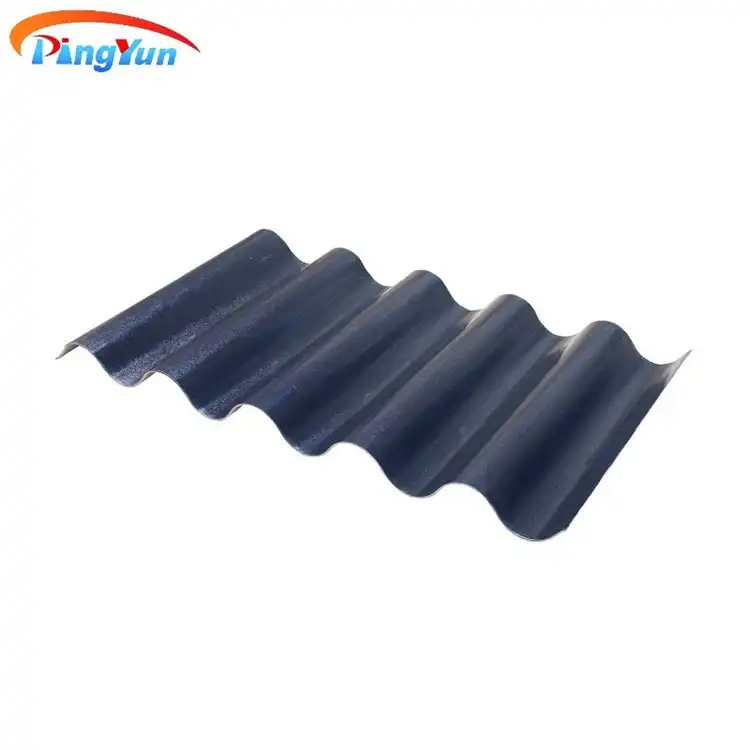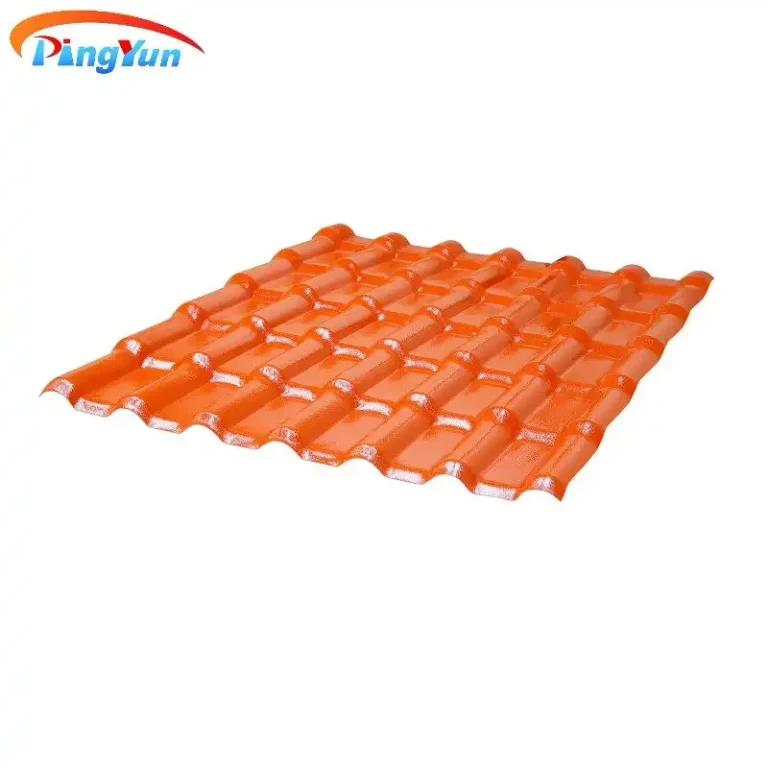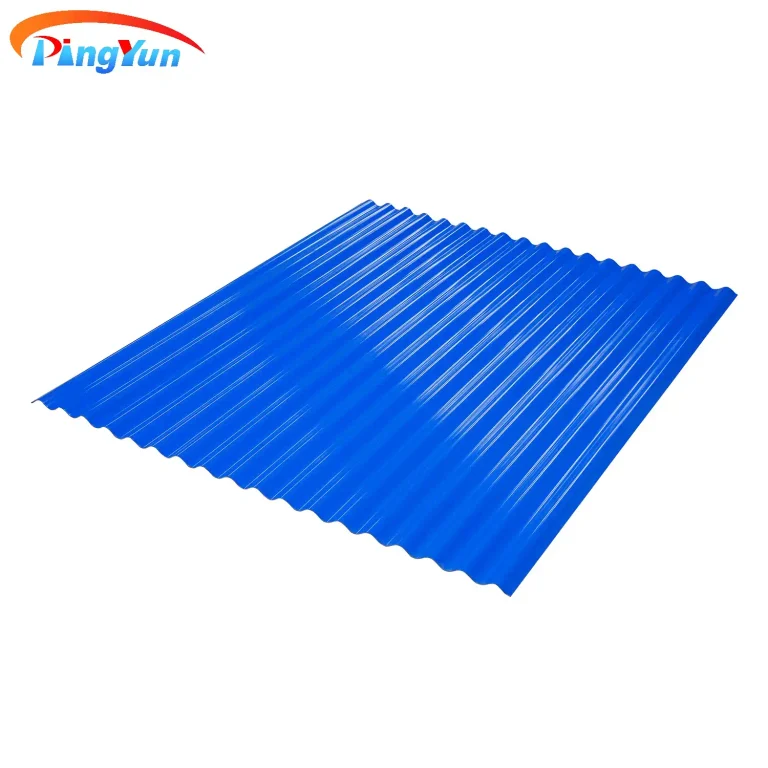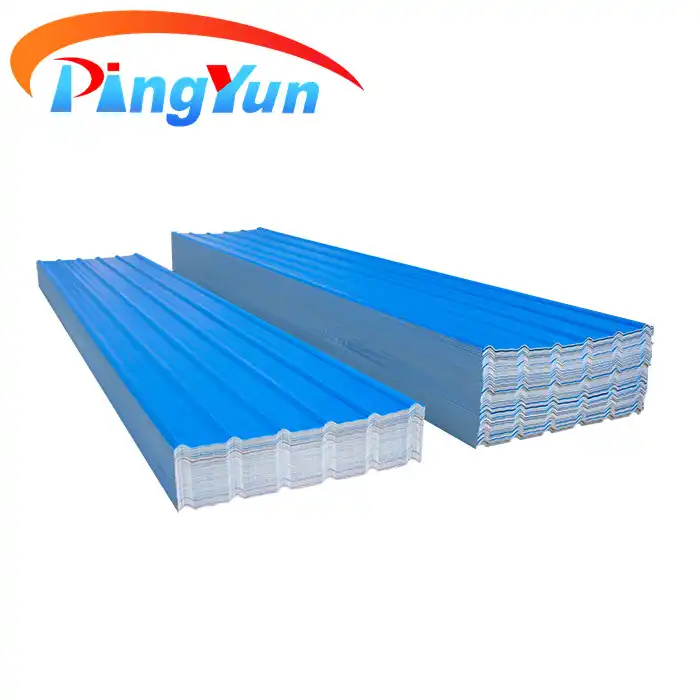
What Questions Should You Ask a PVC Roofing Supplier?
- What Should You Tell a Supplier Before Asking for a Quote?
- Who Is Supplying and Making the Roofing?
- Which Exact PVC Roofing Product Are You Offering?
- What Dimensions and Drawings Do We Need to Price the Roof?
- What Installation and Accessory Questions Matter?
- What Evidence Supports the Supplier's Performance Claims?
- How Will Samples and Production Batches Be Matched?
- What Must a Comparable Quotation Include?
- Which Delivery, Warranty and Support Terms Must Be Written Down?
- Which Questions Should You Ask at Each Buying Stage?
- FAQ
- What is the first question to ask a PVC roofing supplier?
- Does an R1050 listing mean I am buying an ASA roof tile?
- Can I use widths and packing quantities from an old catalogue in my order?
- Is an ISO badge or certificate enough to answer roof-performance questions?
- Are Pingyun samples free?
- Can I place a project order before all installation drawings are available?
- How do I compare prices when suppliers include different components?
- Does Pingyun's 20-year warranty cover every PVC roof tile?
- Conclusion
- References
Ask a PVC roofing supplier who will supply the order, which exact product and roof-system components are included, what drawings and test evidence apply, how the sheets will be installed, and what the price, delivery, inspection, and warranty terms actually cover. Send the same roof brief to every bidder and request answers in documents rather than accepting an unqualified “yes.” The most useful question is not “Do you sell PVC roofing?” but “Which named product, under which approved conditions, will you deliver for this roof?”
A contractor may be concerned about a joint at a skylight; a distributor may need identical profiles for future stock; an importer may need cartons and commercial documents to match the order. This guide turns those concerns into questions that can be sent before the first quote, during technical clarification, and before a purchase order. Pingyun’s published product categories and archived catalogue offer concrete illustrations of how easily broad names can hide distinct constructions [1][2]. They are not a substitute for a current quotation or an approval of a particular roof.
What Should You Tell a Supplier Before Asking for a Quote?
A good question can still receive a poor answer if the supplier must guess the application. The first message should define what the buyer knows, distinguish fixed project requirements from preferences, and say which missing decisions must be made by the project designer. Do not ask several suppliers to recommend “the best PVC tile” while providing different information to each. A comparable response starts with a comparable brief.
Share the roof and destination brief
Tell the supplier where the roof will be installed, whether the work is new construction or replacement, the roof plan and elevations available, the intended appearance, and the proposed slope, supports, penetrations, and daylighting areas. Include site access or transport constraints if long sheets may be difficult to deliver. If the structure has not yet been designed, say so rather than asking the supplier to endorse a support arrangement it has never seen. The manufacturer can provide product instructions and evidence; the responsible design professional must determine whether they fit the actual building.
State the destination country and any known project or buyer approval requirements without assuming that one market’s paperwork is universal. If the importer does not yet know the required documentation, ask its own local specialist or designer to identify it. The supplier can then reply to a concrete list rather than promising that a tile “meets international standards.” Include desired delivery windows and whether the purchase is a sample, a trial order, a single project, or repeat distribution stock. These distinctions affect what can reasonably be quoted.
A concise opening request could read: “Please recommend a named PVC roofing product for the attached roof plan and destination. Identify the current profile drawing, material construction, effective cover, installation manual, compatible accessories, test evidence relevant to the stated project requirements, and any information you still need from our designer.” The answer should identify both the product proposed and the assumptions used. If only a product photo is returned, ask which drawing and quoted SKU it represents.
Separate mandatory requirements from preferences
Classify requirements before requesting a price. A mandatory item may be an approved profile for an existing roof, a project-specific performance submission, a color prescribed by the architect, or an installation method approved by the designer. Preferences might include a secondary color option, alternative packing, or a different sheet length. This distinction lets the supplier propose a documented alternative without quietly replacing a critical requirement. Ask: “Which requirements can your proposed SKU meet as stated, and which need an alternative detail or further approval?”
Provide a schedule of what will be supplied by the roofing vendor and what the contractor or another manufacturer will provide. If fasteners and flashings are excluded from the supplier’s price, they still need approved specifications and an assigned responsible party. Mark undecided items openly. A supplier who identifies an unresolved junction has helped the buyer more than one who gives a confident price for a roof that has not been technically defined.
Who Is Supplying and Making the Roofing?
The aim here is not to label one business model good and another bad. The buyer needs a coherent account of who will sign, manufacture, invoice, export, approve technical changes, and respond to defects. A brand, a sales company, a factory, and a certificate holder may have different names. The relationships can be legitimate, but a quotation should not leave them to be reconstructed after a dispute.
Clarify the contracting and producing entities
Ask: “What is the legal name of the party issuing the quotation and invoice? At which site will this specific profile be produced? Which entity will appear on shipping documents?” Request the relevant registration and address information appropriate to the transaction. If the production site differs from the seller, ask for the relationship, the supplier’s quality oversight, and responsibility for any subcontracted components. Do not infer current factory ownership from a historic brochure photograph or a general company profile.
A productive follow-up is: “Will the same site and tooling make the approved sample and the production shipment? If not, how will you establish their equivalence?” For repeat orders, ask whether the specified profile will remain available, how changes to tools or surface materials are notified, and which entity holds the approved drawings. The goal is reliable product identity, not a promise that no organization will ever change a production arrangement.
Pingyun’s website publishes its product and quality activities as company descriptions [1][4]. Such pages tell a buyer whom to contact and what to investigate, but they do not identify the plant and batch assigned to an unknown future order. Ask for that information in the dated offer. When a representative cannot yet give a production schedule because the buyer has not approved color or lengths, record the missing prerequisite rather than inventing a confirmed lead time.
Identify the owners of technical and claims decisions
Ask: “Who may issue or revise the cross-section? Who confirms compatibility of accessories? Who approves a proposed substitute? Who receives a quality complaint after arrival?” Put names or roles and response routes in the quotation or project correspondence. A sales contact can coordinate questions, but a technical answer should identify the document that governs it. Likewise, a warranty is useful only when the responsible legal entity and claim procedure are knowable.
If the exporter supplies tiles made by an affiliate, ask whether that affiliate’s test report is applicable to the offered product and whether the contracting party accepts the specified obligations. A report issued to one firm is not automatically evidence for every related product. Keep the comparison practical: the buyer needs the chain of responsibility for this order, not a general essay about corporate structure. Once these questions are answered, move to the product itself; a correctly identified supplier still cannot make an undefined tile into an approvable roof.
Which Exact PVC Roofing Product Are You Offering?
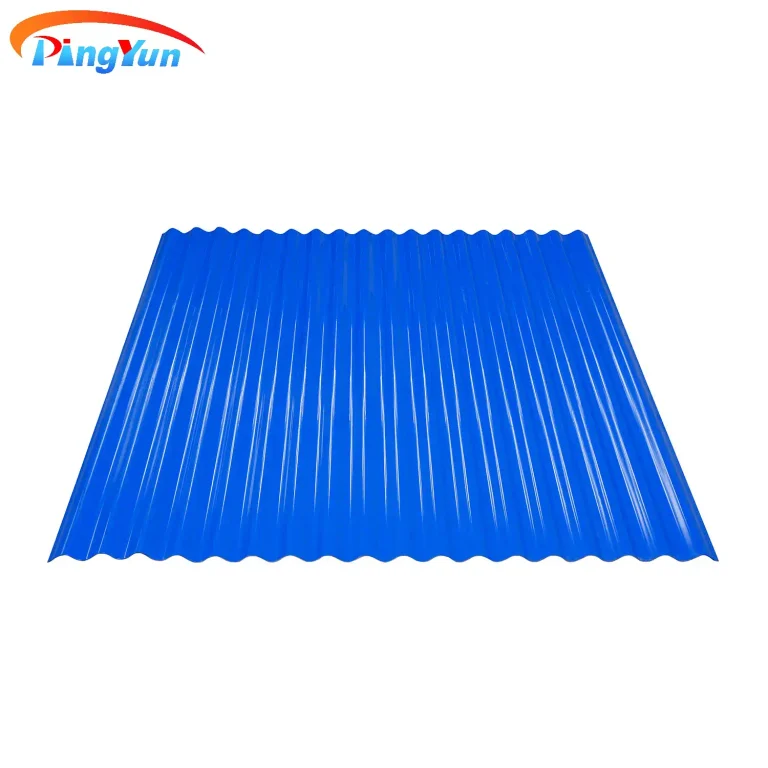
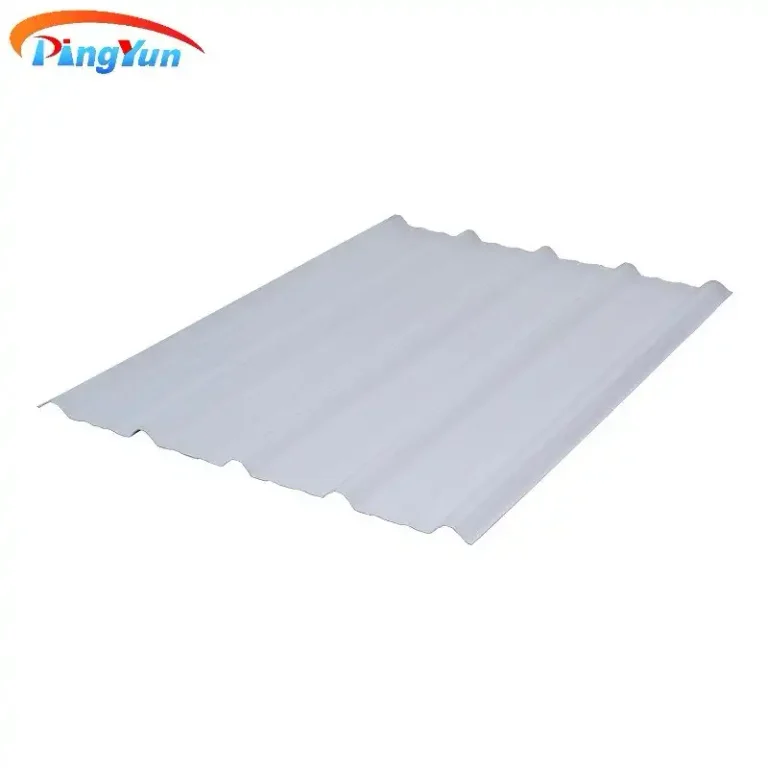
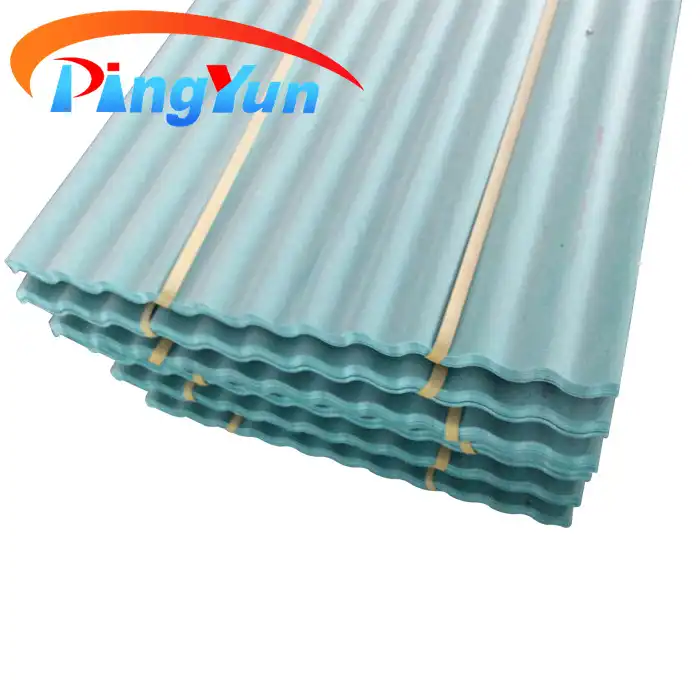
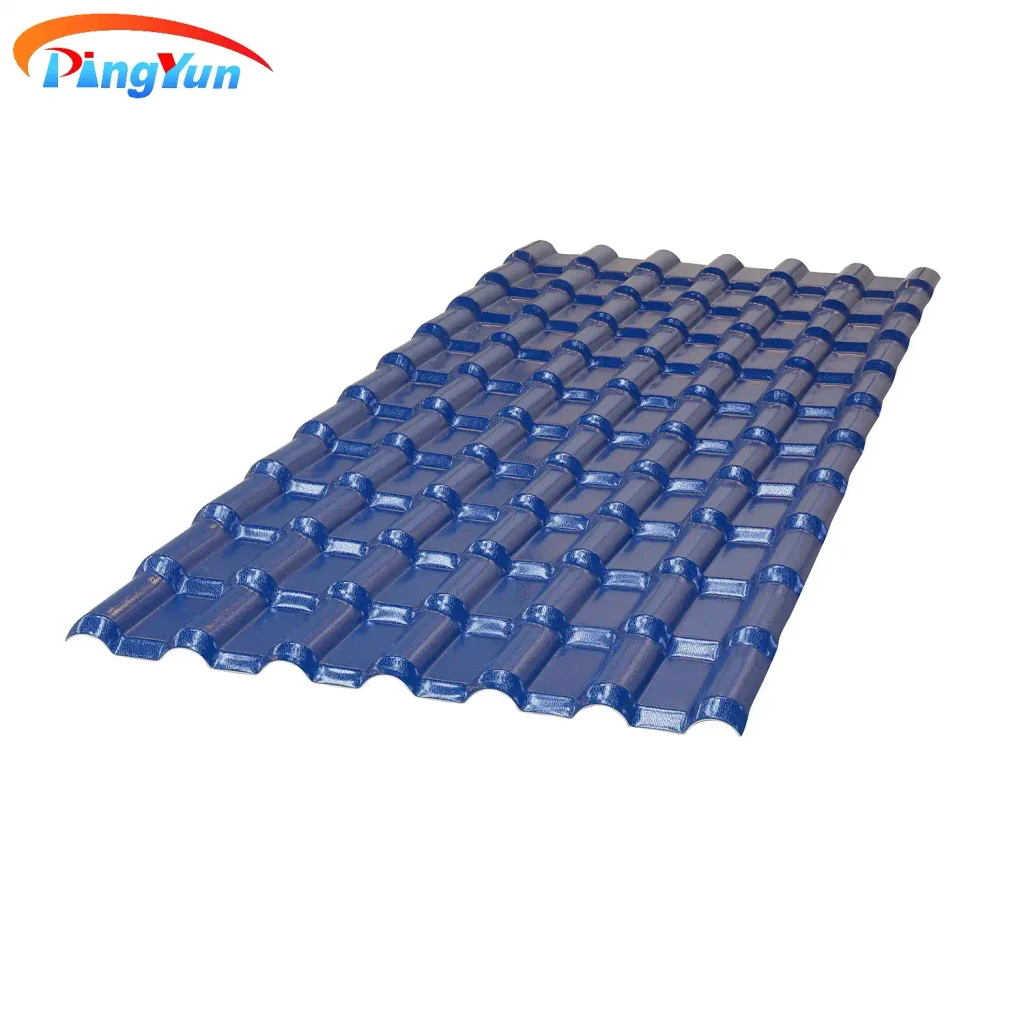
“PVC roofing” can refer to different profiled sheets, tile-like products, or light-transmitting materials. Start by asking the supplier to identify the unit being sold, its complete current code, cross-section, surface construction, and intended roof detail. A family name may describe appearance rather than the material or joint. Pingyun’s current navigation distinguishes Spanish and Roma PVC roof tile categories and lists other plastic roof products separately [1]. Its archived catalogue provides an especially useful warning about codes that appear similar [2].
Ask for the product family, SKU, and material
Use direct language: “What is the exact current SKU, commercial name, profile revision, and material description of the item on this quote?” Ask whether the sheet is opaque or translucent, how its exposed surface is described, what thickness or other options are available for the proposed SKU, and which color reference would be supplied. Request a dated drawing and material declaration. If a line item says only “Spanish PVC” or “synthetic resin tile,” ask the supplier to fill in the remaining fields before comparing prices.
Pingyun’s older catalogue displayed Spanish style R1050 and Roma style R1080 as separate ASA-PVC examples. It also displayed a translucent R1050 with a PVC description [2]. This establishes what that archive listed; it does not prove that those historical specifications are current. The point for a buyer is to ask a better question than “Do you have R1050?”: “Which R1050 construction, edge profile, surface and current drawing are you offering, and is it the opaque roof tile or a translucent product?”
The current Roma category also includes a listing whose title contains “Roma R1050” [3]. That means even the website category plus model string should not be turned into an exclusive rule that R1050 always means Spanish and R1080 always means Roma. Ask the supplier to match the offered item to its controlled section and an identified sample. A marketing title helps find a possible product; it is not an order-ready specification.
Distinguish ASA surfaces and translucent alternatives
Ask: “Does the exact quoted product include an ASA surface or another declared construction, and how will that construction appear on the order documents?” This is material to the user-confirmed Pingyun warranty policy, under which ASA products have a 20-year warranty and other products have a 10-year warranty [9]. The product’s ASA status should come from the actual current SKU and written specification, not the broad heading “PVC roof tile.” Do not turn the policy into a claim that all tiles in a category receive the longer period.
If daylighting is part of the roof, ask a separate question: “Which current translucent sheet do you propose, what material is it, and is there a documented approved joint with the opaque tile?” The old catalogue’s opaque and translucent R1050 entries used different material descriptions [2]. A shared code in historical marketing material cannot prove that two sheets can be directly lapped, fixed in the same way, or covered by the same warranty. Where a compatible transition is unavailable, the designer may need an independently detailed rooflight opening. The supplier should not silently replace a requested opaque tile with a translucent alternative or vice versa.
Tie an approved sample to change control
Ask each supplier to label a sample with the exact profile, construction, color, revision, and date to which its quote refers. If a sample does not show both side edges or a full decorative repeat, request a representative larger piece or a documented mock-up before relying on it for pattern matching. A photo may clarify appearance but cannot establish accurate installed cover or material identity. Ask: “If the sample, drawing, and quotation differ, which item will be revised and reapproved before production?”
A final product question should address substitutions: “Will you notify us and obtain written approval before changing the surface, color standard, profile tool, accessory or production site?” Changes need not always be forbidden. They must be visible so that earlier test evidence and installation approval can be rechecked if necessary. Record the version of each accepted document in the purchase order; otherwise a perfectly good technical conversation can be lost when the order is processed by another team.
What Dimensions and Drawings Do We Need to Price the Roof?
A unit price per sheet cannot be converted into a comparable roof price until the buyer understands installed coverage, sheet lengths, end joints, and cutting. Ask for the drawings that explain the unit of sale. An archive may contain widths and packaging quantities, but it is not a current production drawing or a takeoff for the buyer’s roof [2]. This section turns dimensions into questions that an estimator and installer can both use.
Separate overall width from effective cover
Ask: “What are the overall width and the effective installed cover of the exact proposed profile, and under which side-lap detail?” Require the answer to cite a current cross-section showing both edges and the overlap. A nominal width tells the buyer how much sheet is shipped; the effective cover depends on how sheets join on the roof. For budgeting, ask the supplier to show its takeoff method and the quantity of sheets needed for the attached plan. Do not assume a width printed beside a profile name is the installed coverage.
If a sales sheet and a current drawing give different figures, do not choose one to make the estimate work. Request a written clarification and revised quote tied to the governing drawing. Confirm whether accessories are counted by sheet, by installed length, or by roof detail. This exposes quotations in which the main sheet price is low but a substantial number of closures or custom edge pieces were omitted. The relevant comparison is completed roof scope, not merely nominal material area.
Ask about length, pattern, and overlaps
For tile-like sheets, ask whether the visible pattern repeats along the slope, whether ordered lengths must correspond to a design module, and where cutting or an end lap is permitted. If the roof slope exceeds a manageable sheet length, ask for a documented joint detail and its effect on takeoff and packaging. The supplier’s answer should state the assumptions behind the proposed length schedule, including transport and site handling where relevant. Do not insert a maximum length from a legacy catalogue as though it were a present production promise [2].
Ask specifically which side laps and end laps apply to the product under the proposed roof conditions and whether any seals, closures, or additional supports are required. A sensible reply points to an applicable installation instruction or approved project detail, not to a generic statement that the tile “does not leak.” A drawing can clarify geometry, but the design team should still review exposure, slope, drainage, uplift, and other requirements for the site. The supplier should identify any information it needs before it can offer a defensible lap recommendation.
Control revisions before estimating
Ask the supplier to list the drawing number, date, revision, SKU, and compatible accessory drawing in the quotation. Send the same version to the installer and project designer. If the product is ordered in several colors or lengths, confirm which dimensions and details remain the same and which variants need separate approval. A plan markup can show where each sheet length is proposed and where trim pieces are expected. This prevents one party from pricing a historic pattern while another approves a present variant.
One useful clarification line is: “Please mark every dimension in your estimate as sourced from the attached current drawing, and identify assumptions that you need us to confirm.” An unanswered assumption is not a fatal objection to talking with a supplier. It is simply a reason to label the budget provisional. Once the roof geometry and offered profile are sufficiently defined, the conversation can move from sheet quantities to the rest of the roof system.
What Installation and Accessory Questions Matter?
A supplier may be able to supply a handsome field tile yet leave the roof’s difficult interfaces unresolved. Ask for the complete system proposal: which installation instructions govern the exact SKU, what accessories are included, which details are available, and what must be designed separately. Pingyun’s old catalogue contains a diagram naming roof items such as a top ridge, transparent sheet, barge board, and flashing in an UPVC-sheet context [5]. That image shows why buyers should ask about interfaces. It is not a current installation manual for every PVC tile the company lists today.
Ask for support, slope, and fixing instructions
Send the roof slope, location, support material, proposed spacing, and design actions identified by the project team. Ask: “What is your current installation instruction for this SKU under these conditions, and which parts must the project designer check?” The answer should identify the manual revision and explain whether it covers the offered thickness, length, profile, and fastening pattern. If the supplier quotes a support spacing or minimum slope, ask which document and assumptions support it. Avoid transplanting a number from a photograph of a different roof, or from a generic “PVC tile” page.
Request a fastener schedule showing the fastener and washer type, position on the profile, relationship to support material, and any differing treatment at perimeters and penetrations. Ask how movement, drilling, and replacement of damaged pieces are handled in the applicable instructions. A sales reply of “easy installation” cannot tell an installer where a roof will resist uplift or how joints shed water. The manufacturer’s instructions are necessary inputs to design and installation review; the manufacturer does not by this alone assume the project designer’s legal or engineering responsibilities.
For an existing roof, ask whether the proposed tile can work with the measured supports and junction locations; if not, what modifications would be required? For a new roof, ask when the supplier needs plan and elevation drawings to resolve critical details before quantities are fixed. The supplier might respond that a given condition is outside its standard details. That is useful information: the design team can then specify an approved alternative rather than allow a contractor to invent a transition on site.
Ask about ridges, edges, and wall junctions
Make a roof-interface list from the drawing: ridge, hip, verge, eave, valley, wall abutment, gutters, and penetrations. Ask: “Which named accessories fit this exact tile, which are supplied by you, and which are excluded or require project-specific fabrication?” Request the current section or detail and item code for each supplied piece. If a universal-looking ridge is proposed, ask how it closes against the actual tile contour and how the junction is fastened and weathered.
A supplier’s estimate should make clear whether closures, sealing materials, ridge and verge pieces, fasteners, and flashings are part of the offer. If another trade supplies a wall flashing or gutter, the interface still needs an agreed drawing and a responsible reviewer. The historical Pingyun UPVC illustration identifies some accessory categories [5], but it cannot establish that an archived item is currently stocked or fits a Spanish or Roma profile. Ask for current compatibility rather than infer it from a general catalogue picture.
Check appearance as well as function when the roof is visible from the street. Ask whether accessory colors are matched to the quoted sheet, whether different batches have an agreed color reference, and whether ordering custom lengths changes ridge or edge components. For a distributor, ask whether accessory codes will remain identifiable on future replenishment orders. A system is not complete merely because the central tile was described precisely while the perimeter materials were left to “contractor’s choice.”
Ask for an approved daylighting interface
A rooflight or translucent run deserves its own submittal. Ask: “What is the exact current translucent product, what is its material, and what detail connects it to the opaque roof covering?” Pingyun’s archived catalogue separately listed translucent PVC R1050 and opaque ASA-PVC R1050 [2]. Their historical shared number does not prove that today’s sheets have compatible edges, thermal movement behavior, fixings, or warranty. Ask for both current cross-sections and a manufacturer-approved transition; if none exists, request the designer to detail an independent opening or framed assembly.
Also ask who supplies closures at the upper and lower ends of the daylighting zone, what support is needed around an opening, and what restrictions govern cutting or attaching other components. A product that transmits light is not automatically suitable to be walked on during maintenance. Ask for the applicable handling and access instructions instead of relying on the word “roofing.” The supplier’s reply may lead to a perfectly reasonable alternative; the important point is that the interface be selected deliberately and reviewed by the project team.
What Evidence Supports the Supplier’s Performance Claims?
A buyer should convert every performance adjective relevant to the project into a document question. “Wind resistant,” “fire rated,” “weatherproof,” or “long-lasting” may describe an intended benefit, but the order requires an answer about the proposed tile, test specimen, and installation. Do not demand every conceivable laboratory result. Start with the roof’s actual approvals and service conditions, and ask for the reports necessary to assess them. If a requirement has not been defined, mark it as a question for the destination-market professional or designer.
Match reports to the proposed tile
Ask: “Which complete test reports apply to this exact SKU, surface construction, thickness, profile, and installed configuration?” The response should identify the issuer, date, tested specimen, method, result, and limitations. Where a report concerns a roof assembly, ask whether the laps, fasteners, supports, and accessories in that assembly match the proposed design. A report for a sheet alone may not answer a question about the assembled roof; a report for one profile or different product family should not be assumed to cover another.
If the supplier offers a summary chart, request the underlying current report for a claim that the project actually relies on. Ask who selected and submitted the tested sample and whether the report is complete rather than a cropped page. If there has been a material or tooling change since testing, ask for an applicability statement supported by the responsible technical party. The right follow-up to an unmatched report is not an accusation: “Please show how the specimen described here corresponds to the tile in your quotation, or identify the evidence required for the offered version.”
Pingyun’s quality page describes controls over material selection, production, and inspection [6]. That published statement may motivate a request for batch records, but it is not itself a laboratory report for an exact tile. Likewise, the archived catalogue’s promotional descriptions and dimensions are not present-day product test data [2]. The article therefore offers questions rather than reporting an unsupported fire class, structural capacity, weathering result, or universal corrosion resistance for Pingyun roofing.
Check certificate holders and scope
Ask: “What certificate are you relying on, whose legal name and site does it cover, what activities or products are within scope, who issued it, and is it currently valid?” A management-system certificate and product-specific test report answer different questions. ISO explains that ISO 9001 concerns quality management systems and that ISO itself does not certify organizations; independent certification bodies perform certification [7][8]. The presence of an ISO logo or an “ISO” field on a product listing does not prove that the proposed roof assembly met a project performance requirement.
ISO provides guidance on confirming accredited certifications through appropriate certification or accreditation channels [7]. Ask for a legible, complete certificate number and text before attempting to validate it. A supplier may legitimately use an affiliated manufacturing site or a separate exporter; the holder named on the document should nevertheless be reconciled with the manufacturing and contracting parties. Do not quietly rewrite a certificate’s owner to match the sales brand. If the issuer cannot confirm status or the scope is unrelated to the roof product, keep the claim unresolved rather than announcing a verified approval.
Ask what the destination actually requires
A local code provision or market-entry requirement cannot be selected from a generic list without the project’s jurisdiction, building use, and intended assembly. Ask the importer and designer which documents are needed at destination; then ask the supplier to match them to the current product and application. The buyer may need a product report, a declaration, a specific test, or a reviewed installation detail. Which combination applies is a project question, not something the words “PVC roof tile” determine everywhere.
A useful email line is: “Our project team requires evidence for the following specified conditions. For each item, please identify the submitted document, tested or covered SKU, installation assumptions, and any limitation or missing test.” This invites an honest exception list and reduces the risk that a broad marketing claim gets mistaken for an approval. If the supplier cannot supply the required evidence in time, a buyer can assess a different product or plan additional review instead of pretending the gap was closed by a certificate icon.
How Will Samples and Production Batches Be Matched?
A sample is useful when it can be tied to a defined product and future batch. Ask how it was made, what it represents, and which changes would require a new sample or approval. Physical appearance is not a substitute for product testing; an independent test, in turn, does not guarantee that an unrelated production lot matches the tested material. The buyer should build a practical chain from sample label to current quotation, production identification, inspection record, and carton label.
Ask about sample identification and freight
Request the exact sample SKU, material construction, profile, color reference, size, and dispatch date. Ask whether both side edges and a complete visible pattern repeat are represented. Pingyun’s policy, confirmed directly by its representative to the commissioning editor, is that samples are free and the customer pays freight [9]. This general policy does not determine the available sample size, shipping method, destination cost, or preparation time for a specific request. Confirm those details before dispatch.
Ask: “Will the approved sample be linked to the drawing and specification in our eventual order?” If the piece was cut from an old batch or made with a different surface from the current offer, it can still help assess appearance, but it should not be treated as production approval. A distributor planning a color range might need more than one reference; a contractor matching an existing roof might need a full-width profile section. State the intended decision so the supplier sends a sample that can answer it.
Ask for batch traceability and inspection
Before placing a significant order, ask how sheets will be identified by batch or production run and how labels on bundles connect to the packing list. Request an example of the inspection record for critical order characteristics such as profile identity, specified dimensions, color reference, and declared construction. The actual inspection criteria, frequency, and sample size should be agreed for the transaction; this guide does not invent a standard acceptance percentage. A supplier’s published claim of strict quality control [6] is a starting point for asking what records the buyer will receive, not a substitute for those records.
Ask whether a buyer or appointed inspector can observe agreed checks before shipment, whether material failing inspection is segregated, and who approves rework. For a first order, establish the timing of a pre-shipment check before production is complete, not after a carrier has been booked. If multiple colors or lengths are in the order, ask how each variant is identified. Carton descriptions that collapse materially different products into a shared short code make receipt and later claims harder.
Ask what happens when something differs
Use a concrete question: “If the production batch differs from the approved drawing or sample, how will you notify us, which batches are affected, and what choices do we have before shipment?” Ask about containment, reinspection, replacement, and corrective action. A professional supplier may not promise a production process without any nonconformities; it should be able to explain how a discrepancy is documented and resolved. The contract should identify who pays for an agreed repeat inspection or corrected shipment under the circumstances defined by both parties.
On receipt, preserve labels and photographs where practical, and use the agreed acceptance process. Distinguish damage in transport from differences in the manufactured product or a misunderstanding in a drawing. If a contractor discovers a junction problem after installation starts, retain the approved details as well as the batch identity. Traceability is valuable because it helps determine which part of the chain should be investigated, not because it magically proves that every sheet is flawless.
What Must a Comparable Quotation Include?
Suppliers cannot quote the same roof scope if one prices only the main sheet and another includes compatible trim, fasteners, packing, and documentation. Ask each candidate to respond to the same RFQ and identify exceptions. Pingyun’s customization page publicly sets out a sequence of model recommendation, confirmation of length, width, thickness and color, discussion of lead time and payment, and confirmation of shipping details [4]. That is a process description, not the commercial terms for an unplaced order. The buyer still needs a dated and itemized offer.
Request the same-scope itemized offer
Ask: “Please quote the named tile, proposed lengths and quantities, effective cover used for takeoff, and every accessory required by the attached roof drawing as separate line items.” Include ridges, hips, verges, eaves, closures, fasteners, flashings, daylighting transitions, and any unusual condition shown in the plan. If a component is provided by another trade, require an explicit exclusion and the specification of the interface. The quoted unit price should state the unit of sale and currency, not merely a number beside a product image.
Ask the supplier to return an assumptions schedule with the estimate. Did it allow for side laps, end laps, waste at hips, transport limits, support revisions, and spare pieces? Which quantities were calculated from drawings and which are budget allowances? A purchaser may not know the final answers yet, but the question exposes where two offers are not comparable. Do not measure a current order against a historic catalogue’s bundle or container quantity; packing depends on the actual dimensions, order mix and agreed loading method [2].
A simple response grid helps:
| Ask the supplier | Acceptable form of answer | Follow-up if vague |
|---|---|---|
| Which SKU and construction are priced? | Dated product schedule and drawing revision | “Please identify the exact product, not the category.” |
| What is the installed cover? | Cross-section and stated lap assumptions | “Is this the overall width or the effective cover?” |
| Which accessories are included? | Itemized codes and quantities | “Who supplies the missing ridge or edge piece?” |
| Which evidence applies? | Report identifier, specimen, scope and date | “Where does this report identify the offered SKU?” |
| How is the order packed and shipped? | Bundle plan and agreed delivery terms | “Which lengths and components fit this plan?” |
| What is excluded? | Written exceptions and assumptions | “Will the excluded work be designed and priced elsewhere?” |
The table is a buyer’s communication aid, not a record of a Pingyun quotation. Where the supplier cannot complete a field without more project information, ask it to name the missing input. A conditional answer with clear assumptions is more usable than a firm-looking price based on guesses. Retain replies together with drawings and revisions so the technical team and purchasing team work from the same offer.
Ask about packing, shipment, and documents
For imported roofing, ask: “What are the proposed sheet lengths, bundle dimensions, labels, handling precautions, loading plan, and gross weights for this exact order?” Confirm who arranges freight, which destination point is covered by the price, who handles unloading, and when risk or responsibility changes under the negotiated contract. Avoid importing a generic trade term into the article as though it had already been agreed. Ask the supplier to name the term and its precise named place on the quotation.
Ask the importer or customs adviser what documents are needed at destination; then list them in the RFQ. The invoice, packing list, origin information where required, and any applicable product or testing papers should refer to the same item identity and quantities. If the buyer plans to relabel products for distribution, ask how traceability will survive the new packaging. If long tiles require a special transport route or unloading equipment, settle that before approving lengths and delivery dates, not when the consignment arrives.
Record exclusions and substitutions
Ask the supplier to flag where the proposal differs from the project brief: another profile, alternative surface material, different accessory, unavailable color, shortened length, or a requirement it cannot document. Each alternative needs its own specification, evidence, and price. A buyer may accept it after technical review; it should never be hidden within a broad “equivalent PVC roof tile” description. Record what will trigger a revised quote and who must approve it.
A useful final comparison is not “Which supplier has the lowest price per sheet?” but “Which offer delivers the documented roof components and services we require under the same assumptions?” This does not mean the buyer must purchase everything from one vendor. It means scope, compatibility, approval, and responsibility have been allocated. A clear exclusion is not automatically a weakness; an unpriced or unowned essential junction is.
Which Delivery, Warranty and Support Terms Must Be Written Down?
Technical approvals can be undermined by loose commercial wording. A supplier might be able to make the right sheet, yet the contract can still leave unclear when production starts, which version is ordered, who inspects the finished goods, and how a valid claim will be handled. Ask these questions before a deposit or final purchase order. Treat a headline warranty as one part of a written service arrangement rather than as a promise of roof lifespan.
Ask for an order timetable and responsibilities
Ask: “Which events start the production clock—approval of color, drawings, payment, or all of them? What is the planned date for production release, inspection, carrier handover, and delivery to the named place?” If a bespoke profile or accessory needs separate manufacture, ask for its critical dates too. Confirm how the supplier will report a delay and what options the buyer has if the construction programme changes. A generic webpage statement about fast delivery should not become the schedule for an order whose colors, lengths and documents remain unapproved.
Put inspection and acceptance points in writing. Who approves the sample? Can a buyer-appointed inspector see the first batch? What evidence is supplied before shipping, and what is checked only after receipt? Identify who may approve a substitution after the order is signed and what revised documents must be issued. The supplier should be able to point to one controlling product schedule; a chain of chat messages with several incompatible drawings invites a mistake.
Confirm the SKU-specific warranty
Pingyun’s policy directly confirmed for this work is 20 years for ASA products and 10 years for other products [9]. Ask: “Is the actual quoted SKU an ASA product under this policy, and which written warranty will accompany it?” The answer should identify the product, responsible party, commencement date, covered issues, limitations and exclusions. A historical brochure’s longer marketing statement must not be used to override the current policy [2]. A warranty period is also not a forecast of service life for the whole roof.
Ask whether matching accessories and translucent elements have their own terms. The answer may be different from the main tile, especially where products have different material descriptions. If a website field, sales email and warranty document disagree, request a corrected, signed version before advertising the period to a downstream customer. Distributors should not promise the same coverage across all PVC categories merely because some ASA products qualify for the longer policy.
Set the claims and replacement route
Ask who receives a claim, what evidence must accompany it, how quickly a response is expected, how samples of disputed material are retained, and who decides whether the problem concerns manufacture, handling, design or installation. If an accepted claim leads to replacement goods, clarify who pays freight, customs-related charges if applicable, and any labor costs. These are commercial questions that cannot be answered solely by saying “we offer a warranty.”
Contractors also need support before any defect occurs. Ask whom to contact if an installer encounters an edge condition not shown on the supplied detail, and whether revised drawings will be formally issued. Distributors need to know how compatible replacement pieces can be ordered later and what happens if a color or profile is discontinued. Put a route for technical clarification and an after-sales contact into the supplier record. It is easier to resolve questions during procurement than after materials have been cut on a roof.
Which Questions Should You Ask at Each Buying Stage?
The order of questions matters. An introductory message should be short enough to elicit a relevant proposal; technical clarification should test that proposal against the actual roof; the final order check should freeze the version and obligations. Trying to settle a fire report, a custom color, packing, and every warranty exclusion in the first sentence often produces a generic reply. On the other hand, accepting a cheap quotation before asking about essential roof junctions can waste weeks. Use the following sequence as a communication tool, not as a substitute for the project’s professional review.
First email: identify a viable offer
Send the project brief and ask: “Which named PVC roofing SKU do you propose for the attached roof and destination? What is its material construction, current section drawing, effective cover, and proposed accessory family? Which conditions must our designer confirm before you can make a firm recommendation?” State whether the order is a sample, a single project, or repeat supply. Include an anticipated quantity range only if one has actually been estimated, and say whether the aim is a budget quotation or an order-ready proposal.
For Pingyun, a website visitor may have seen Spanish and Roma categories [1][3]. A first email should name the listing of interest but ask which actual current SKU and cross-section it corresponds to. Do not ask the sales contact to certify a design from a thumbnail. A short answer with a drawing and a list of missing project inputs is an effective start. A polished catalogue with no link between the quotation and the offered item is not yet a usable response.
The buyer can paste this compact RFQ paragraph into an email: “Please propose your exact product for the attached roof, identify its material and approved drawing revision, state the installed cover and required accessories, and list the project information you need to confirm installation suitability. Please quote main sheets and accessories separately and identify any exceptions.” Replace “attached roof” with the actual drawing reference before sending; do not leave a placeholder in a final purchase order.
Technical clarification: close design and evidence gaps
Once the supplier names a product, ask: “Which current installation manual, side and end lap details, support and fixing instructions, ridge and edge pieces, and daylighting transitions apply to this SKU? Which complete reports support the performance required by our project?” Send these questions to the supplier’s technical contact and the project’s designer together when possible. The technical team should mark which answers are adequate, which remain conditional, and which require a different detail or product.
Use a discrepancy register rather than letting critical points disappear in email. For each question, record the supplier’s answer, document identifier and date, reviewer, status, and next action. If a report covers a different thickness, ask the supplier to explain applicability; if an accessory drawing is for a different profile, ask for the correct one. Avoid an automatic assumption that all missing papers prove the product defective. The issue is whether the required evidence and details can be supplied and approved before the purchasing milestone.
Final purchase-order check: freeze what will arrive
Before signing, ask: “Does the order schedule name the same SKU, construction, profile revision, color, lengths, quantities, compatible accessories, and warranty terms that we approved? Are the packing, inspection, shipment, acceptance and claim arrangements written down?” Check that the sample label and drawings point to the same version. Ask which document takes precedence if an older brochure, website listing or sales email conflicts with the signed order package. Make sure the supplier knows who can approve a last-minute change.
The buying stage ends with a decision, not a generic compliment. If a mandatory requirement lacks an applicable document or a critical roof transition remains undesigned, keep that item open and defer the order or select an alternative. If the uncertainties are minor and explicitly allocated, record them and the person authorized to accept them. A good question is one that changes what appears in the final product schedule or resolves a real risk; unnecessary repeats of the same broad request do neither.
FAQ
What is the first question to ask a PVC roofing supplier?
Start with the project and product together: “Which exact current SKU do you recommend for this roof, and what drawings and assumptions support that recommendation?” Provide the roof location, plan, intended use and known requirements. Without a defined project, a supplier can only give a generic list of available styles. Follow the initial reply by asking who supplies the system and which items remain subject to technical review.
Does an R1050 listing mean I am buying an ASA roof tile?
No. Pingyun’s archived catalogue separately listed opaque ASA-PVC Spanish R1050 and translucent PVC R1050, while the company’s present Roma category also includes a listing with “Roma R1050” in its title [2][3]. Ask for the exact current product code, material declaration, cross-section, quotation and sample label. An archived model string or a category breadcrumb does not establish the material of a future shipment.
Can I use widths and packing quantities from an old catalogue in my order?
Use them only as historic leads for questions, not current ordering guarantees. Ask for the current overall and effective cover, available sheet lengths, packing and loading plan for the actual product mix, and the drawing that governs the quote. Pingyun’s archived catalogue page contains earlier tables and promotional statements [2], but a present order must be based on present controlled documents and written commercial terms.
Is an ISO badge or certificate enough to answer roof-performance questions?
No. ISO 9001 deals with a quality management system, and ISO says independent certification bodies—not ISO—certify organizations [7][8]. Ask whose certificate it is, whether the holder and scope are relevant, and whether it remains valid. Separately request reports for the product and installation characteristics required by the project. Neither a website icon nor a management certificate alone states the load, fire, or water performance of the proposed roof.
Are Pingyun samples free?
The policy directly confirmed by Pingyun’s representative for this content is that samples are free and the customer pays freight [9]. Ask which exact sample SKU, size, color and material are available, the dispatch timing, and the freight arrangement for your destination. Link any approved sample to the written quote; receiving a free piece does not prove the performance of the eventual production batch.
Can I place a project order before all installation drawings are available?
A buyer can request a budget estimate, but should not mistake it for an approved roof design. If a junction, lap, fixing or support detail affects suitability, ask who will issue and review it, and make approval a condition before manufacture or binding purchase as appropriate. The supplier should distinguish standard details from matters requiring the project’s designer. If essential evidence cannot be produced, keep the technical decision open.
How do I compare prices when suppliers include different components?
Issue one roof brief and ask every bidder for a line-item quotation with effective-cover assumptions, lengths, compatible accessories, fasteners, packing, delivery and exclusions. Ask each supplier to price or clearly exclude ridge, edge and daylighting junctions. Compare completed, technically reviewable scopes rather than prices per nominal-width sheet. If the scope is different, first normalize it or identify the cost and responsibility of missing items.
Does Pingyun’s 20-year warranty cover every PVC roof tile?
No. The directly confirmed policy is 20 years for ASA products and 10 years for other products [9]. Ask whether the exact SKU is an ASA product and request the matching written terms. Do not treat a historical promotional period, a broad product-category title or a material-looking color as proof of eligibility. Warranty duration must also not be presented as a guaranteed lifespan of the installed roof.
Conclusion
The best supplier conversation starts with the buyer’s roof and ends with written, product-specific answers. Ask who will supply and support the order, which exact tile and accessories are being offered, what drawings and evidence apply, how the system will be installed, and what the quote, delivery, inspection and warranty terms include. If an answer depends on the project’s designer or destination-market requirements, record that dependency rather than inviting the supplier to guess.
Pingyun’s present category pages and archived catalogue illustrate why this sequence is worthwhile: published style names and repeated codes do not by themselves resolve construction, current coverage, or compatibility [1][2][3]. Its customization and quality pages offer useful topics for a conversation, but a transaction still needs the current documentation and written commitments that correspond to its specific SKU [4][6]. Send the initial RFQ with the roof brief, request the named drawing and itemized offer, and close the technical gaps before converting a promising conversation into an order.
References
- Pingyun International, “PVC Roof Tile” category navigation, including Spanish and Roma subcategories. https://www.pingyungroup.com/PVC-Roof-Tile-pl3880300.html. Establishes how products are organized online, not an approval or full specification for an order.
- Pingyun International, PINGYUN New catalogue 201804.pdf, p. 3, historical synthetic resin roof tile entries (Pingyun AI knowledge base). Separately lists opaque ASA-PVC Spanish style R1050, opaque ASA-PVC Roma style R1080, and translucent PVC R1050; its historical tables and promotional claims are not current technical or warranty commitments.
- Pingyun International, “Roma PVC Roof Tile” category. https://www.pingyungroup.com/Roma-PVC-Roof-Tile-pl3879300.html. Shows a product title containing “Roma R1050”; not evidence that all R1050 products share a construction.
- Pingyun International, “Custom.” https://www.pingyungroup.com/custom.html. Gives the website’s model, dimension/color, lead-time/payment and shipping discussion sequence, not a particular order’s agreed terms.
- Pingyun International, PINGYUN New catalogue 201804.pdf, p. 6, archived UPVC-sheet installation illustration (Pingyun AI knowledge base). Used only to identify categories of roof junction, not as a current PVC-tile manual.
- Pingyun International, “Quality.” https://www.pingyungroup.com/quality.html. Represents company-published descriptions of production and inspection, not an independent audit or batch test report.
- International Organization for Standardization (ISO), “Certification.” https://www.iso.org/certification.html. Explains the distinction between certification and accreditation, certificate verification, and ISO’s role.
- International Organization for Standardization (ISO), “ISO 9001 explained.” https://www.iso.org/home/insights-news/resources/iso-9001-explained.html. Explains that ISO 9001 concerns quality management systems rather than a particular roof tile’s performance.
- Policy confirmed directly by Pingyun’s representative to the commissioning editor: ASA products carry a 20-year warranty, other products a 10-year warranty; samples are free and customers pay freight. This user-provided commercial policy does not substitute for SKU-specific written terms or laboratory evidence.